
What Is Socionics? The 16 Types and How They Relate
By Virko Kask, founder of Typeza

Socionics is a theory of personality and relationships. It describes two things:
- 16 personality types, each a different way of taking in information, making sense of it and acting on it.
- What tends to happen when any two of those types meet.
Socionics was built mainly for that second part, to explain why people who mean well still misread and hurt each other.
Where socionics comes from
From the Vedas to Jung
The idea that the psyche has four basic parts is thousands of years old. Vedic literature called them together antah-karana ("the inner cause"):
- Ahamkara, the false ego: who we take ourselves to be.
- Buddhi, the intellect: it analyses and decides.
- Manas, the mind: it handles what the senses bring in.
- Chitta, the subconscious: the store of memories and impressions.
In socionics, these four correspond to sensing, logic, ethics and intuition, in that order.
The Swiss psychiatrist Carl Gustav Jung (1875-1961) noticed the same four qualities over 60 years of practice and saw that they are expressed differently in every healthy, ordinary person.
Aušra Augustinavičiūtė
Socionics itself was developed in the 1970s by the Lithuanian Aušra Augustinavičiūtė (1927-2005), a teacher by profession and a sociologist by interest. In Jung's typology she found a contour map of the human types and set out to complete it.
She combined it with the theory of information metabolism by the Polish psychiatrist Antoni Kępiński (1918-1972), which holds that mental health depends on the amount and quality of the information a person processes.
Her essays, written in Vilnius and dated 1982 and 1983, set out a system of 16 types and the relationships between them. She called the 16 types together a socion, and the study of the types and their relationships socionics.
Socionics today
Socionics has been researched and taught ever since:
- More than 1,800 scientific works have been published on it.
- The International Institute of Socionics in Kyiv has published a socionics journal since 1995 and held 41 international conferences.
- Some 60 universities and research institutions have included socionics in their courses.
The core idea: information is food for the mind
Socionics compares the mind to the body. The body takes in food, digests it and turns it into energy. The mind does the same with information. We are surrounded by it, and each of us takes it in, processes it and puts it to use in our own way.
People differ at every one of those steps, even in exactly the same situation. A few examples:
- Taking it in: one person may notice what is happening here and now, while another draws more on memories and intuition.
- Processing it: one may look for logical links and leave feelings out of it, while for another, information matters only when it carries emotional weight.
- Acting on it: one may act by building relationships, another by getting on with things alone.
When two people misunderstand each other, they are often working from different information.
Augustinavičiūtė put it this way: each person takes in only some sides of the world deeply and consciously, and every personality, even a genius, is only part of a larger, shared intelligence.
Socionics therefore sees the types as needing each other. Each one handles information differently, so working together is always more effective than working alone.
Eight kinds of information
Socionics divides the information around us into eight aspects, also called information elements. Everyone handles all eight, but each type handles some of them with ease and others only with effort.
- Sensing of Senses: perceiving the world through the senses.
- Sensing of Will: control and willpower.
- Intuition of Opportunities: possibilities, creativity, new ideas.
- Intuition of Time: foresight, a sense of what is coming.
- Practical Logic: the logic of action, what works in practice.
- Structural Logic: analytical logic, how things fit together.
- Ethics of Emotions: emotions and mood.
- Ethics of Relationships: relationships between people, moral principles, traditions.
The eight come from Jung's four functions, each in an extraverted and an introverted form. Socionics calls them sensing, intuition, logic (Jung's thinking) and ethics (Jung's feeling). Each one has its own page among the eight information aspects.
Four basic differences, 16 types
Every type is a combination of four basic differences:
- Extraversion or introversion: where your attention naturally goes. Extraverts focus on objects, people and events themselves, introverts on how things relate to each other and to them.
- Sensing or intuition: how you take in reality.
- Logic or ethics: how you interpret what you have taken in.
- Rational or irrational: rational types reach conclusions through a chain of reasoning, like to plan and rely on proven solutions. Irrational types take in reality directly, stay flexible and go for breadth.
Four pairs with two options each give 16 types. You can read about each of the four base traits.
Everyone has both sides of each pair. Your type is about which side leads, and it leads consistently, so no one is a bit of one type and a bit of another.
Introvert does not mean shy
The socionics meanings are not the everyday ones. Augustinavičiūtė noticed that a sociable introverted sensing type often comes out as an extravert on a psychological test by Eysenck, while an outward-looking intuitive type who finds it harder to make contact comes out as an introvert. Socionics looks at how the mind works, not at how outgoing someone seems.
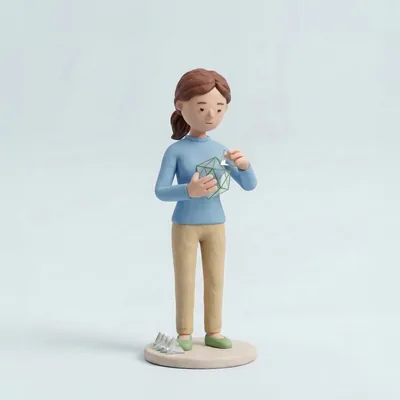
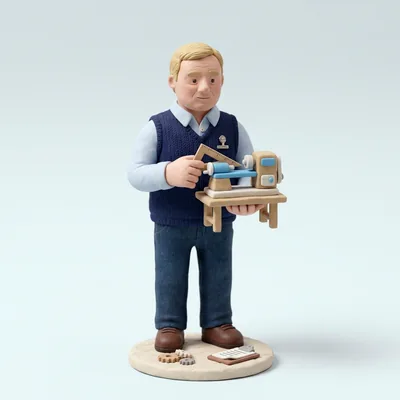
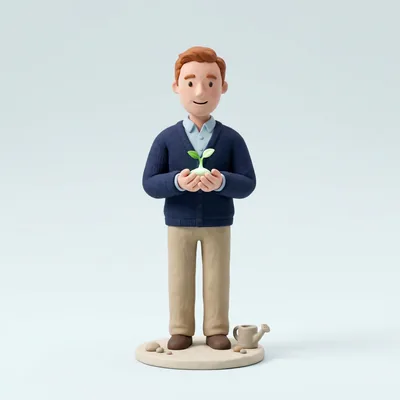
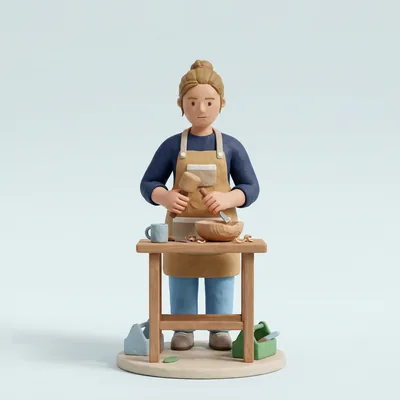
The 16 socionics types
On Typeza, each type has a short name, and each name leads to a full description of the type.












Intertype relationships: how the types relate
Every type relates in a different way to each of the 16 types, its own included. So there are 16 kinds of relationship, and each pair of types has exactly one of them.
Augustinavičiūtė described each as a different form of information exchange:
- Some bring short emotional flashes or quick closeness.
- Some are even and steady and only grow stronger over time.
- Some, the business-like ones, bring neither closeness nor conflict.
And she noted that being drawn to someone is not always better for you than being pushed away.
The types also form four larger groups of four, called quadras (Alpha, Beta, Gamma and Delta), in which people share interests and feel at home with each other.
Augustinavičiūtė wrote that there was no proof that any form of relationship is always harmful. Hard relationships lose their force when a person also has complementary people around them, and every relationship works at the right distance, which is different for each one.
- See all 16 relationship types.
- Look up any two types on the type pairs page.
- To see which relationship you have with someone, both of you can take the free compatibility test.
Your type stays the same
In socionics your type is part of your nature. Augustinavičiūtė described it as forming very early in childhood, among the people around the child, before personal experience starts to shape the personality, and it stays the same from then on. You can learn skills and grow, but you cannot become another type.
She and Jung both saw attempts to change a person's type as harmful. In her observation, such attempts happen when people lack a complementary partner and try to remake someone close to them into one. Those who could not hold out gave up part of themselves, and their mental health suffered.
Weak areas work the same way. A weak area can be trained, but it remains weak, and relying on it every day drains energy, which leads to stress and burnout.
More traits than four
The four basic differences are not the only ones. Grigoriy Reinin, a mathematician and psychologist, added 11 more, such as static or dynamic, tactical or strategic, and process or result. Together that makes 15 traits, and Typeza's AI interview analyses all of them. Read more about the 11 derived traits.
How to find your type
There are four ways, and they work best together: a specialist, a test, talking it over with people close to you, and observing yourself. How to find your personality type goes through each of them, and how masks can lead you to the wrong type.
You can start with the free socionics personality test. Treat a test result as one possible answer and a starting point.
Questions people ask
What is socionics in simple terms?
A theory that sorts people into 16 personality types by how they take in and process information, and describes the 16 kinds of relationship that can form between any two types.
Who created socionics?
The Lithuanian researcher Aušra Augustinavičiūtė (1927-2005). She built it by combining Carl Jung's psychological types with Antoni Kępiński's theory of information metabolism.
How many socionics types are there?
Sixteen. Each is a combination of four basic differences: extraversion or introversion, sensing or intuition, logic or ethics, and rational or irrational.
Can your socionics type change?
No. In socionics your type forms very early and stays the same for life. Skills and habits change, and people can act like another type for a while, but that is a mask, not a new type.
How do I find my socionics type?
Take a test, read the descriptions of the types it points to, and compare them with how you actually behave. In socionics the most reliable method is an open conversation with an experienced specialist, and Typeza's AI interview is close to that method. You can start with the free socionics personality test.
How accurate is a socionics test?
A test reflects how you see yourself, which is not always who you are. Treat the result as a starting point, compare it with the type descriptions, and if you are unsure, combine it with an interview.