
How to Know If You're Compatible With Someone
By Virko Kask, founder of Typeza
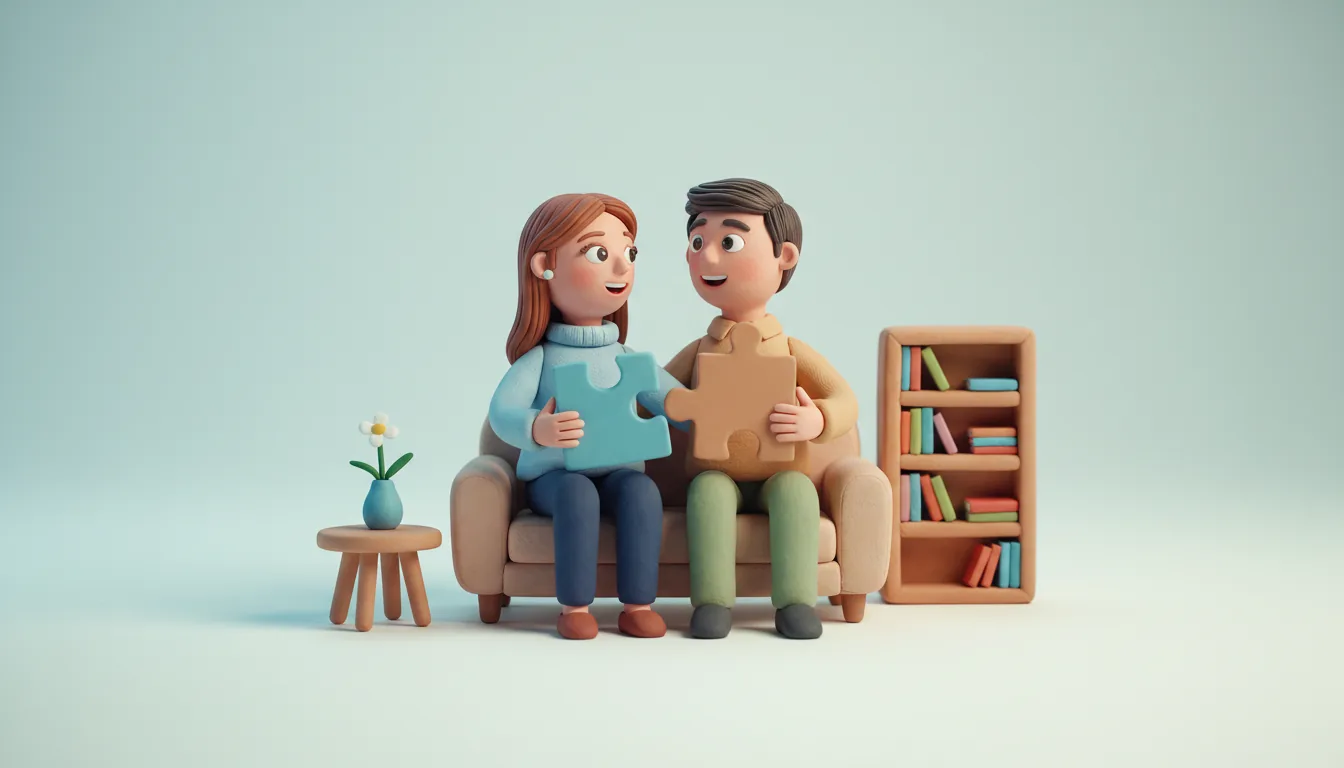
Most advice on how to know if you're compatible with someone is about shared interests and good communication. Socionics looks somewhere else: at how two people's minds exchange information. It describes 16 personality types and, for any two of them, one of 16 relationship types: a pattern of where the two of you fit, where you clash, and why.
This article explains that pattern, the signs that point to real compatibility, the patterns that point the other way, and how to find out which relationship type you two have. It works for partners and for close friends.
Chemistry is not compatibility
Several relationship types start with a strong pull and change as the two people get closer. In Activation, the early exchange can feel almost euphoric. In Mirage, partners seem to see their ideal match at first, and the picture shifts as they grow closer. In Extinguishment, there is often immediate attraction, and only later a feeling that you keep cancelling each other out. In Semi-duality, everything works smoothly until it suddenly does not.
So the first weeks tell you about chemistry. True compatibility shows up in how the exchange between you works once the novelty is gone.
What compatibility really means
Everyone has things they do easily, without thinking, and things that are hard for them. Some of the hard things are sore spots: criticism there hurts more than it should. Others are areas where you would love some help, and when someone gives it, you feel grateful rather than small. And in some areas, a little encouragement goes a long way.
Compatibility is mostly about where your easy things land in the other person. If what comes naturally to you is exactly what they were hoping someone would help them with, it feels like a gift. If it lands on their sore spot, it feels like pressure, even though you are only being yourself.
Two more things shape the fit: whether you value the same things in life, and whether you move at the same pace. Some people like to finish one thing before starting the next, others happily juggle several at once.
If you want the full picture, read about the eight psyche functions every type is built from.
8 signs you're compatible with someone
1. Their natural strengths feel like help, not pressure
What they do without effort is exactly what you find helpful and reassuring. This is the core of Duality, the most complementary relationship type: what comes easily to each of you lands exactly where the other one wants help.
2. Where you feel unsure, they are at ease, and the other way round
Duals cover each other's blind spots. The areas where one person feels uncertain are exactly where the other one is strong. Compare Semi-duality, which looks similar but where both partners share the same weak area, so neither can help the other there.
3. You value the same things, even if you go about them differently
Partners in Activation differ in almost every way, yet they "speak the same language of values". Sharing what you consider important matters more than sharing how you get there.
4. Your rhythms fit
Duals share the same tempo: both methodical or both spontaneous. That shared rhythm is what lets their other differences harmonize instead of clash.
5. Being yourself does not hurt them
In the hardest relationship types, simply being yourself creates stress for the other person. If you can each act naturally and the other person relaxes rather than braces, that is a strong sign.
6. Their encouragement actually energizes you
The right kind of encouragement does more than please you: it makes you want to do more. In Activation, this becomes a call-and-response: one offers, the other receives with appreciation, and both feel enlivened.
7. Help flows both ways
Some relationship types are asymmetric. In Supervision, one person keeps seeing the other's flaws and offering corrections that feel reasonable to them and painful to the other. In Benefit, one person feels inspired to help and the other receives without giving the same back. In compatible pairs, the exchange runs in both directions.
8. It still works after the excitement settles
If the connection felt strongest in the first weeks and has been sliding since, look at Mirage, Extinguishment and Semi-duality. If it has stayed steady or grown, that points toward a more complementary type.
Curious which of the 16 relationship types you two have? Take the free compatibility test.
Patterns that point the other way
The hardest pattern is when what comes most naturally to one person lands on the other's sore spot. In Conflict, this happens in both directions, so ordinary conversation leaves you both drained or defensive. Super-ego is close to it: not the weakest spot, but each person's strongest area is where the other feels most pressured to perform, so one person's competence makes the other feel inadequate.
Other warning patterns are quieter. If one of you keeps correcting and the other keeps defending, that is the Supervision pattern. If you agree on what matters but not on what to do about it, look at Kindred, where each person's way of solving problems touches the other's most sensitive area. If you care about the same topics but see them from opposite sides, Extinguishment fits: two forces of equal strength meet and cancel each other out. And if things run smoothly on practical matters but feel disconnected on what matters most, that is typical of Business and Mirage.
None of this is a verdict. A tense relationship type describes where effort goes, not whether the relationship can work. Even the hardest types can work for some couples, especially when both know the pattern.
The 16 relationship types at a glance
- Complementary: Duality, Activation
- Easy to start, harder to keep: Semi-duality, Mirage, Extinguishment
- Same wavelength: Identity, Kindred, Mirror
- Similar on the surface: Business, Quasi-identity
- One-directional: Supervisor, Supervisee, Supplier, Orderer
- Hard work: Conflict, Super-ego
Questions that reveal your patterns
Every type is built from four basic differences, and a few simple questions bring them into the open. Ask them over a slow dinner or a long walk, and listen more than you answer.
Start with energy: after a busy day, does each of you want people around or time alone? Then attention: do you notice first what is in front of you, or what it could turn into? Then decisions: when you disagree, what matters more, getting it right or how you both feel? And pace: do you like plans fixed early, or kept open as long as possible?
Two more questions get closer to the fit itself. Where does each of you most want help, and where do you hate being corrected? And what kind of encouragement makes you want to do more? The answers show where your easy things are likely to land in each other.
How to find out your relationship type
Your relationship type follows from your two personality types, so it is only as accurate as those types. On Typeza, each of you takes a free test on your own, about yourself. The test gives a direction, not a certainty: when your answers sit close to a line, it shows which types were in the running, so you can read those profiles or take the AI interview before you settle on one. When both types are set, you see your relationship type, with a name, a short summary and what it tends to feel like from each side. Take the free compatibility test.
Questions people ask
What makes two people compatible?
What comes easily to each of you lands where the other needs it, you value the same things in life, and you move at a similar pace.
Can you be compatible with someone very different from you?
Yes. The most complementary pair, Duality, is two people who are opposite on three of the four basic dimensions and share only their rhythm of life. A compatible partner is often not a similar one.
Are two people of the same type compatible?
That is Identity. Understanding comes fast and communication is effortless, but every blind spot also lines up, so neither can help the other where both are weak.
Can a "hard" relationship type still work?
Yes. It describes where the friction tends to come from, not whether you will stay together. Knowing the pattern often makes it easier to handle.
How is our relationship type worked out?
From your two personality types. Each pair of types has exactly one of the 16 relationship types, so getting both types right is the main thing.