
Personality Masks: Why We Act Like Someone Else
By Virko Kask, founder of Typeza
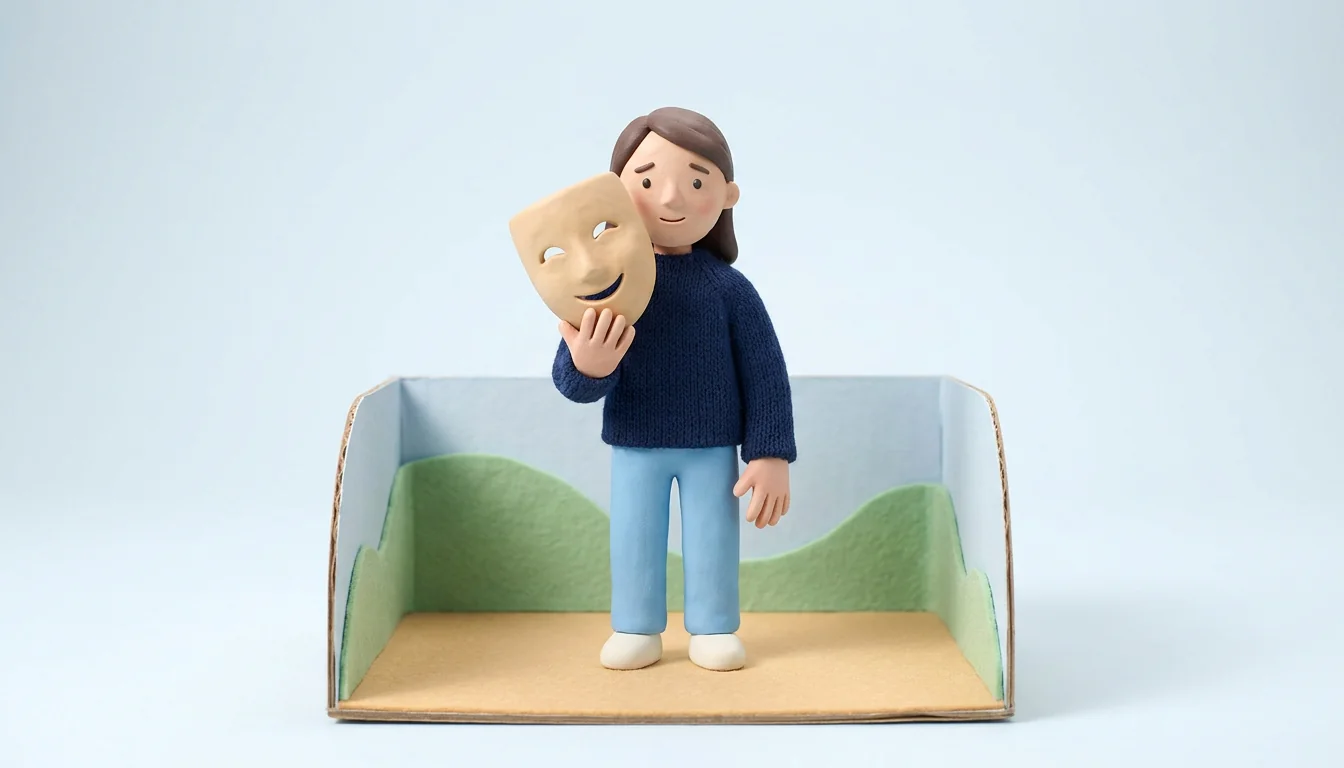
Most of us act a little differently at a job interview, on a first date or among new colleagues. We put on a personality mask: for a while we behave like someone of another type, often without noticing, to make a better impression or get something done.
In small doses that helps, but a mask worn for years starts to cause trouble. In socionics, masks matter for another reason too: they can hide your real type, from others and from yourself.
What a personality mask is
Socionics describes 16 personality types, each with its own strong and weak sides. Wearing a mask means using a side you would not normally use in that situation, and presenting it as if it came naturally.
Say someone's feel for emotions is one of their weaker sides. To seem sociable and fun, they act lively and emotional anyway. That can work for an evening, but kept up every day it wears them out.
The role we play for others
Every type has a side that socionics calls the role function. It is weak, but we are well aware of it, so we can use it successfully for a while before the energy runs out.
Here we are who we want others to think we are, acting as we believe society expects. We switch it on in new or unexpected situations, when we join a new group or meet someone for the first time, and before long we go back to our strong sides. Because this side is weak, we are never experts in it, although we may think we are. We only take on a role and try to impress.
The socionics researcher Victor Gulenko saw this as letting off steam. The more a person leans to one side of their type, the more the opposite builds up inside, until it breaks out in a sudden swing to the opposite style. The healthier way is to let it out bit by bit, and that, in Gulenko's account, is role behaviour. The Ideator and the Encourager, for example, like to show in company how decisive and forceful they can be.
Two kinds of masks
Some masks we put on deliberately for a setting: one for the office, another for visiting friends. These are harmless and often useful.
Others grow on us without our noticing. While dealing with something in life, we behave like another type in certain situations, and when that goes on for a long time, the mask stays on. Social pressure keeps it there, because people come to expect it of us. Masks like these cause the trouble.
When a mask helps
Worn for a short time, a mask helps you find a common language with people and reach your goals: in work relationships, negotiations, acting, diplomacy and politics. It can work in personal life too, if you know the types and the relationships between them well.
It is best done consciously, although some top politicians and businessmen change masks as easily as they change socks.
When a mask starts to cost you
Say you go to a job interview wearing a mask. The employer hires the person they met and expects those qualities. With time your real type comes through, the job gets harder and harder, and neither side gets what they expected.
The same can happen to couples. Two people meet and everything seems wonderful, but if two masks started the relationship, it reaches a crisis sooner or later.
Long-term masks also cost the person wearing them. Others get a false picture of you and understand you less, so relationships suffer. You may take the wrong path in life, choosing work and goals that fit the mask rather than you. And worn long enough, a mask can make you believe you are someone else.
The cheerful mask that hid another type
Tatiana Prokofieva of the Scientific Research Socionics Institute, who by then had more than 7,500 typings behind her, describes a young woman who at first came across as a Vitalizer: cheerful, lively, the life of the party.
Two things did not fit. Prokofieva had never met a Vitalizer quite like her. And her answers were short and formulaic, as if she were sitting an exam. Asked to say more, she gave the same kind of answers again.
Then, at one question, she burst into tears. She said she was tired of entertaining everyone, and that the mask had become hard to drop, partly because people now expected it of her. After that her answers became long and open, and her type turned out to be a different one. The cheerful mask had been getting in the way of her life.
What a mask can tell you
Tatiana and Victor Prokofiev see a long-term mask as a sign of an unresolved problem. In their experience, no more than about 15% of people in big cities are free of such problems, so that their type shows cleanly.
A mask always copies another type. In socionics, the relationship between your own type and the type you copy points to the problem behind the mask. A few examples:
- You act like the type that complements you best, your dual: you need rest, comfort, relaxation and support, and regular rest has to become a fixed part of your life.
- You act like a type you admire from a distance, your super-ego type: you are in survival mode, doing what has to be done without weighing it against your strength, with no balance between work and rest.
- You act like the type most different from you, your conflict type: you find it hard to make clear choices and stay torn for a long time, and the mask also points to an inner conflict.
- You act like a type with similar views but different methods, your kindred type: you never learned to stand up for yourself in good ways, so you cover your weak sides and present yourself, above all to yourself, as someone else.
Talking about that problem helps separate what you have had since childhood, your type, from what you built to cope with it, the mask.
How to find your long-term masks
Not every mask needs to go. The ones worth working on are those you have worn for a long time without noticing. Some ways to find them:
- Look back at your childhood. Between about six and ten, your character has formed but masks have not yet taken hold. Compare how you behaved then with how you behave now.
- Get into different situations. Travelling with someone or spending a long time together lets masks come off.
- Notice what drains you. Behaviour that leaves you tired every time, however well you do it, may be a role you are playing.
- Be honest with yourself about what comes naturally to you and what does not.
- Ask a specialist. Masks show up in test answers and can point you to a third type that is neither you nor your mask. An experienced specialist can see past them. How to find your personality type covers the other ways.
People who wear few masks come across as simple and reliable. They are honest with themselves and with others and do not try to play a role.
Your type and the people around you
You can start with the free personality test. Masks can show up in your answers, so also read the descriptions of any types that came close.
Once you know your type, you can see how you relate to the people around you. Send the free compatibility test to someone close, and when they have taken it, you will see which of the 16 relationship types the two of you make.
Questions people ask
What is a personality mask?
Acting like another personality type, often without noticing, to make a good impression or reach a goal. In socionics it means using a weaker side of your type and presenting it as a natural strength.
Is wearing a mask bad?
Not in itself. Masks worn for a short time help in negotiations, at work and in new company. They cause trouble when worn for a long time without noticing, because others get a false picture of you and you lose track of your own nature.
Can a mask change your personality type?
No. In socionics your type forms in early childhood and stays the same for life. A mask is behaviour on top of your type, however long you have worn it.
Can a mask affect a personality test?
Yes. A mask shows up in your answers and can point a test to the wrong type. Read the descriptions of the types that came close and compare them with how you behaved as a child and how you behave once you have settled into a group.