
Beauty is in the eye of the beholder: why we see people so differently
"Beauty is in the eye of the beholder" means that what looks beautiful depends on the person looking. The idea is very old, and the exact wording is usually traced to a novel from 1878.
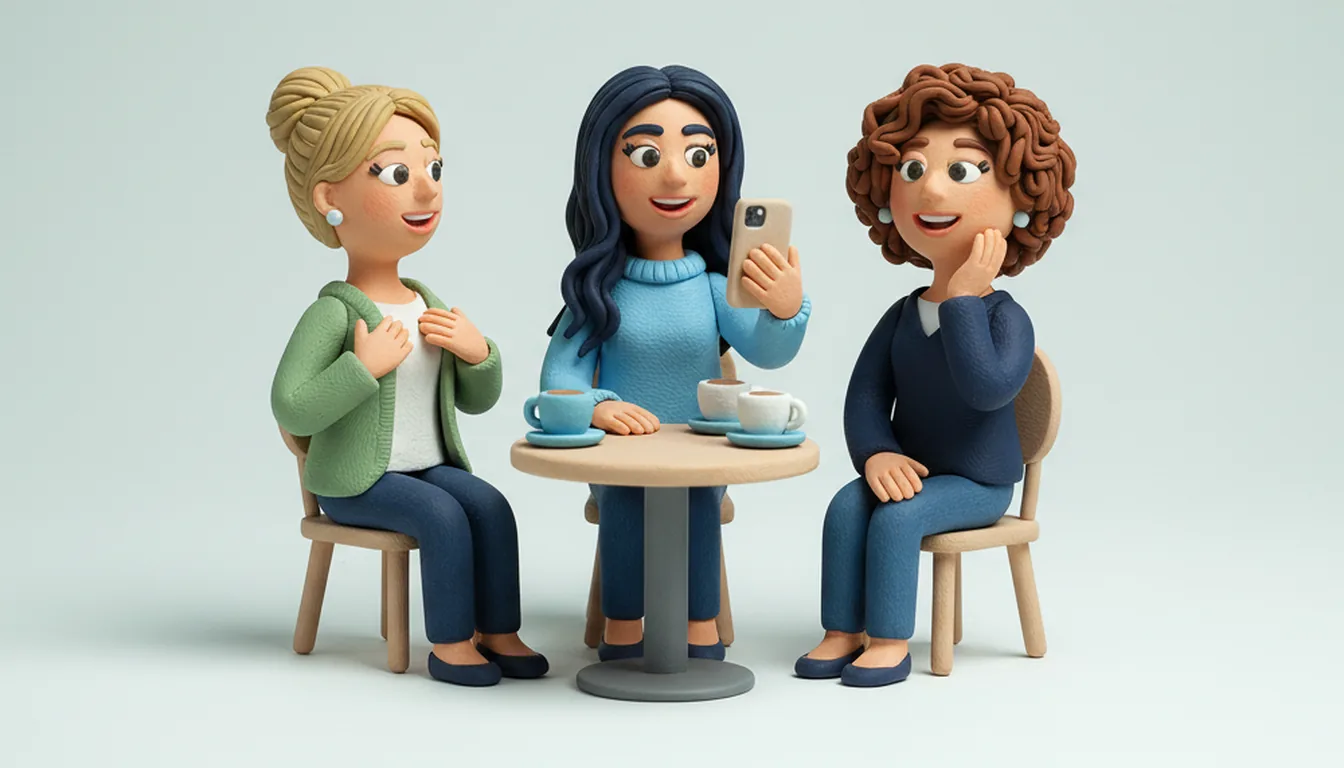
An example: Rosa had been seeing Felix for three months when she finally showed his photo to her two oldest friends. She held her phone up next to her face, turned it toward them across the cafe table and waited. Bea pressed both hands to her heart. "Oh, he has kind eyes." Lucy rested her cheek on her hand and grinned. "He looks like a man who files his taxes in January." Rosa laughed, because both of them were right and neither had seen what she saw. To her, Felix was the best-looking man she had ever dated, mostly because he could make her laugh until her coffee went cold. Two weeks later her grandmother met him and gave her own verdict: "He carried every chair in from the garden without being asked. Handsome boy."
Same man, four verdicts
Rosa, her friends and her grandmother all looked at one man and came back with four different pictures of him. None of them was wrong. Each woman noticed the thing she cares about most.
That's how the saying works in everyday life. When people call a person beautiful, they rarely mean only a face. They mean the whole impression: how someone talks and laughs, how they treat a waiter, what happens to a room when they walk in. Every viewer weighs those pieces in their own way, and a few things decide how.
- What you need. Someone who grew up in a loud house may find a calm person beautiful. Someone from a quiet house may light up around a person who talks fast and laughs loud.
- What you've been through. After one charming partner who never called back, steadiness can become the most attractive quality in the world.
- How well you know them. A face you love collects good memories, and each memory adds something.
- The day you're having. When you're worn out, the gentle friend looks like the best person on earth. When you're bored, the funny one does.
So two people can sit at the same table, look at the same person and honestly disagree. Neither of them has to win.
Why people grow lovelier the better you know them
Many of us have lived the opposite of love at first sight. A friend of a friend seemed ordinary at the first dinner. A year later, after a hundred small kindnesses and one long night of talking on a balcony, you can't picture them any other way, and you think they're lovely.
It also runs in reverse. Someone who looked striking at first can fade fast once you hear how they talk about people who aren't in the room.
Knowing someone changes the eye. That's why the people who love you tend to see you more kindly than your mirror does. Your partner remembers you laughing on the beach at sunset. You remember the tired person brushing their teeth at midnight. You're both looking at the same face, and you each bring different memories to it.
Warmth, calm, wit or drive: what each type notices
Personality type explains a good part of what catches a person's eye. People tend to be drawn to the qualities their own type values most, and those differ a lot from one type to the next. Here are eight of the 16 types, each with its own eye:
- Ideator notices wit. A person who can play with a strange question and run with a silly idea looks wonderful to them.
- Harmonizer notices calm. Someone easy to be around, who never rushes an evening and makes a home feel soft, seems beautiful to them in a way they struggle to put into words.
- Vitalizer notices warmth. They're drawn to people who join in, laugh freely and turn up when it counts.
- Analyst notices a clear and honest mind. A person who says exactly what they mean, with no games, stands out right away.
- Commander notices drive. Confidence, and a person who finishes what they start, catch their eye quickly.
- Dreamer notices gentleness. They're drawn to quiet kindness and to people who see the small things others walk past.
- Guardian notices character. For them, loyalty and a firm sense of right and wrong outshine any amount of charm.
- Organizer notices people who are handy in the best sense. Like Rosa's grandmother, they think the man carrying the chairs is a handsome one.
Lucy's joke about January taxes may even have been a compliment in her own language, since a dependable man looks good to someone who loves order. These are tendencies, and many people are drawn to more than one thing. Taste also shifts over the years, often toward the qualities that turned out to matter.
When your partner sees you differently than you see yourself
A common surprise in a couple is that your partner loves exactly the parts you try to hide. The loud laugh you learned to tone down in public. The way you talk to every dog on the street. The color-coded plan you make for a two-day trip. To them, those are some of the best things about you.
The same happens in the other direction. You may adore your partner's patience while they call it being slow, or love their bluntness while they keep apologizing for it.
When your partner says something kind that you don't believe, try believing them for a minute. They're describing what they see, and they see more of you, on more days, than your mirror ever will. The early spark and the long-term fit are two different things, and chemistry vs compatibility looks at how each one works in a couple.
When friends or family don't see what you see
Rosa got lucky, because her friends liked Felix right away, each for her own reason. Sometimes the people closest to you are lukewarm about the person you love, or about a new friend. It stings, though often it only means they value different things than you do.
- Ask what they see, out of curiosity. "What was your first impression?" gives you their view without starting a debate.
- Tell one story. A single moment that shows what you see does more than a list of good qualities.
- Give it a few meetings. Many people warm up after a relaxed afternoon or two, especially one on one.
- Listen if a trusted friend keeps naming the same thing. One specific worry from someone who knows you well deserves a calm second look.
Families have their own version of the saying. A parent can see a grown child as the most remarkable person alive, long after everyone else sees an ordinary adult with a mortgage. There's even a phrase for that kind of love, and apple of my eye explains where it comes from.
How to tell someone what you see in them
If everyone sees something different, the best gift is your own view, said plainly. "You're beautiful" is nice to hear. "I love how you light up when you talk about the garden" tells the person what your eye catches, and they can keep that sentence. If the person is your partner, how to compliment your partner has many lines to borrow.
A few habits make it easier. Pick a real moment, like the toast at your sister's wedding or the calm way they handled a flat tire. Talk about humor, kindness and nerve as often as you talk about looks. Say it to friends and family as well, since your best friend rarely hears what you admire in them. And use your own words, even plain ones, because they sound more like you than anything clever.
See what you and your partner see in each other
What you find attractive in someone often says as much about your type as about theirs. The free couples compatibility test shows you yours. Then hand the link from your result to your partner. Once their answers are in, your relationship type also shows where a kind word from one of you might land oddly with the other.
Questions people ask
What does "beauty is in the eye of the beholder" mean?
It means beauty is a matter of personal taste. What one person finds beautiful, another may find plain, and both views are fair.
Who said "beauty is in the eye of the beholder"?
No single person owns it. Shakespeare and Benjamin Franklin both wrote lines close to the idea, and the exact sentence is usually traced to the novel Molly Bawn, from 1878.
Is it "eye" or "eyes" of the beholder?
The usual form is "eye," singular. "Beauty is in the eyes of the beholder" and "beauty lies in the eye of the beholder" mean exactly the same thing.
What is a beholder?
A beholder is the person looking. The word is old and today shows up mostly in this saying.
Is beauty really in the eye of the beholder?
Partly. In a 2015 twin study, people agreed with others about half the time on which faces were attractive. The other half was personal taste, shaped mostly by each person's own experiences, not by genes.
Sources
- The Phrase Finder, "Beauty is in the eye of the beholder": Shakespeare's "Beauty is bought by judgement of the eye," Franklin's lines in Poor Richard's Almanack (1741), and the exact wording in Margaret Wolfe Hungerford's Molly Bawn (1878), the earliest citation the site found.
- ScienceDaily, "Is beauty really in the 'eye of the beholder'? Yes, and here's why" (2015), on Germine and colleagues in Current Biology: about 50 percent agreement on faces, with personal preferences shaped mostly by individual experience.
Written by Virko Kask, founder of Typeza
Written with the help of AI tools.
One question for two, every week
A question to ask your partner, friend or family, and how different types tend to answer it.
Free. Unsubscribe any time.