
Apple of my eye: meaning, origin, and who we call it
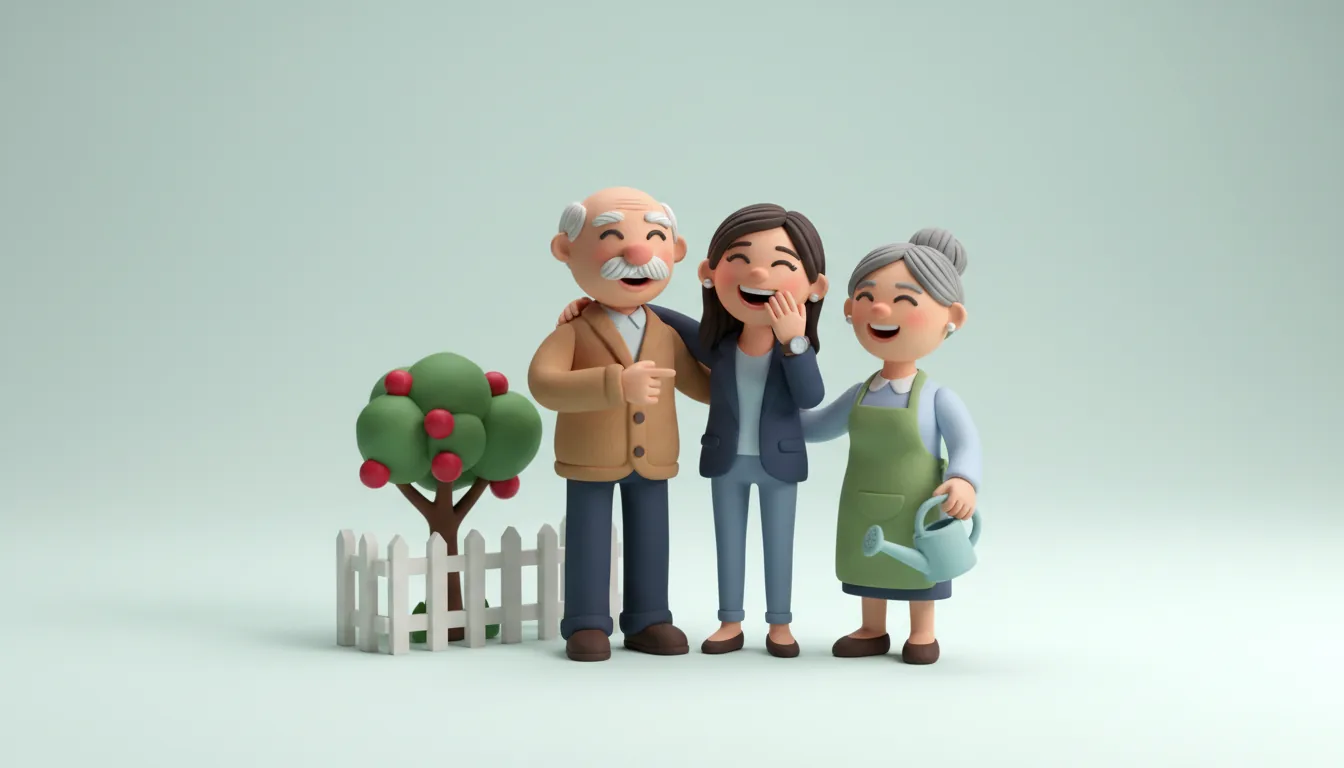
"Apple of my eye" means a person you love, treasure and feel proud of more than almost anyone else. People often say it about a son, a daughter or a grandchild, and sometimes about a partner. The phrase is more than a thousand years old, and the apple in it is not a fruit at all.
An example: Elena is 38, and her father still introduces her the same way. "This is Elena, the apple of my eye." He says it to the mailman, to waiters, and to Mrs. Alvarez from next door, who has heard it at least twenty times and laughs anyway. Elena covers her face. Her brother Tom, carrying the groceries in, rolls his eyes and says, "And what am I, Dad, the pear?" Joe started calling her the apple of his eye the week she was born. He has not stopped since.
What does "apple of my eye" mean?
When you call someone the apple of your eye, you are saying they are precious to you. You light up when they walk in, you would do almost anything for them, and you like telling other people about them. It's warm and a little old-fashioned, which is part of its charm.
The phrase works in any person: "she's the apple of my eye," "he was the apple of his mother's eye," "their youngest grandson is the apple of their eye." Unlike a lot of sayings about family, it carries no hidden dig. It is pure affection, though grown children like Elena may find it embarrassing in front of the neighbors.
Don't mix it up with a saying that sounds close. The one about the apple not falling far from the tree is about children being like their parents. Apple of my eye is about how much someone is loved.
Where does "apple of my eye" come from?
In old English, "apple" was also the word for the pupil, the dark round center of the eye. People believed the pupil was a small solid ball, and an apple was the closest round thing they knew. The pupil was also the part of the body you guard by instinct. If anything flies toward your face, your hand comes up to protect it.
So "the apple of the eye" first meant something you protect without thinking, as carefully as your own sight. The phrase appears in the works of King Alfred, at the end of the 800s. Bible translations of the early 1600s used it several times, as in "Keep me as the apple of the eye." Shakespeare put it in a play too, in a scene where a love potion is squeezed onto a sleeping man's eye.
Over the centuries the meaning moved from "something you guard" to "someone you cherish," and that is how people use it now.
There's a lovely detail behind the image. Look closely into someone's eye and you'll see a tiny copy of yourself in their pupil. The Hebrew phrase behind some of the Bible verses is often read as "the little man of the eye," though scholars aren't sure. Latin had the same picture, and our word "pupil" comes from a Latin word that also meant a little doll. To be the apple of someone's eye is to be the person they hold so close that you show up in their gaze.
Who do people call the apple of their eye?
Mostly the people they feel responsible for and proud of.
- A grown son or daughter. Like Joe, many parents keep saying it decades after the child has moved out, married or gone gray.
- A grandchild. Many grandparents use the phrase. It fits the mix of pride and soft spot they feel for a grandchild who is now an adult with a life of their own.
- A partner. Some couples use it, especially after many years together. It reads as tender rather than flirty.
- A pet. Plenty of dogs and cats are the apple of someone's eye, and their owners say so without shame.
How to use "apple of my eye" in a sentence
- "My grandmother kept every postcard I ever sent her. I was the apple of her eye."
- "Their only daughter is the apple of their eye, even now that she's forty."
- "Dad would never admit it, but the old truck was the apple of his eye."
One common slip shows up in cards and messages. It's "you're the apple of my eye," short for "you are." "Your the apple of my eye" is a spelling mistake, though everyone will still understand the love behind it.
When one child is the apple of a parent's eye
The phrase is sweet until there are siblings in the room. Tom was joking about the pear, and partly not. When a parent calls one child the apple of their eye, the others can hear "favorite," even as grown adults with families of their own.
Many parents feel deep love for each child and connect with each one differently. One child shares their sense of humor, another their love of the outdoors, and the easy bond with one can look from outside like a preference. Grown children who feel left out often do better saying so plainly to the parent, without blaming the sibling. Grown children who are the apple can help by sharing the spotlight. "Dad, tell Mrs. Alvarez what Tom built in his garage" goes a long way.
Some people say it, others show it
Joe says it out loud to anyone who will listen. Many parents and grandparents never use words like that at all, and they love just as hard. Typeza sees personality type as part of how a person shows that someone is special. Six of the 16 types show how differently people do it:
- Vitalizer: says it loudly and often, to the person and to everyone nearby. Joe is a lot like the Vitalizer.
- Mentor: tells you how proud they are, sees things in you that you haven't noticed yet, and may get teary doing it.
- Inspector: shows it through reliability. They remember your flight time, check your tires and keep every card you ever sent, filed in order.
- Guardian: shows it through loyalty. Criticize their grown child and you will find out quickly how much that child means to them.
- Organizer: shows it through help. They turn up with groceries, fix the leak and quietly pay the parking ticket.
- Craftsman: shows it with their hands, like building you a bookshelf, sharpening your knives or fixing the car you were about to give up on.
If you grew up with a parent who rarely said kind things, it helps to look at what they did. A father who drove three hours to fix your heater may have been saying "apple of my eye" in the only way that felt natural to him.
See how you and your parent fit
Parents and grown children often show love in different ways, and knowing your types can help you notice the other person's way. The family compatibility test is free and open to anyone 16 or older. Your mother or father can then follow the link on your result. With both of you done, a page on your relationship type explains what comes easily to a parent and child like you and where you tend to misread each other.
Questions people ask
Is "apple of my eye" in the Bible?
Yes. English Bible translations from the early 1600s use it several times, for example "Keep me as the apple of the eye." The phrase in English is even older than those translations.
Is "apple of my eye" romantic?
It can be, though it's often used for children and grandchildren. Between couples it sounds tender and settled more than flirty.
What is another way to say "apple of my eye"?
The light of my life, my pride and joy, my one and only, or the love of my life for a partner. Each one has its own flavor, and the apple remains the most family-sounding of them.
Sources
- Michael Quinion, World Wide Words, "Apple of one's eye". The pupil was called the apple and was thought to be solid, the first uses in King Alfred's works at the end of the ninth century, the King James Bible and A Midsummer Night's Dream.
- Wikipedia, "Apple of my eye". The Bible verses that use the phrase, and the "little man of the eye" reading of the Hebrew as a popular idea that isn't proven.
- Wiktionary, "pupil". Latin pūpilla, "pupil; little girl, doll," named for the small image seen in someone's eye.
Written by Virko Kask, founder of Typeza
Written with the help of AI tools.
One question for two, every week
A question to ask your partner, friend or family, and how different types tend to answer it.
Free. Unsubscribe any time.