
Old sayings your grandparents used, and what they mean
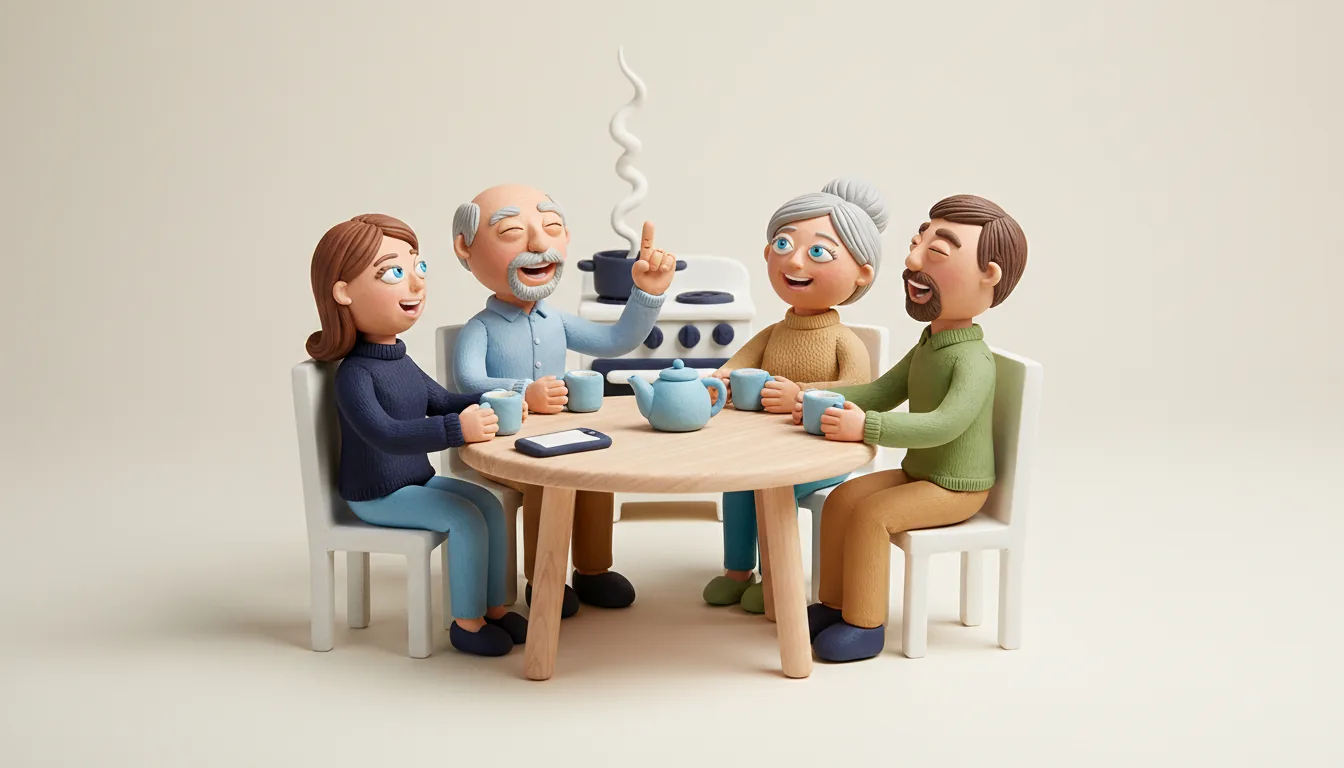
Old sayings are short lines that fit a bit of common sense into a few words, handed down at kitchen tables for generations. Many grandparents have a handful they repeat so often that the grandchildren can finish the sentence for them.
An example: Nora, 29, was waiting to hear whether her offer on an apartment had gone through, and she checked her phone every two minutes during Sunday tea. Her grandfather Walt pointed at the pot on the stove. "A watched pot never boils." Her grandmother Edie rolled her eyes and laughed, since she has heard that one about ten thousand times. Nora's brother Leo opened a note on his phone and started writing down every saying the two of them used. By Christmas he had 47, and the grandparents still argue about who said which one first.
Below are common ones, grouped by what they're about, each with a plain meaning.
Why old sayings stick around
They're easy to remember. Many rhyme or have a beat, like "haste makes waste." Many borrow a picture from a farm, a kitchen or the sea, so the idea sticks to something you can see. They also let people say a hard thing gently. "Don't count your chickens before they hatch" is kinder than "you're getting ahead of yourself." Phrases like on cloud nine last for the same reason, since anyone can picture a person floating on a cloud.
Old sayings about money
- A penny saved is a penny earned. Not spending money is as good as earning it.
- Money doesn't grow on trees. There's only so much, so spend it with care.
- Waste not, want not. Use what you have and you won't run short later.
- Save something for a rainy day. Keep some money aside for hard times.
- Penny wise, pound foolish. Careful with small amounts and careless with big ones.
- Don't put all your eggs in one basket. Spread your risk so one loss doesn't sink you.
- Neither a borrower nor a lender be. Lending money to friends or family can spoil the friendship. The line comes from Shakespeare's Hamlet.
Sayings about people
- Don't judge a book by its cover. People are often different from how they look at first.
- All that glitters is not gold. A shiny outside can hide very little underneath.
- Actions speak louder than words. What someone does matters more than what they promise.
- Still waters run deep. Quiet people often have a lot going on inside.
- You catch more flies with honey than with vinegar. Kindness gets better results than sharpness.
- Pretty is as pretty does. How you treat people counts for more than your looks.
- A leopard can't change its spots. A person's basic nature tends to stay the same.
- It takes all kinds to make a world. People are different, and that's fine.
- Two heads are better than one. A problem is easier to solve with someone else.
- Beggars can't be choosers. When help comes free, you take what's offered.
- When in Rome, do as the Romans do. In someone else's place, follow their customs.
- If the shoe fits, wear it. If a remark describes you, own it.
Families have sayings about themselves too. When a grandchild starts sounding exactly like a grandparent, someone at the table is sure to say the apple doesn't fall far.
Love and marriage sayings
- Every pot has a lid. There's someone out there for everyone.
- There are plenty of fish in the sea. After a breakup, someone else will come along.
- Marry in haste, repent at leisure. Rushing into marriage can lead to years of regret.
- Never go to bed angry. Settle a fight before you go to sleep.
- It takes two to tango. When a couple has a problem, both people play a part.
- Love is blind. People in love don't see each other's faults.
- The course of true love never did run smooth. Every real love story has rough patches. This one is from A Midsummer Night's Dream.
Home and weather sayings
- Home is where the heart is. Home is wherever the people you love are.
- There's no place like home. Nowhere feels as good as your own home.
- Red sky at night, sailor's delight. Red sky in the morning, sailors take warning. A red evening sky promises good weather, and a red morning sky means a storm may come.
- April showers bring May flowers. Hard times now often lead to good times later.
- It never rains but it pours. Trouble tends to arrive all at once.
- Every cloud has a silver lining. Something good can come out of a bad situation.
- Make hay while the sun shines. Use a good chance while it lasts.
- Too many cooks spoil the broth. When too many people run something, it goes wrong.
Sayings about patience
- Rome wasn't built in a day. Big things take time.
- A watched pot never boils. Waiting feels longer when you keep checking.
- Good things come to those who wait. Patience usually pays off.
- Don't count your chickens before they hatch. Don't plan on something before it has happened.
- Slow and steady wins the race. Steady effort beats rushing.
- Cross that bridge when you come to it. Deal with a problem when it arrives, and not before.
- There's no use crying over spilled milk. Don't get upset about what can't be undone.
- This too shall pass. Hard times don't last forever, and neither do good ones.
Funny old sayings with a Southern accent
Some of the best-loved old sayings come from the American South, and many are meant to make you laugh.
- Bless your heart. Sometimes real sympathy, sometimes a polite way to say someone did something silly.
- That dog won't hunt. That idea or excuse doesn't hold up.
- Madder than a wet hen. Very angry.
- Too big for your britches. Acting more important than you are.
- Nervous as a long-tailed cat in a room full of rocking chairs. Very jumpy.
What someone's favorite saying tells you about them
Listen for the saying a person reaches for most, and you may hear what they care about. It's only a hint, but a fun one. Here is a saying that suits each of nine of the 16 personality types:
- Ideator: "Nothing ventured, nothing gained." They'd rather try and fail than never try.
- Harmonizer: "Home is where the heart is." Comfort and the people around the table matter most.
- Vitalizer: "Every cloud has a silver lining." They find the bright spot and point it out to everyone.
- Inspector: "A place for everything, and everything in its place." Order makes life easier.
- Dreamer: "All in good time." Things unfold when they're ready, and pushing rarely helps.
- Strategist: "Don't count your chickens before they hatch." They think ahead and expect plans to wobble.
- Guardian: "Actions speak louder than words." Loyalty is something you show.
- Organizer: "Waste not, want not." Practical care keeps a household running.
- Craftsman: "If you want something done right, do it yourself." They trust their own hands.
Walt's watched pot sounds a lot like a Strategist. Edie's eye roll sounds like someone who just wanted another cup of tea.
Ask your grandparents for theirs
The best list of old sayings is the one in your own family. Next time you visit, ask your grandparents what their parents used to say, which saying they heard most as children, and which one they still believe. Ask where a saying came from, too. Sometimes there's a story behind it, like a strict aunt or a hard winter on the farm.
Write them down, or record the talk on your phone so you keep their voices along with the words. For more ways to get them talking about their lives, try these questions for parents and grandparents.
Find out how you fit with each grandparent
Grandparents who have shared a kitchen for fifty years can still disagree about who said what, and type helps explain how each of them sees the world. The family compatibility test is free, and grandparents can do it as well. Send each grandparent your result's link. As each one finishes, you learn your relationship type with that grandparent, which spells out what comes naturally between you and what tends to start an argument.
Questions people ask
What are some old sayings?
Common ones include "a penny saved is a penny earned," "don't judge a book by its cover," "every cloud has a silver lining," "Rome wasn't built in a day" and "a watched pot never boils."
Where did old sayings come from?
Many came from everyday life on farms, at sea and in the kitchen, and were passed down by word of mouth. Some started in plays and poems: two on this page come from Shakespeare.
What is the old saying about patience?
There are many. "Rome wasn't built in a day," "good things come to those who wait" and "a watched pot never boils" are the best known.
What are some funny Southern sayings?
"That dog won't hunt," "madder than a wet hen," "too big for your britches" and "nervous as a long-tailed cat in a room full of rocking chairs" are favorites.
What is the difference between a saying, a proverb and an idiom?
A saying is any well-known short phrase. A proverb is a short popular saying that states a common truth or gives advice, like "haste makes waste." An idiom is a phrase whose meaning isn't clear from its words, like "too big for your britches."
Sources
- Wiktionary, "neither a borrower nor a lender be": from Hamlet, Act 1, Scene 3.
- Wiktionary, "the course of true love never did run smooth": from A Midsummer Night's Dream, Act 1, Scene 1.
- Dictionary.com, "proverb": a short popular saying that expresses a common truth or useful thought.
Written by Virko Kask, founder of Typeza
Written with the help of AI tools.
One question for two, every week
A question to ask your partner, friend or family, and how different types tend to answer it.
Free. Unsubscribe any time.