
This too shall pass: meaning, origin and how to say it kindly
"This too shall pass" means that whatever you're in the middle of won't last. The bad week ends. So does the good one, which is the half people forget. The saying comes from a Persian fable, told by poets in the 1100s, about a king who asked his wise men for a ring that would cheer him up when he was sad. They gave him one engraved with those four words, and it also kept him humble when he was happy.
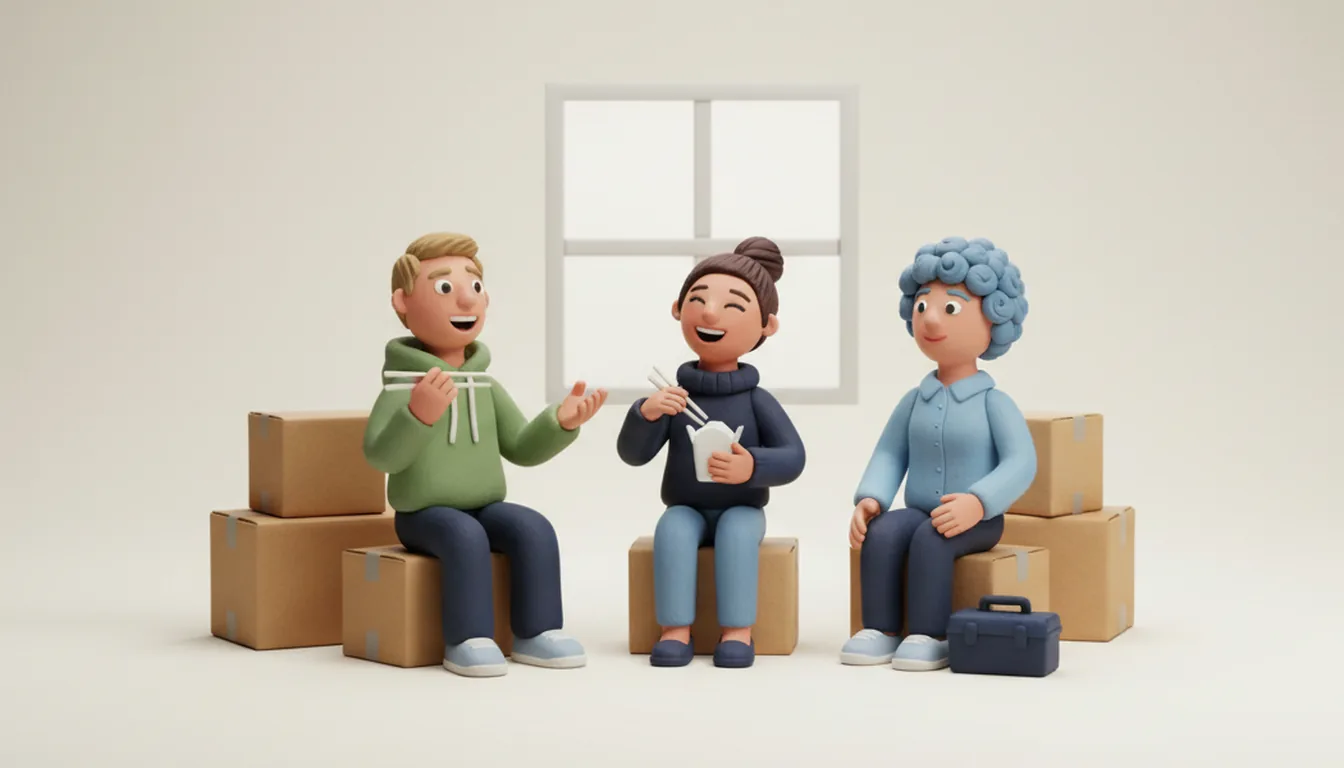
An example: Cleo heard the line on day three of her move. The sofa hadn't fit through the new front door and had gone back to storage. The internet wouldn't be connected for ten days. Her bed was a stack of boards leaning against the wall. Two friends came over with noodles, and the three of them sat on moving boxes in the empty living room, eating out of white cartons. Dario waved a hand at the bare window and said, with great feeling, "This too shall pass." Cleo laughed. "That's the least useful thing anyone has said to me all week," she told him. Talia, on the next box with her navy toolbox at her feet, said, "The bed goes up on Saturday. I'm bringing the drill." That was the sentence Cleo needed.
A month later, on the sofa that finally came in sideways with its legs off, Cleo admitted Dario had been right too. Both friends had been trying to help. Which words help depends on who hears them, and when.
What the four words promise
The line makes one small promise: change. It doesn't say things will get better, that you'll learn something or that it all happened for a reason. It only says that this, whatever this is, won't stay. That makes it a cousin of every cloud has a silver lining with a smaller claim. The silver lining saying goes looking for a good part. This one only points at the clock.
The small claim is what makes it easy to believe. You don't have to find anything good about a moving week to trust that it will end. You only have to remember that every other hard week did.
Weeks it was made for
The saying fits ordinary hard stretches best, the kind that are miserable but have an end in sight:
- a move, with boxes in every room and nothing where it should be;
- a fight with a friend that hasn't been talked through yet;
- a busy stretch when every evening is booked and the laundry piles up;
- a disappointment, like a trip that fell through or a concert that sold out before you got tickets;
- a week of grey skies and short nights when nothing is wrong and nothing is easy.
In weeks like these, you can say it to yourself in the hallway between two stacks of boxes. Its louder cousin, what doesn't kill you makes you stronger, asks for more, since it wants you to come out of the week tougher.
Why it calms one person and sounds empty to another
Some people hear the line and their shoulders drop. Others hear it and want to throw a shoe. Personality has a lot to do with it. Below, eight types and how the line usually sounds to each, in types page order.
- Ideator: agrees, then changes the subject. She's already thinking about what to do with the new place, so the line feels a little late.
- Harmonizer: finds words alone a bit thin when she's uncomfortable. A warm meal and a made bed calm her faster than any saying.
- Vitalizer: wants her feelings met first. Said too early, the line sounds like "calm down," and she may get louder.
- Analyst: finds it calming because it's simply true. He likes a statement that holds up when you check it.
- Commander: wants action, and the line sounds like sitting still. Hand him a job and he'll feel better than he would with any proverb.
- Dreamer: takes real comfort from it, especially when it's said softly late in the evening. She likes the old story behind it.
- Strategist: may say it to himself before anyone else does. Looking at things across months and years comes naturally to him.
- Organizer: wants a date. "When exactly?" is a fair answer from her, and "the internet is back on the 14th" calms her more.
Neither group is wrong. They need different things in the same hard week.
Saying it to a friend or sister so it helps
The words are kind. The timing decides whether they feel kind. A few things help:
- Listen first. Let her tell the whole sorry story of the sofa before you say anything wise.
- Add something you'll do. "This too shall pass, and I'm coming Saturday with the drill" is worth twice the line alone.
- Give it an end if you can. "Ten more days of no internet" is the same saying with a date on it.
- Say it about yourself. "I kept telling myself this too shall pass when I moved last year" sounds like company.
- Skip it while she's still angry. Wait a day.
With a sister, shared history helps. Remind her of a hard week she already got through, like the summer the car broke down twice. Over text, keep it short and add something real: "This too shall pass. Noodles at mine on Thursday?" For more on what to say and what to bring, see how to cheer someone up.
The good weeks pass too
In the fable, the ring did two jobs. It cheered the king up in bad times and made him humble in good ones. Many people skip that second half. The line is also a quiet nudge to enjoy a good week while you're in it, like a long summer evening on a friend's balcony or the first night in a finished home. Those pass too.
That's why plenty of people keep it among their life mottos. It steadies them on both kinds of day.
Plainer ways to say the same thing
If the old words feel too grand, these carry the same meaning:
- "It won't feel like this forever."
- "A month from now, this will be a funny story."
- "One box at a time."
- "Rough week. It ends on Sunday."
- "Nothing stays the same, including this mess."
Noodles on the boxes
The week the internet came back, Cleo had both friends over for noodles again, this time on the sofa. She asked what she'd wondered since moving day: why had Dario's big line made her laugh, while Talia's drill made her want to hug her? Talia guessed it came down to personality. Dario has promised not to bring a proverb to the next move.
Find out which kind of comfort helps you
A big line can make one person laugh while a quiet hand with the drill makes another feel cared for, and type is behind much of that. The free personality test shows your type and its strong and soft sides. From your result, send the friends who helped you through a hard week the link to the same test. Every helper who answers adds a relationship type with you, which shows why their way of helping fits you, or doesn't.
Questions people ask
What does this too shall pass mean?
It means the situation you're in won't last. Hard times end, and good times end too, so it's a reminder to be patient in one and grateful in the other.
Who said this too shall pass?
Nobody knows who said it first. Persian poets told the fable of the king and the ring in the 1100s. Abraham Lincoln retold it in an 1859 speech at the Wisconsin State Fair.
Is it "this too shall pass" or "this to shall pass"?
"Too," with two o's. It means "also": this, like everything before it, will pass.
Is this too shall pass in the Bible?
No. The words don't appear in the Bible, though people sometimes take them for a Bible verse. Jewish folk tales tell the ring story about King Solomon, which may be why.
Is it a kind thing to say to someone?
It can be. Say it after you've listened, and pair it with something you'll do. Said too soon, it can sound like you want the conversation to end.
Sources
- Wikipedia, "This too shall pass". The Persian fable in 12th-century poems, the Solomon versions in Jewish folklore, the Bible mix-up and Lincoln's 1859 speech.
Written by Virko Kask, founder of Typeza
Written with the help of AI tools.
One question for two, every week
A question to ask your partner, friend or family, and how different types tend to answer it.
Free. Unsubscribe any time.