
Humility: examples of humility and signs of a humble person
Humility is seeing yourself at your real size, no bigger and no smaller, and leaving room for other people.
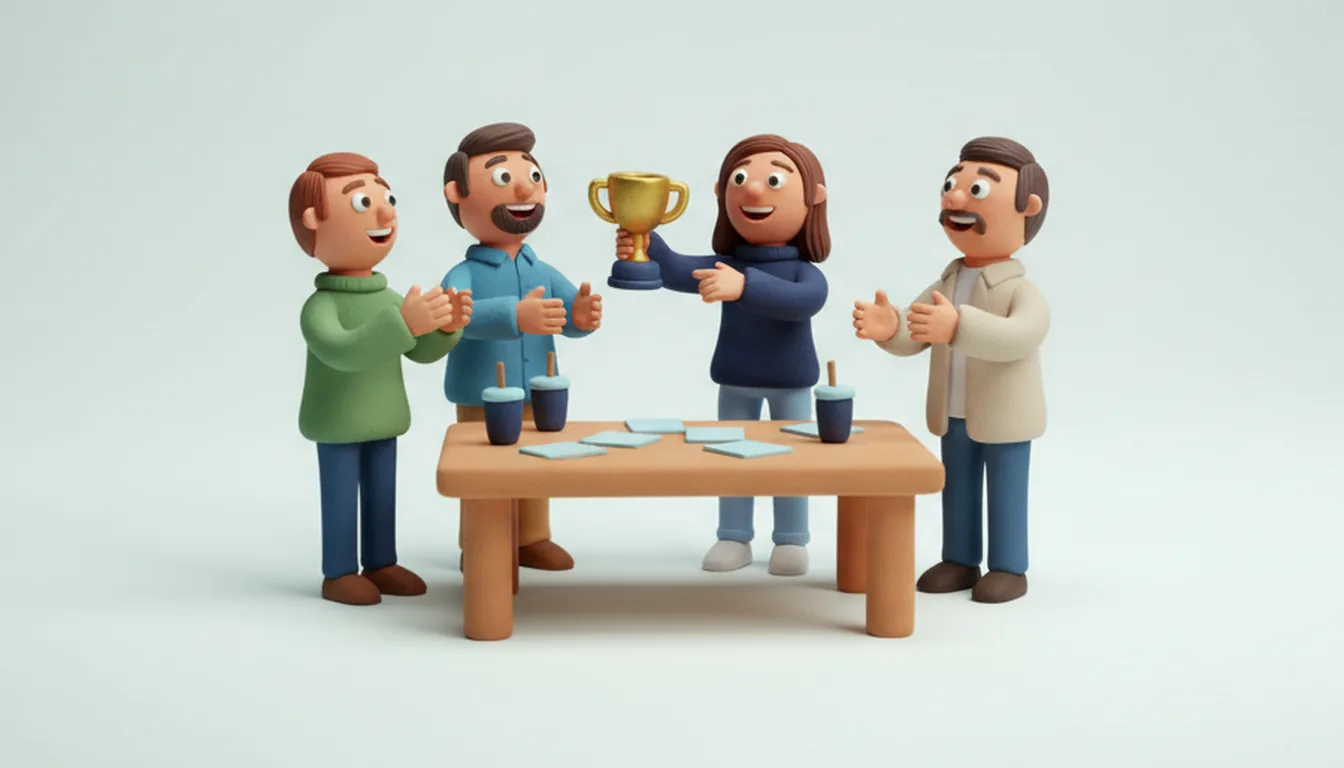
An example: Nadia's team had come last at the neighborhood pub quiz for three years in a row. This time they won. Nadia got the final question, the one that broke the tie, and the whole table screamed. When the host walked over with the little gold trophy, she took it and held it out to Raj, who had carried them through the geography round all night. Later Raj told her, "You got the winner." Nadia shrugged. "I got one. You got eleven."
Nobody at the table would have used the word, but that was humility. Nadia knew what she had done and did not need it to be the story of the night.
What does it mean to be humble?
Being humble means you do not think you are more important than other people. You know your strengths and your limits, and you are fine with both. You can be good at something and still listen to someone who knows more. You can be wrong and say so.
The word comes from the Latin for low, close to the ground. Many faiths and cultures praise humility, and many people know it when they see it.
You rarely notice humility in one big act. You notice it over time, in how a person shares credit, takes advice and treats the waiter.
Examples of humility in everyday life
These are small moments, the kind that make up most of real life.
- A friend tells a story you have heard before, and you let her finish without saying so.
- You burn the dinner and say, "That one's on me," instead of blaming the oven.
- Your team wins and you thank the person who did the boring part.
- A younger cousin shows you a faster way to do something, and you use it.
- You change your mind in an argument because the other person made a good point.
- You ask a question in a group, even though it shows you do not know the answer.
- Someone praises your garden and you say thank you, without a long speech about how much work it took.
- You apologize to your partner first, even when you were only half wrong. Our guide on how to apologize has more on doing that well.
- You help a neighbor move and do not mention it again.
- You laugh when someone teases you about your bad sense of direction.
10 signs of a humble person
You can often spot a humble person within a few weeks of knowing them.
- They listen more than they talk, and they ask follow up questions.
- They admit mistakes quickly and without a fuss.
- They give credit to others in public.
- They are curious about people who are different from them.
- They treat everyone the same, from the boss's boss to the person cleaning the floor.
- They can take feedback without getting defensive.
- They do not need to win every argument.
- They are happy for friends who do well.
- They do not name drop or keep score.
- They know what they are good at, and say so plainly when it matters.
The last sign surprises some people. Humble people do not hide their gifts. They just do not lean on them to feel bigger.
Humility and confidence can live together
Many people think humble means shy or unsure. It does not. Humble confidence is a real thing. A confident person trusts what they can do. A humble person stays open to what they cannot. When one person has both, they can lead a project and still ask for help, or give a toast and then sit back and let others shine.
Arrogance is what happens when confidence loses its humility. The arrogant person needs to be right and needs others to see it. Insecurity is the other side: a person so unsure of themselves that they cannot say what they are good at. Humility sits between the two.
If you want to read more about the strong, steady kind of self belief, our article on a strong personality looks at how it differs from being loud.
What humility is not
A few habits look like humility from far away and are something else up close.
- Putting yourself down. "Oh, I'm terrible at this" every time someone praises you is not humble. It can make others work hard to cheer you up.
- False modesty. Saying "It was nothing" while hoping everyone insists it was something.
- Never speaking up. A humble person still has opinions and says them. They just hold them a little more loosely.
- Letting people walk over you. Humility is about your view of yourself. It does not mean accepting bad treatment.
How humility shows in different personality types
Any type can be humble, and each one shows it in its own manner. Each also has a spot where pride tends to sneak in.
- Ideator: they say "I don't know" easily and enjoy being proven wrong, because it means there is something new to learn. Pride shows up when they fall in love with their own clever idea.
- Harmonizer: their care often happens behind the scenes, and they rarely ask for thanks. Their humility can tip into keeping quiet when they should speak up.
- Analyst: for them, humility means changing a conclusion when new facts come in. That is hard work for an Analyst, and it earns deep respect when they do it.
- Commander: they show humility through action, by fixing what they broke. Saying "I was wrong" out loud is the harder part.
- Dreamer: they seldom take center stage, so humility comes easily. Their risk is selling themselves short.
- Organizer: they get the work done and do not talk about it. Well done matters more to them than well said.
- Counselor: they make space for others to talk and grow. Their humility is in how much attention they give away.
- Craftsman: they let the quality of their work speak for them. They rarely brag, and they also rarely ask for advice.
None of these is a rule. A humble person of any type has simply learned to see their strengths and their gaps clearly. If you would like a list of qualities to compare yourself with, our guide to positive personality traits is a good next stop.
How to be more humble
Humility can be practiced like any other habit. Start small.
- Ask one more question. In your next conversation, ask a follow up before you share your own story.
- Say "you were right." When it is true, say it out loud. It gets easier each time.
- Share credit on purpose. Name the person who helped, even if they did a small part.
- Learn something you are bad at. A beginner's class in anything is a fast lesson in humility.
- Notice when you need to win. If an argument matters more to you than the person, let it go.
- Keep a short list of what you owe others. Teachers, friends and family who helped you get where you are.
To stay humble over the years, keep people around you who will tell you the truth. Humility also links closely to what you care about most, which we cover in personal values.
An honest look at your own strengths
Part of humility is knowing what you are good at without making a show of it. The free personality test can help with that. You choose between pairs of statements, and when you finish you see your type and your scores on four base traits. The profile of your type, free to read, lists where it tends to shine and where it tends to struggle. Read both halves, and see if you can say yes to each.
You can also send the same test to a friend or partner from your result, once you have a free account. When they are done, Typeza names the relationship type the two of you form and what it tends to give each side.
Questions people ask
What is an example of humility?
Giving credit to a teammate in public, admitting a mistake quickly, or listening to someone who knows more than you are all simple examples of humility.
What is the opposite of humble?
Arrogant, proud or boastful. An arrogant person thinks they are more important than others and needs others to agree.
Is humble the same as modest?
They're close, but they aren't the same. Modest is about how you show yourself: you play down your wins and don't talk yourself up. Humble is about how you see yourself next to other people, as no more important than anyone else. You can act modest and still feel above the room, which is where false modesty comes from, and a humble person can say "I did that well" without any fuss.
Why is humility important?
It makes people easier to trust and easier to be close to. Humble people can also learn faster, because they admit what they do not know.
Can you be humble and confident at the same time?
Yes. Without confidence, humility slides into self-doubt. Without humility, confidence slides into arrogance.
Sources
- Wiktionary, "humility": the word comes through French from Latin humilitas, from humilis, "low, lowly".
Written by Virko Kask, founder of Typeza
Written with the help of AI tools.
One question for two, every week
A question to ask your partner, friend or family, and how different types tend to answer it.
Free. Unsubscribe any time.