
What are personal values? A core values list and how to pick yours
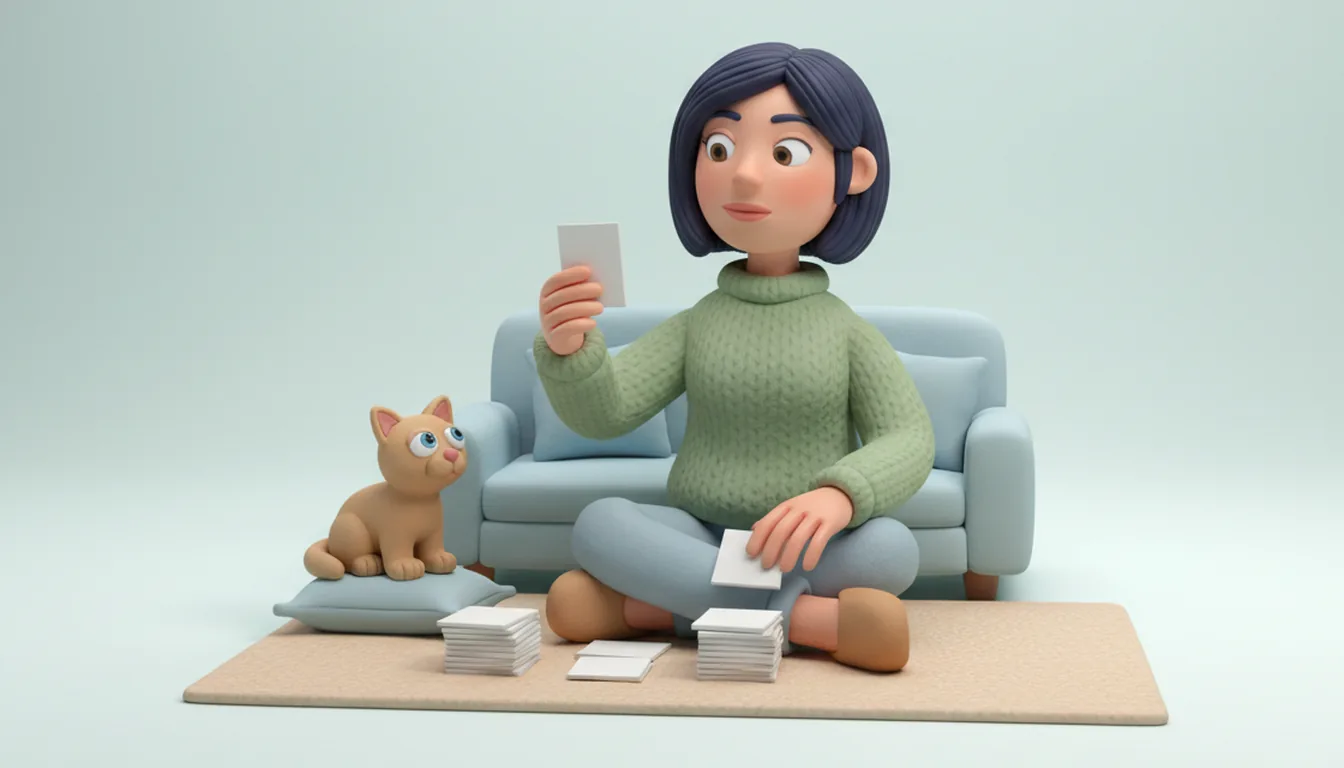
Personal values are the things you care about most in life, such as being close to your family or always telling the truth. They shape what you choose, what makes you proud and what makes you angry, often without you noticing.
An example: Ines is choosing between two flats. One is cheap, a bit dark and five minutes from her sister. The other is bright, expensive and an hour from everyone she knows. Her lists of pros and cons come out even. Then her sister asks a different question: "What matters most to you right now?" Ines answers before she has time to think. "Being near you." The choice takes a second after that, because the answer came from one of her values.
What are personal values?
Personal values are your ideas about what matters, and they guide how you live. Each one is usually a single word: kindness, loyalty, adventure, fairness, calm. Together they make up your value system, the order you put things in when they compete for your time and attention.
Most days you don't think about your values. You notice them when something goes against them. A person who values honesty feels sick when a friend asks them to lie. A person who values freedom feels trapped by a calendar full of plans. Those strong reactions are your values at work.
Values are different from goals. A goal is something you can finish, like running a marathon. A value is a direction you keep walking in, like looking after your health. These life goals examples show how values turn into concrete plans.
Here are a few examples of personal values and what they can look like on an ordinary day:
- Family: you call your mom every Sunday, even in a busy week.
- Honesty: you tell a friend the truth about something hard, gently.
- Adventure: you pick the restaurant you have never tried.
- Security: you put money aside before you buy something fun.
- Kindness: you help a neighbor carry their shopping up the stairs.
A core values list
Here are 64 common core values, grouped by what they are about. Read through quickly and notice which words feel like yours. You will use this list in the steps further down.
Values about people and belonging
- Family
- Friendship
- Love
- Loyalty
- Belonging
- Kindness
- Generosity
- Community
Values about honesty and fairness
- Honesty
- Fairness
- Integrity
- Responsibility
- Respect
- Keeping your word
- Justice
- Humility
Values about growth and learning
- Learning
- Curiosity
- Wisdom
- Growth
- Skill
- Courage
- Open-mindedness
- Discipline
Values about freedom
- Freedom
- Independence
- Adventure
- Spontaneity
- Privacy
- Originality
- Self-expression
- Flexibility
Values about safety and order
- Security
- Stability
- Order
- Health
- Tradition
- Reliability
- Caution
- Simplicity
Values about achievement
- Ambition
- Success
- Competence
- Progress
- Efficiency
- Influence
- Recognition
- Determination
Values about joy and beauty
- Fun
- Humor
- Pleasure
- Beauty
- Comfort
- Playfulness
- Creativity
- Harmony
Values about meaning
- Faith
- Purpose
- Service
- Gratitude
- Inner peace
- Compassion
- Nature
- Legacy
Values, beliefs and principles: what is the difference?
People often use these three words as if they meant the same thing, but each one means something different.
- A belief is something you think is true. "People are mostly good." "Things work out in the end." A belief can change when you learn something new.
- A value is something you think is important. "Kindness matters." It is about what you want more of in your life, and it doesn't need proof.
- A principle is a rule you set for yourself, built on a value. If you value honesty, your principle might be "I don't lie to make myself look better."
Beliefs often feed values. If you believe people are mostly good, you will likely come to value trust and generosity. When a belief and a value pull in different directions, you feel it as a kind of unease, even before you can say what is wrong. Morals and ethics are two more words people mix up with values, and morals vs values sorts them out with everyday examples.
How to pick your top five values
A long list is a start. These five steps turn it into the handful of values that are really yours.
- Mark every value that feels true. Go through the list above fast. Fifteen or twenty marks is fine. Add your own words if something is missing.
- Join the ones that mean the same to you. Family, loyalty and belonging may all be one thing for you. Group them and keep the word that fits best.
- Check them against your memories. Think of a moment you felt proud and a moment you felt angry or let down. Which value was met in the first, and which was broken in the second? Values that show up in real memories stay. Values you marked because they sound nice can go.
- Compare them in pairs. Take two values and ask, "If I could keep only one this year, which would it be?" Keep going until five are left at the top.
- Write what each one looks like in your week. "Health" becomes "I walk every morning." "Friendship" becomes "I see one friend each weekend." A value you can't picture in an ordinary week is still only a word.
Your top five can shift as life changes. A new parent may find security moving up the list, and someone who just left a long relationship may find freedom there. It helps to repeat these steps every year or two. If you want to look past values at what gives you energy and what you are good at, how to find yourself covers that.
Why personal values matter
Knowing your values makes choices easier. When two options look equal on paper, the one that fits your values is less likely to leave you with regrets. Values also help you say no without guilt, because you can see what a yes would cost you. Some people put their top value into a short life motto and keep it where they'll see it.
They matter between people too. Friends and partners don't need the same values, but they need to respect each other's. Some arguments about money, time or chores come from two different values. One person spends to enjoy life now, and the other saves because security comes first. Once you both name the value behind your side, the argument often gets smaller.
Values in a relationship: what to share and what can differ
Couples ask about this a lot, and the honest answer is that you don't need matching lists. A few values do need to be shared, though. Honesty, respect, kindness, loyalty and commitment hold a relationship up. If one person treats honesty as optional, no amount of shared hobbies makes up for it.
Then there are the big life values, the ones that turn into decisions. Whether to have children, where to live, how to handle money, and how much room faith or family get are hard to split down the middle. You can't half move abroad. These are worth talking about early, before plans pile up.
Many other values can differ and even help. One partner who loves adventure and one who loves comfort can plan trips with a soft landing at the end. One who values order and one who values spontaneity can each cover what the other misses.
Here is a simple exercise for couples. Each of you picks a top five from the list above, on your own. Then compare. Look for the ones you share, the ones that differ, and any pair that pulls in opposite directions.
Which values matter most to each personality type
Your values come from many places: your family, your culture and what has happened in your life. Your personality type plays a part too, because it shapes what you notice and what feels natural to protect. In Typeza, the 16 types tend to lean toward these values:
- Ideator: curiosity and freedom. They want room to question anything and chase new ideas.
- Harmonizer: comfort and harmony. A peaceful, pleasant home matters a lot to them.
- Vitalizer: togetherness and generosity. Life feels better to them when it is shared.
- Analyst: truth and fairness. They hold to their principles even under pressure.
- Mentor: meaning and passion. They want their life to move people.
- Inspector: order and duty. A promise is a promise.
- Commander: strength and courage. They respect people who act.
- Dreamer: kindness and calm. They need a gentle mood and time to move at their own pace.
- Diplomat: freedom and adventure. They want to live fully right now.
- Strategist: wisdom and honesty. They would rather face a hard truth than a nice story.
- Entrepreneur: progress and efficiency. Wasted time bothers them.
- Guardian: loyalty and integrity. Trust, once earned, is kept.
- Organizer: usefulness and reliability. They show care by getting practical things done.
- Counselor: compassion and understanding. They want people to feel safe enough to grow.
- Encourager: acceptance and possibility. They see what a person could become.
- Craftsman: quality and skill. They would rather do one thing well than many things badly.
These are leanings. Any type can hold any value, and two people of the same type can rank theirs very differently. Your type mostly shows which values come easily to you and which ones you may need to choose on purpose.
See which values come with your type
Your top five come from your own life, and your personality type adds a second view. The free personality test gives you two statements at a time with no neutral middle, so your real leanings show. Your result gives your type and shows how you lean on all four base traits. From there you can open your type's profile, free to read, with what that type gives and what it needs from the people close to it. Check it against your list. Where the two agree, you have probably found a real value. You see your type without making an account.
If you and someone close to you keep clashing over things that seem small, the cause may be a difference in what you each care about. Your result has a link to the same test that you can send them. Once they are done, Typeza tells you your relationship type and where the two of you are likely to clash.
Questions people ask
What are the 5 core values?
There is no fixed set of five that everyone shares. Your core values are the five or so that matter most to you, and you can find them with the steps above.
Where do values come from?
From your family, your culture, your experiences and your personality. You take in some values as a child and choose others later.
Can your values change?
Yes. Core values tend to stay steady, but their order can shift after big changes like a move, a new baby or a breakup.
Written by Virko Kask, founder of Typeza
Written with the help of AI tools.
One question for two, every week
A question to ask your partner, friend or family, and how different types tend to answer it.
Free. Unsubscribe any time.