
Family oriented: what it means to be a family-oriented person
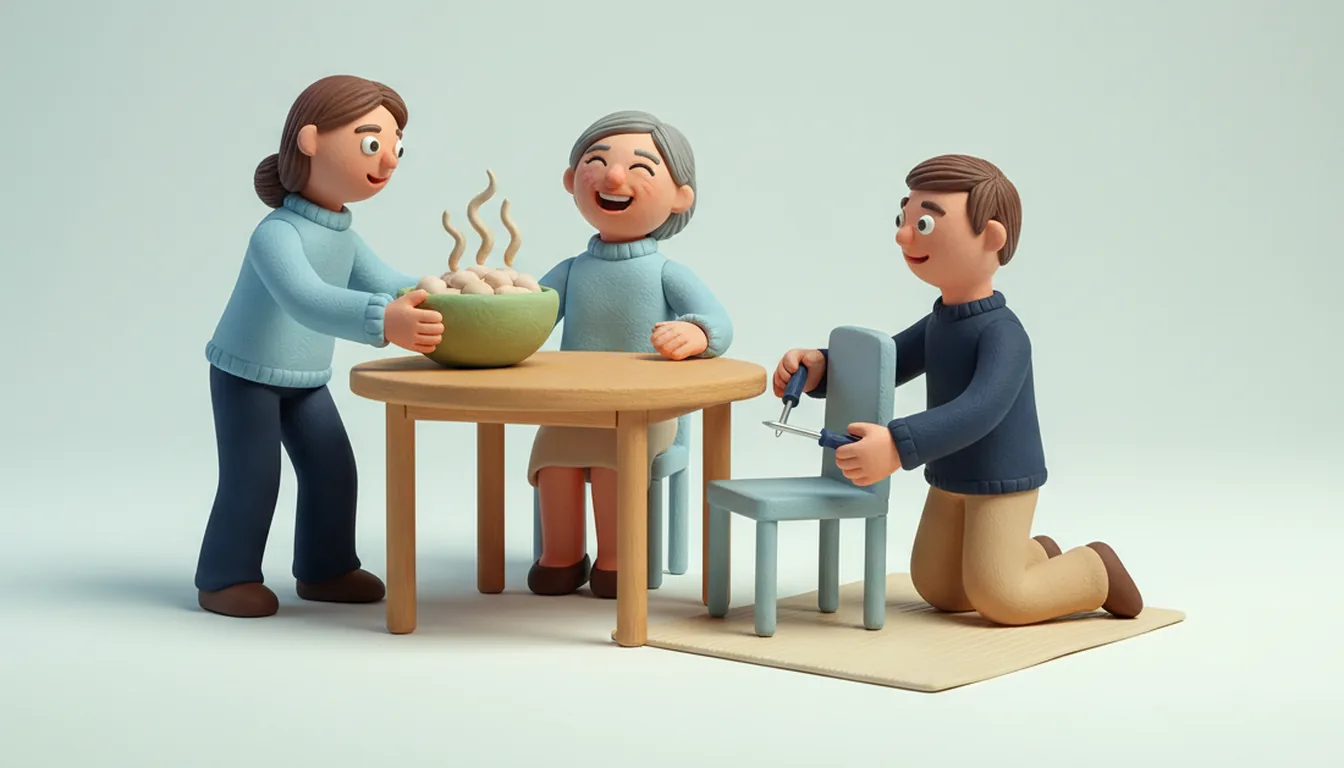
Being family oriented means your family sits near the top of your priorities. You make time for them, you stay in touch, and family plans often shape your own plans. The phrase describes where your attention goes. It says little about the size of your family or how often everyone sits at one table.
An example: every month, Marisol's mother sends her three grown children the same message: "Sunday lunch, who is coming?" Marisol replies within a minute, then reminds the sibling chat and decides who brings dessert. Her brother Teodor replies a day later, but he phones their mother every Sunday evening without fail and knows the name of every neighbor on her street. Their younger sister Esme lives four hours away and rarely makes the lunches. She is also the one who drove up on a Tuesday when the boiler broke and spent her day off on the phone with plumbers. Ask any of the three whether they are family oriented, and each will say yes. All three are right, in three very different ways.
Family oriented meaning, in plain words
A family-oriented person is someone who values family life and acts on it. The phrase is built like "goal oriented" or "detail oriented." Your energy points toward something, and here that something is the people you call family.
Two points on how people use the phrase:
- Spelling. Before a noun it takes a hyphen, as in "a family-oriented person." After a verb, both forms are common: "she is family oriented" and "she is family-oriented."
- Who counts as family. Parents, siblings, a partner, grandparents, cousins, and often old friends who have become family over the years.
Signs of a family-oriented person
You can usually spot a family person in an ordinary week. Holidays prove less.
- They know what is going on in their relatives' lives, from the doctor's appointment to the cousin's exam.
- They keep family traditions alive, or start new ones when the old ones fade. Some even have a family motto that everyone knows by heart.
- They plan their own year around family dates, such as birthdays, anniversaries, Grandparents Day and the summer visit.
- They stay in touch without needing a reason, with a call, a message or a photo of something that made them think of you.
- They help even when it is inconvenient, with a lift to the airport, a weekend of painting or an evening with a sick parent.
- They make room for newcomers, like a sibling's new partner or a friend with nowhere to go at Christmas.
- They try to mend things after an argument instead of letting the silence settle in.
Nobody does all seven. Most family-oriented people do a few of them so steadily that everyone else notices.
Is being family oriented a good thing?
Mostly, yes. Family-oriented people are often the glue of their families. They remember, they organize and they turn up, and because of them cousins still know each other and grandparents still get visits.
The same quality has a cost when it runs without limits. Some signs it has tipped too far:
- Saying no to a relative feels impossible, even when you are exhausted.
- Your partner or friends always come second, and they have started to say so.
- You carry the family's plans alone and resent it in silence.
- You feel guilty for missing a gathering, even for a good reason.
Family comes first most easily when it isn't the only thing in your life. Friends, rest and plans of your own make it easier to stay warm toward family.
Three siblings, three ways to put family first
Their mother once joked that she raised a planner, a talker and a fixer. Each way covers something the other two miss.
- The organizer keeps the family calendar. Without Marisol, the lunches would happen twice a year instead of every month.
- The keeper of contact holds the thread between visits. Teodor's Sunday calls are how their mother hears about everyone's week.
- The practical helper turns up when something breaks. Esme's day with the plumbers meant more to their mother than a dozen lunches.
Trouble starts when one sibling measures the others by their own yardstick. For years Marisol felt that Esme didn't care, because Esme skipped the lunches. Esme felt that Marisol cared more about the seating than about their mother. Both cared a great deal, and each showed it in a way the other didn't count. Families settle into roles like these over many years, and family dynamics looks at how those roles form.
How family love looks in each personality type
Personality type explains a good part of why family love comes out in such different shapes. Here are eight Typeza types, listed as the types page lists them.
- Harmonizer makes home the place everyone wants to be, with the right food, a warm room and nobody left out.
- Vitalizer is the heart of every gathering, who throws the birthday party and gets the shy cousin onto the dance floor.
- Inspector keeps the traditions exactly as they were, the same dishes and the same order of the day, year after year.
- Dreamer senses that a relative is struggling before anyone says it, and calls at just the right moment.
- Guardian is fiercely loyal, quick to defend the family and slow to forget who was there for whom.
- Organizer shows love through work, like clearing the gutters, doing an elderly parent's paperwork or cooking for twelve.
- Counselor is the quiet listener every relative goes to with the problem they can't tell anyone else.
- Craftsman arrives with tools and few words, builds the ramp for grandma and leaves before the thank-yous.
Types that seem less home-centered can be just as family oriented. An Ideator may show it by helping a sister think through a big decision late into the night, and a Strategist by quietly planning for the parents' old age years before anyone else brings it up.
When two family people disagree about family time
Being family oriented gets complicated when two people do it differently. A couple who are both close to their families can still clash over how many Sundays go to whose parents, whether every holiday is spent with relatives, or how often a mother-in-law should call. The same happens between an adult child and a parent. A mother who expects a weekly visit and a son who shows his love through one long call a month can both end up feeling unloved.
What helps:
- Describe your picture. Say out loud how often you want to see family, for how long, and which dates matter most.
- Split the calendar on purpose. A simple plan for holidays and birthdays prevents the same argument every December.
- Count the other person's way. A call can count as much as a visit, and a repaired fence can count as much as a call.
Unspoken pictures like these are part of the expectations in a relationship, and they are easier to talk through in March than on the morning of a holiday. Your personal values play a part as well. For one person family is the top value, and for another it shares first place with freedom or adventure.
Other words for family oriented
- Family-minded people think of the family first when they make plans.
- Devoted describes steady love and effort over many years.
- Home-loving people are happiest at home with the people closest to them.
- Family-first means family comes ahead of most other things.
- Close-knit is used for a whole family whose members stay close.
"Family man" and "family woman" are common too, though both can sound a little old-fashioned.
See who in your family loves the way you do
Marisol stopped counting Esme's missed lunches once she saw that the boiler morning was Esme's version of Sunday lunch. Personality types can show where your own family way comes from, and why a brother or a parent shows love in a shape you barely notice. Typeza's family compatibility test starts with you, through paired statements where you pick the one that fits. As soon as you finish, your type is on the screen next to where you stand on four base traits. The type profile costs nothing to read, and no account is needed.
After that, you can send an invite to a parent or a sibling straight from your result page. You need a free account to send it, and everyone you invite needs to be 16 or older, Typeza's minimum age. When your relative is done, you will both see your relationship type, plus what usually comes easily between you.
Questions people ask
What does family oriented mean?
It means family is one of your top priorities. A family-oriented person makes time for relatives, stays in touch and lets family plans shape their own.
What is a family-oriented person like?
Usually warm, reliable and involved. They remember birthdays, keep traditions going and help when something goes wrong, each in their own way.
Is family oriented a personality trait?
It is closer to a value than a trait. Your personality type shapes how you show it. Some people organize the gatherings, some keep in touch, and some help with their hands.
Can you be family oriented without a big family?
Yes. The phrase is about how much you care and how you act on it. Many people pour the same care into a small family, or into close friends who feel like family.
Written by Virko Kask, founder of Typeza
Written with the help of AI tools.
One question for two, every week
A question to ask your partner, friend or family, and how different types tend to answer it.
Free. Unsubscribe any time.