
Blood is thicker than water: meaning, and when it isn't true
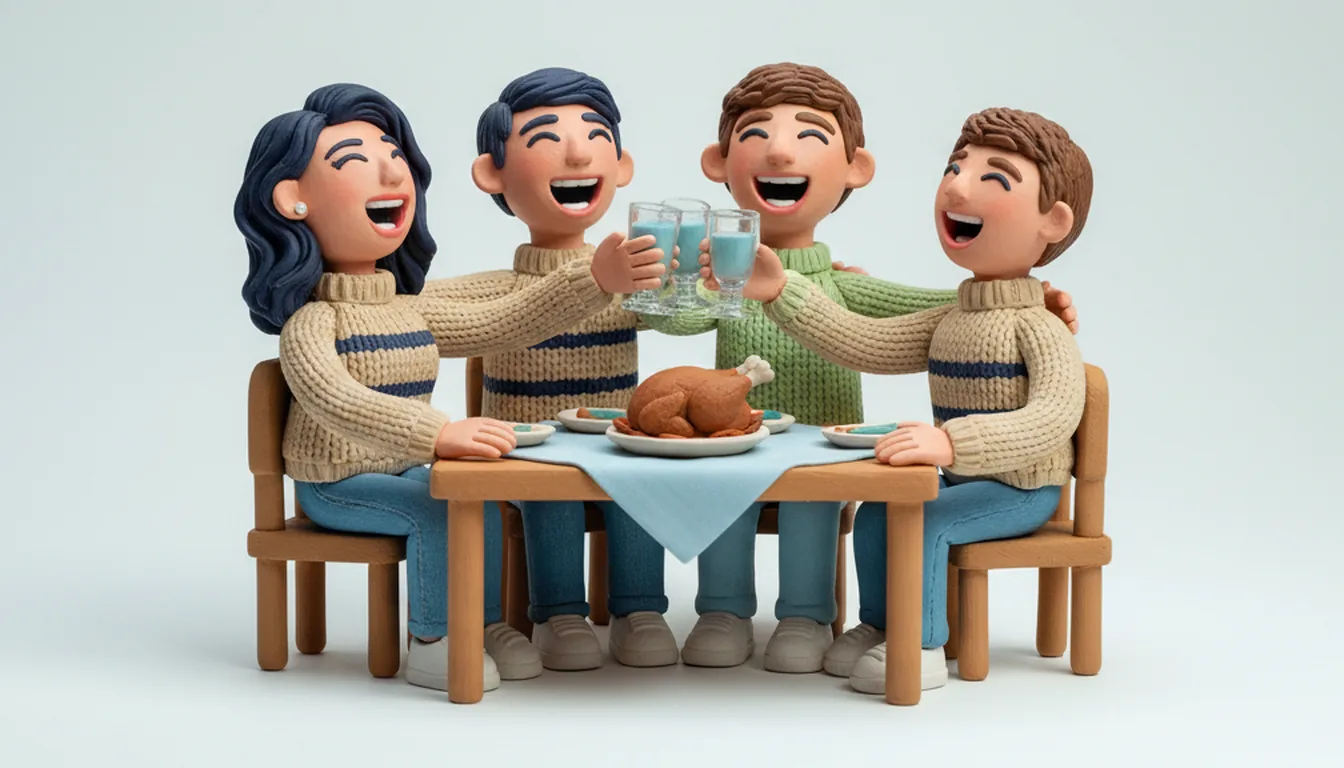
"Blood is thicker than water" means that family ties are stronger than other ties, like friendship. When you have to choose, the saying tells you to stand by your relatives.
An example: every Thanksgiving, Nick's mother hands out matching sweaters, one for each of her grown children and one for herself. This year Nick brought his friend Sam. Two winters ago, Sam drove forty minutes at two in the morning when Nick's car broke down on the highway. Nick's sister hadn't picked up her phone that night. Over the turkey, his mother raised her glass and said, "To family. Blood is thicker than water." Sam, in the only green sweater at the table, laughed and raised his glass too. Nick wasn't sure what to think.
What does "blood is thicker than water" mean?
The bond between relatives, the "blood", is stronger than the bond with people outside the family, the "water". People use it in a few ways:
- To explain loyalty. A woman lends her brother money, though he never paid back the last loan. "Blood is thicker than water."
- To ask for loyalty. A parent reminds a grown child to come home for the holidays instead of going away with friends.
- To excuse a choice. A boss hires a nephew over a better candidate. Here it sounds more like an excuse than a value.
You will also hear "blood runs thicker than water". It means the same thing.
Where does "blood is thicker than water" come from?
The idea is old. A German poem from around 1180 has a line saying that kin-blood is not spoiled by water. An English preacher used the modern wording in the 1650s, and by the 1800s it turned up in novels like Walter Scott's.
The picture is easy to understand. Blood stands for the family you are born into. Water stands for everyone else, the people who come and go. Similar sayings in English are "family comes first" and "charity begins at home".
The "full quote": is there a longer version?
Online you will often read that the full quote is "The blood of the covenant is thicker than the water of the womb." In this version the meaning flips. The bonds you choose, like a promise sealed in blood, would matter more than the family you were born into.
There is no good evidence that this longer line is older than the familiar saying. It first shows up in two books from 1994 and 2005, and neither names a source for it. The old sources only have the short version, and it has always meant that family comes first.
How to use it in a sentence
- "I know he let you down, but he is still your brother. Blood is thicker than water."
- "She sided with her sister in the end. Blood was thicker than water."
- "My cousin gave me a job when nobody else would. Blood really is thicker than water."
- "They say blood is thicker than water, but my best friend is the one who shows up."
The last one shows a common way people use it today: to question the saying as much as to repeat it.
Is blood thicker than water?
Literally, yes. Blood is several times thicker than water, which is where the picture comes from.
As a rule for life, it is true for many people and false for others. Plenty of adults would do anything for their family. Others feel closest to friends they met at twenty and see their relatives twice a year. Some people turn the saying around and say that water is thicker than blood, meaning the people you choose matter more than the people you are related to.
When blood isn't thicker than water
The saying stops working when family is not where a person finds support. Some common cases:
- Different values. A son who sees the world very differently from his parents may find the family dinner the loneliest evening of the month.
- A family that only calls when it needs something. When "blood is thicker than water" comes up only when someone needs money or a favor, it starts to sound like a bill.
- Friends who were there. For some adults, the people who helped them through a divorce, a move or an illness were friends. Loyalty earned that way can feel stronger than loyalty by birth.
- Siblings who drifted apart. Brothers and sisters who were close as kids can have little in common at forty.
Many people add their own ending to the saying: "Blood makes you related. Loyalty makes you family." Neither version has to be the whole truth. You can love your family and still feel closest to a friend.
Why a friend can feel closer than family
Sharing blood does not mean sharing a personality. Each of the 16 personality types in Typeza can turn up anywhere in a family tree, in a parent, a child or a sibling. Here is one family of four, all adults:
- Vitalizer: the mother, warm and lively, who holds the family together with big dinners and daily calls.
- Strategist: the son, calm and skeptical, who loves his mother and finds her daily calls tiring. His closest friend from university understands him in a way his family rarely does.
- Organizer: the father, practical and hardworking, who shows love by fixing and paying for things and rarely says it out loud.
- Encourager: the daughter, full of ideas and plans, close to her mother and puzzled by her quiet brother.
They share a home and a name, and each sees the world differently.
The relationship type between two people often matters more than whether they are related. Some pairs, like Duality, tend to feel easy and supportive from the start, and a friend in that kind of pair can feel like the brother you never had. A harder pair, like this mother and son, can love each other and still misread each other at dinner.
How much grown children really resemble their parents is the question in the apple doesn't fall far from the tree, while family dynamics is about the parts people play at home. If you are the one who never fit in, black sheep of the family is for you.
What to say when someone uses it on you
Sometimes the saying is a gentle reminder, and sometimes it is pressure. A few calm replies:
- "I love you, and I also need to make this choice myself."
- "Family matters to me. That's why I'm being honest with you."
- "I can be there for you and still keep my plans with my friends."
Say it kindly, and say it once. You don't need to win an argument about the saying itself.
See what you share with your family
A relationship type can explain a feeling like Nick's, and being related says little about it. The free test is on the family compatibility test page. Afterward, invite a parent, a brother or a sister from your result. Everyone you invite has to be 16 or older. Once a relative is done, both of your types appear along with the relationship type that links you. A close friend like Sam can take the same test through the link on your result page too.
Questions people ask
What is the full quote of "blood is thicker than water"?
Many websites say the full quote is "The blood of the covenant is thicker than the water of the womb." There is no good evidence that this version is older than the short saying.
Is water thicker than blood?
No, blood is thicker. "Water is thicker than blood" and "blood ain't thicker than water" are twists people use to say that the friends you choose can matter more than relatives.
What does "blood runs thicker than water" mean?
The same as "blood is thicker than water". Family bonds come first.
What is the opposite of "blood is thicker than water"?
Sayings like "friends are the family you choose" or "blood makes you related, loyalty makes you family". Both say that closeness comes from how people treat you, more than from birth.
What does "charity begins at home" mean?
It means you should look after your own family first, before you help people further away. People say it to explain why they help a relative before a stranger.
Sources
- Wikipedia, "Blood is thicker than water". The German poem Reinhart Fuchs (around 1180), William Jenkyn's sermon of the 1650s, Walter Scott's novels, and the 1994 and 2005 books by Richard Pustelniak and Albert Jack that gave the "covenant" version without sources.
Written by Virko Kask, founder of Typeza
Written with the help of AI tools.
One question for two, every week
A question to ask your partner, friend or family, and how different types tend to answer it.
Free. Unsubscribe any time.