
Family dynamics: what they are and how to improve them
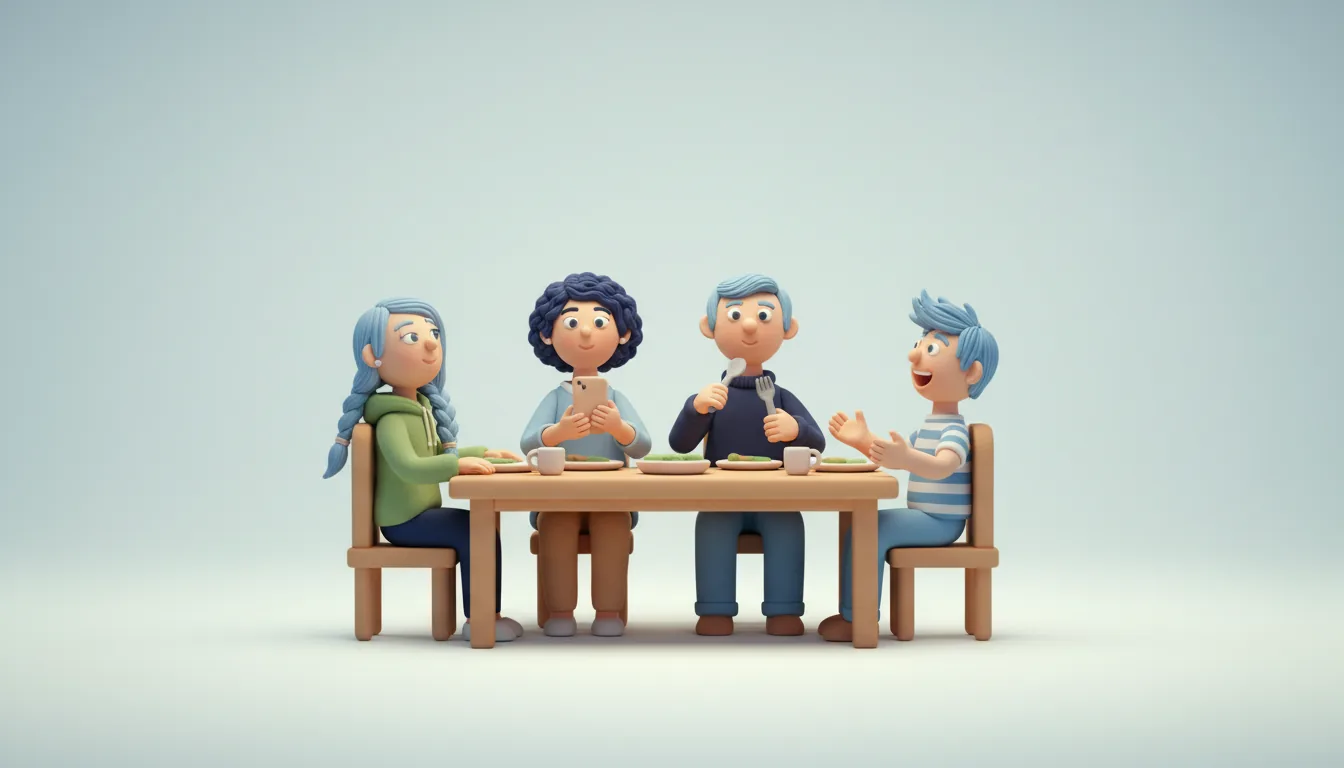
Every family has its own way of working. Some talk everything through. Some avoid hard topics. Some have one person who always takes charge, and others where everyone fights for it. These patterns are family dynamics, and they shape how family members relate to each other every day.
What are family dynamics?
Family dynamics are the patterns of behavior, communication and roles that exist within a family unit. They describe how a family interacts, who makes decisions, how conflict is handled and how emotions are shared or hidden.
These patterns form early and tend to stick. A family where one parent plans every holiday and the other goes along will often keep that pattern for decades. The child who smooths over arguments when parents clash may still be doing it at 30. Nobody writes family dynamics down. Everyone in the family just knows them.
What shapes family dynamics?
Several things come together to create the way a family works.
Personality types. Each person handles information differently. One family member notices mood and feelings easily. Another sees the plan and the next step. A third focuses on practical comfort. When these differences meet, they create the dynamic. The parent who wants everyone to talk about their feelings clashes with the child who just wants to fix the problem and move on.
Family history. Patterns pass down. A parent who grew up with strict rules may raise their own children the same way, or swing the other way and set none. A family that never talked about money will often raise children who also avoid the topic.
Life events. Divorce, illness, job loss and moves all shift family dynamics. A family that was open and calm can become tense and closed when stress hits. The roles people held can change overnight.
Culture and values. Some cultures expect children to care for aging parents. Others value independence. Some families talk openly about everything. Others keep private things private. These values set the boundaries for what is normal in that family.
Family dynamics roles
Most families develop roles, often without anyone deciding them. These roles shape how each family member behaves and what others expect from them.
The caretaker. This person notices when someone is upset and tries to fix it. They mediate arguments, check in on everyone and put their own needs last. The role can feel necessary in the moment and draining over years.
The achiever. The family member who does well at school, work or life in general. They get praised for their success, and the family often holds them up as proof that things are fine. The pressure to keep achieving can be heavy.
The peacekeeper. Similar to the caretaker but focused on avoiding conflict. They change the subject when an argument starts, laugh off tension and never take sides. Their goal is to keep the mood calm, even when a real problem needs solving.
The scapegoat. The person blamed when things go wrong. If there is tension in the family, it gets directed at them. They may act out because it is the only role they know, which keeps the pattern going.
The lost child. The quiet one. They stay out of the way, do not cause trouble and often get overlooked. They learn early that their needs come last, and they carry that into adulthood.
The joker. The one who makes everyone laugh. Humor can lighten the mood, but it can also be a way to avoid serious topics. When this person tries to talk about something real, the family may not take them seriously.
These roles are not fixed. They shift as the family changes, and one person can hold more than one role at different times. Recognizing them helps family members see why they keep falling into the same patterns.
Healthy family dynamics vs unhealthy family dynamics
Not all family patterns help the family unit grow. Some strengthen it, and some wear it down.
Healthy family dynamics
In a healthy family, people can talk openly and honestly. Conflict resolution happens without fear of being shut down or attacked. Each family member feels heard, even when the family disagrees. Roles are flexible. The person who usually plans can step back sometimes, and the quiet one can speak up without it being strange.
Healthy families also respect boundaries. Parents and children have different roles, and everyone understands them. Support flows both ways. The family celebrates wins together and helps each other through hard times.
Mental health and physical health are taken seriously. If someone is struggling, the family talks about it instead of pretending everything is fine.
Unhealthy family dynamics
In a dysfunctional family, patterns of behavior damage people over time. Communication is one-sided or missing. One person makes all the decisions, or no one does, and chaos fills the gap. Conflict is avoided completely or turns into shouting matches that solve nothing.
Roles become traps. The achiever burns out. The scapegoat feels like they can never do anything right. The lost child grows up invisible.
Unhealthy family dynamics often include blame, guilt and control. Feelings are dismissed. Boundaries are crossed. One family member's needs dominate, and the others learn to shrink.
These families may look fine from the outside, but the people inside them know the cost.
How to improve family dynamics
Family patterns feel permanent, but they can change when people are willing to try.
Name the pattern. You cannot change what you do not see. If the same argument happens every holiday, or one person always ends up hurt, that is a pattern. Naming it is the first step.
Understand family dynamics through personality. Much of what feels like stubbornness or selfishness is just a difference in how people process information. One person needs to talk feelings through. Another needs space to think. When you see the difference as a type mismatch instead of a personal attack, the tension drops. Each of you takes the free family compatibility test, and when you both have a type, you see which of the 16 relationship types you make. That gives you a map of where you tend to clash and where things flow easily.
Set boundaries. Healthy boundaries are agreements, and you get to make them. You can say no. You can ask for what you need. You can choose how much to share. When each family member knows where the line is, the family interacts more honestly.
Make space for hard conversations. Avoiding conflict does not make it go away. It makes it grow quietly. Families that improve learn to talk about the uncomfortable things without the conversation turning into a fight. That takes practice.
Get help when you need it. Some family dynamics are too tangled for the family to fix alone. A therapist who understands family systems can help everyone see the patterns and find a way forward. Asking for help means choosing to stop repeating what does not work.
Understanding family dynamics makes the difference
Family rifts are common. Many of them start with patterns that no one understood or knew how to change.
Understanding family dynamics does not fix everything. It does not erase years of hurt or make hard relationships easy. But it gives you a starting point. When you see the roles, the patterns and the differences in how each person works, you stop blaming and start solving.
A family that understands its own dynamics has a chance to build something better.
Questions people ask
What does family dynamics mean?
Family dynamics are the patterns of behavior, communication and roles within a family. They describe how the family interacts, who holds power, how decisions are made and how emotions are handled.
What are the roles in a family?
Common family dynamics roles include the caretaker, the achiever, the scapegoat, the lost child, the peacekeeper and the joker. These roles develop naturally and shape how each family member behaves and what others expect from them.
How do you fix unhealthy family dynamics?
Improving unhealthy family dynamics starts with naming the patterns, understanding the personality differences that drive them, setting boundaries and making space for open communication. Some families also benefit from working with a therapist who understands family systems.
What is the difference between healthy and unhealthy family dynamics?
Healthy family dynamics include open communication, flexible roles, mutual respect and conflict resolution that does not harm. Unhealthy family dynamics involve blame, rigid roles, poor boundaries, dismissed feelings and patterns that damage family members over time.
Why is understanding family dynamics important?
Understanding family dynamics helps you see why the same conflicts keep happening and why certain conversations always go wrong. It gives you a way to change the patterns instead of repeating them.
Sources
- Sharon Wegscheider-Cruse, Another Chance: Hope and Health for the Alcoholic Family (1981). This is where the hero, scapegoat, lost child, mascot and enabler roles come from. Here they are called the achiever, scapegoat, lost child, joker and caretaker.
- Virginia Satir, Peoplemaking (1972). The family therapy work that the role model builds on.
Written by Virko Kask, founder of Typeza