
Black sheep of the family: what it means, the signs, and why one person sees things so differently
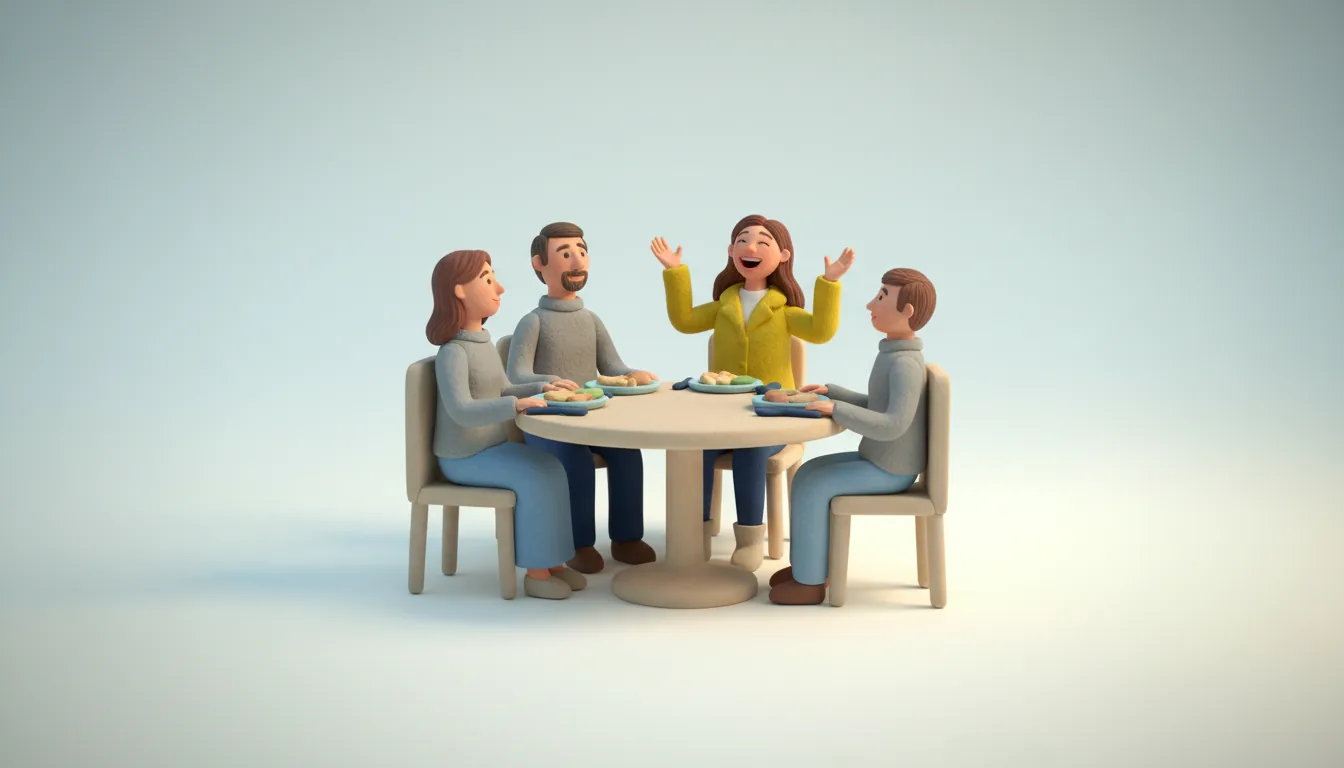
The black sheep of the family is the member who does not fit the family's usual way. They make different choices, hold different beliefs or simply see life differently, and the others find them hard to read. The phrase can be said with affection or as a complaint, and the person it describes often hears both at once. This article is about the everyday feeling of not fitting in. When the label comes with constant blame or being shut out, it has gone past being different, and it helps to talk to someone you trust outside the family.
An example: at every family dinner, her parents and her brother talk about the new kitchen tiles, a good price on winter tyres and who will host Christmas. She talks about the march she joined, a book that changed her mind and her plan to move abroad for a year. Her father shakes his head and says, "Where did we get you from?" Everyone laughs, and so does she. On the drive home she is quiet.
What does black sheep of the family mean?
Most sheep in a flock are white, so a black lamb is easy to spot. The phrase grew from that picture. A black sheep of the family is someone who stands out in the same way. They might have chosen a career nobody understands, moved far away, left the family religion or married someone unexpected. Or they might simply think and feel in a way the rest do not share.
The phrase can be harsh. In English it has meant both an unusual person and a disreputable one. In some families it means the one who brings shame. In many others it is said with a smile and means the different one. In other settings people would call the same person the odd one out.
What is the black sheep of the family like?
There is no single kind of black sheep, but people who carry the label often describe some of these things:
- They question rules the rest of the family follows without thinking.
- They take a path that is not the family's usual one.
- They feel more at home with friends than at family events.
- They say the uncomfortable thing everyone else avoids.
- They see the family more clearly from the outside.
- Relatives call them when a crisis needs a fresh pair of eyes.
The last point surprises people. The family member who never fit in is sometimes the one who copes best when the usual ways stop working.
Signs you are the black sheep of the family
- The family jokes about where you came from, or who you take after.
- You explain your choices more often than your siblings do.
- Talk at holidays moves around you instead of through you.
- The family celebrates achievements you do not care about, and misses the ones you do.
- You feel like a guest in the house you grew up in.
- You are closer to one aunt, uncle or grandparent than to your parents.
None of these mean anyone is doing something wrong. They mean the fit is loose.
Why is there a black sheep in the family?
Families build a picture of themselves. "We are practical people." "We are a sporty family." "We don't make a fuss." Many members grow into that picture. One person may not, because they care about different things. For the reverse story, the child who grows up to be a copy of a parent, see our article on apples that land close to the tree.
Other reasons add to it:
- Life choices. A job, a city, a partner or a belief the family did not expect.
- A role from childhood. A child who was "the difficult one" at eight can keep that label at forty, long after they have changed.
- Being the first. The first to go to university, to leave the town or to talk openly about something the family never discussed.
- A different idea of a good life. What the family sees as success is not what this person wants.
Often it is a mix, and quite often nobody chose it at all.
Is being the black sheep of the family a bad thing?
It can be hard. Holidays feel long, and it hurts when the people who have known you longest seem to understand you least.
It also has a good side. The black sheep often brings new ideas home and keeps the family in touch with the wider world. Younger relatives see through them that there is more than one way to live. Some people who were the black sheep in their twenties find that the family's view of them softens later, once everyone sees the life they built.
Why does one person see things so differently from the rest of the family?
Typeza draws on socionics, a theory with 16 personality types in which any two people, a father and a daughter included, share one of 16 relationship types. The types also form four groups of four, called quadras. People in the same quadra care about similar things and tend to feel at home with each other.
A family is not chosen by type. Sometimes most of a family happen to share a quadra, and one member belongs to another. That person stands out even when everyone is kind. The black sheep feeling is then made of several relationships, one with each relative, and each has its own pattern. A compatibility test can name those patterns one relative at a time.
Picture one family. The mother is an Organizer, the son an Encourager and the father a Craftsman. All three are from the same quadra, and home is calm, practical and warm. The daughter, now 30, is a Mentor from another quadra. She loves strong feelings, long talks about what matters and causes bigger than the family. This is how she fits with each of them.
The father whose help never quite lands
The Craftsman father shows love by fixing her car and asking whether her new job pays enough. She wants him to ask what the job means to her. When she gets excited, he goes quiet and leaves the room, and she reads it as not caring. When he gives practical advice, she hears criticism. This is Conflict, where each person's natural way of helping lands on the other's sore spot. Nobody is at fault. Short visits and shared tasks, like painting the fence together, work better than long talks about life.
The mother you admire from a distance
The Organizer mother runs the house like a clock, and the daughter admires that. The mother, in turn, admires how easily her daughter talks to anyone. Over lunch in town they get on well. When the daughter stays for a week at Christmas, the mother's lists and advice land on her daughter's weakest point, and the daughter's moods land on her mother's. By day three both are tense. Their pattern is Super-ego: easy over a lunch in town, tiring under one roof. Shorter stays help more than any long talk.
The brother everyone says is just like you
Relatives say the Encourager brother and the Mentor sister are two of a kind. Both are lively and quick to laugh. Yet their talks never go anywhere. He wants a warm, easy life with room to grow, and she wants something to fight for. They use the same words and mean different things. This is Quasi-identity. Being called alike makes it more confusing, because each of them expects to be understood and is not.
The grandfather who always got you
Then there is her grandfather, an Analyst, the other odd one in the family. When she brings him a wild plan, he takes it seriously, asks clear questions and helps her see which part will work. She brings warmth and fire into his quiet flat. They have learned more from each other than from anyone else in the family. This is Semi-duality, which gives much of the fit of the closest relationship type with one gap neither of them can fill. For a black sheep, one relative like this can change how the whole family feels.
The label puts the problem on one person. The relationship types show that each pair has its own fit, which is why the daughter feels close to some relatives and far from others.
How to find out where you fit in your family
Nobody at that dinner table could have named these four patterns just by watching. To map your own family, do the free family compatibility test yourself first, then share your result's invite with a parent, a sibling or a grandparent. Everyone you invite needs to be at least 16. Each relative who finishes it adds one pair to the map: the kind of relationship you have, the ground that comes easily and the spots where one of you usually gets the other wrong. Family dynamics looks at the roles a household hands out, and types of sibling relationships covers brothers and sisters.
Questions people ask
What does black sheep of the family mean?
The one relative who stands out from the rest, the way one dark lamb stands out in a white flock.
Is being the black sheep of the family a bad thing?
Not by itself. It can feel lonely at family events, and it often brings new ideas and a clearer view of the family. It becomes a problem when the label comes with blame or exclusion.
Why am I the black sheep of my family?
Often because you care about different things than most of your family, or you made choices they did not expect. Sometimes an old childhood role has simply stuck.
Can the black sheep of the family find their place?
Often, yes. Time one to one with the relatives you fit best helps, and so do visits of a length that works for you. Some families soften once they see the life you have built.
What is another word for black sheep?
Outsider, maverick and the odd one out all come close. "The rebel of the family" keeps the fond tone many families mean by it.
Sources
- Wiktionary, "black sheep". The senses "a nonconformist" and "someone not honest or trustworthy," with the example of an artist in a family of doctors and lawyers.
Written by Virko Kask, founder of Typeza
Written with the help of AI tools.
One question for two, every week
A question to ask your partner, friend or family, and how different types tend to answer it.
Free. Unsubscribe any time.