
Half siblings vs stepsiblings: the difference, and the bond as adults
A half sibling shares one biological parent with you, either the mother or the father. A stepsibling shares no parent with you by blood. You became siblings because one of your parents married one of theirs. So half siblings are blood relatives, and stepsiblings are family by marriage. How close any two of them become as adults is a separate question.
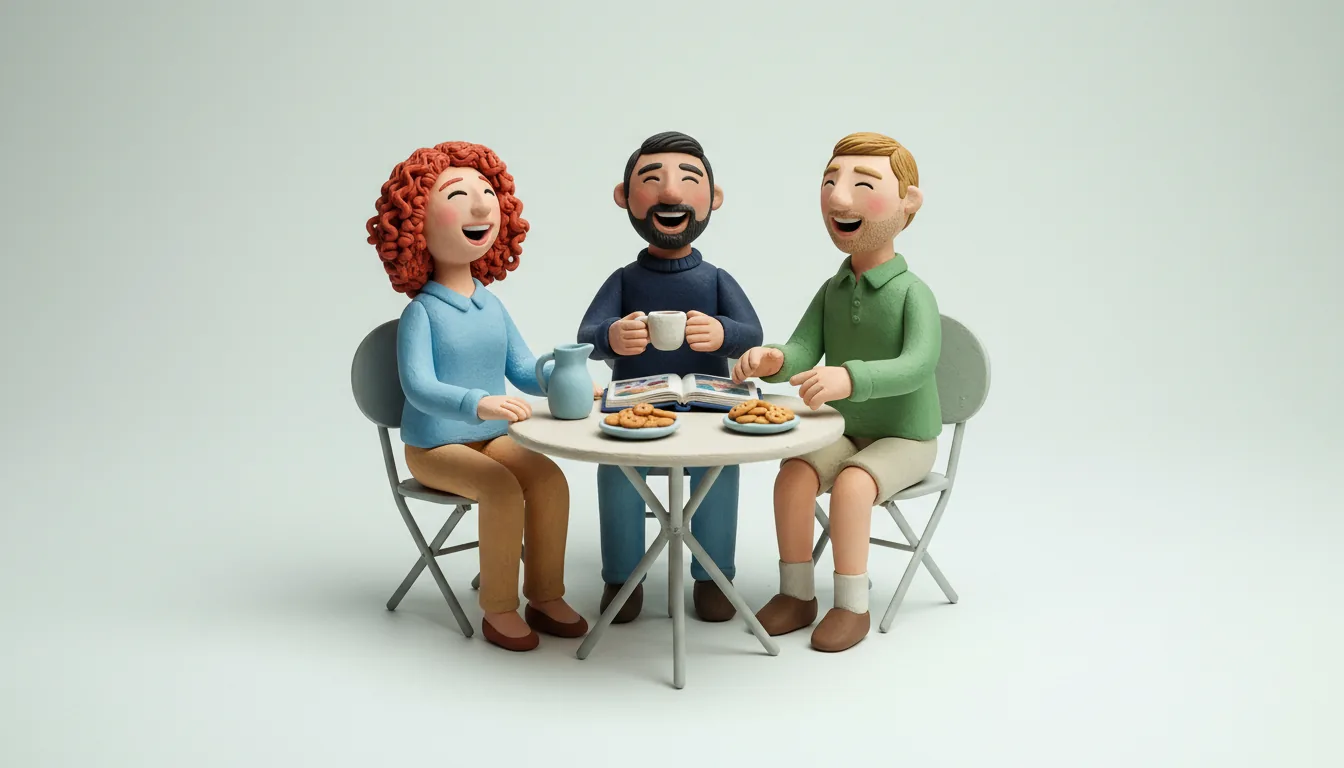
An example: for his 38th birthday, Jonah booked a table in a garden café and invited the two people who had shared his childhood holidays. Lily, 29, has red curls and the same laugh as their dad. Sam, 40, taught Jonah to ride a bike the summer their parents got married. Lily brought an old photo album that opens with a 1996 picture of Jonah and Sam in matching bowl cuts, and the three of them argued for an hour over who had cut whose hair. The waiter asked if they were all brothers and sister. They looked at each other, and Sam said, "Sort of." Lily is Jonah's half sister. Sam is his stepbrother. Lily and Sam are not related to each other at all, and they still share a brother.
What is a half sibling?
A half sibling is a brother or sister who has one parent in common with you. It usually happens when a parent has children with more than one partner. If your father had a child with his second wife, that child is your half sibling. If your mother had you in her first marriage and a son in her second, he is your half brother.
Half siblings who share a mother are sometimes called maternal half siblings. Those who share a father are paternal half siblings, the same words families use for paternal and maternal grandparents. Both kinds are related by blood, and on average they share about a quarter of their DNA. Full siblings share about half. The word is written both ways, half sibling and half-sibling, and both are correct.
Many half siblings grow up in different homes, sometimes in different cities, and some only meet as adults. Others grow up in the same house and never use the word "half" at all.
What is a stepsibling?
A stepsibling is the child of your stepparent. When your mother marries a man who already has a daughter, that daughter becomes your stepsister. You have no parent in common and no shared blood. The link runs entirely through the marriage. You will also see it written as step sibling and step-sibling.
Stepsiblings can meet as toddlers and grow up side by side, or they can meet at a wedding in their thirties and stay polite strangers. A stepbrother you shared a room with for ten years can feel more like a brother than someone you share half your DNA with.
Half sibling vs step sibling: the differences at a glance
- Parents in common: a half sibling shares one parent with you. A stepsibling shares none.
- Blood: half siblings are blood relatives. Stepsiblings are not.
- How it happens: half siblings come from one parent having children with two partners. Stepsiblings come from two parents with children of their own marrying each other.
- What stays: a half sibling stays your half sibling no matter what happens between the parents. With stepsiblings, there is no single rule for what happens if the marriage ends, and many people keep calling each other family anyway.
- Who you share: with a half sibling you share a parent and often a set of grandparents. With a stepsibling you share a household and the history that comes with it.
Full, half, step and adopted
Families mix these words in all sorts of ways, so it helps to have the whole set:
- Full siblings share both biological parents.
- Half siblings share one.
- Stepsiblings share none, and are siblings through a parent's marriage.
- Adoptive siblings share parents through adoption. In most families they are simply brothers and sisters, with no prefix at all.
Then there is the baby who connects two families. If your mother and your stepfather have a child together, that child is a half sibling to you and also a half sibling to your stepfather's children. One new person turns two sets of stepsiblings into a single family with a shared little brother or sister.
Half and step siblings as adults
Childhood shapes these bonds: how old you were when the families joined, whether you lived under one roof, and how the adults handled it. Once everyone grows up, the rules change. Nobody has to share a bathroom or a back seat anymore, so the relationship becomes a choice.
Some adult half and step siblings grow closer than they ever were as kids. Others drift to the edges and meet only at weddings and funerals. Brothers and sisters of every kind spread across the types of sibling relationships, from very close to openly hostile, and half and step siblings can land in any of them. The old line that blood is thicker than water doesn't hold up well here. Some people feel closer to the stepsibling they grew up with than to a half sibling they met at twenty.
For Jonah, both bonds work, in different ways. Sam is the one he calls when the car breaks down. Lily is the one he calls when he wants to talk about their dad.
Why some click and others stay polite
Sharing a parent or a childhood gives two people a reason to know each other. It doesn't make them get along. Personality type is part of whether two adults enjoy each other's company or just tolerate it. Five of the sixteen types, kept in the order of the types page:
- Vitalizer: throws the birthday lunches and makes sure the new half sister feels welcome. Often the person who holds a mixed family together.
- Inspector: takes family roles seriously and keeps their word to a stepsibling as firmly as to anyone. Can seem formal until trust is built.
- Guardian: judges people by how they treat others, and decides slowly who counts as family. Once they decide, they're loyal for life.
- Organizer: shows care in practical ways, like helping a stepbrother move or sorting out a parent's paperwork. Bonds through doing things together.
- Encourager: curious about the half sibling they hardly know and keen to hear their story. Quick to make a stranger feel like a relative.
Put an Inspector and an Encourager at the same table and the talk may tire them both, since they share a Conflict relationship. Two people whose natures fit can feel like siblings within a single afternoon, with or without a shared parent.
How to make it work at family gatherings
Mixed families get together at the same moments as any other family, which means birthdays, holidays and the occasional hospital visit. A few habits make those days easier:
- Use the words people prefer. Some adults like "my brother" without the prefix. Others want the distinction. Ask, or listen to how they introduce you.
- Don't rank siblings out loud. Saying "my real sister" in front of a half or step sibling stings, even when nobody means harm.
- Find a reason to meet that isn't a parent. A shared hobby or a yearly lunch of your own gives the bond its own ground.
- Let old roles go. The stepsister who was annoying at twelve may be good company at forty.
- Know who you are dealing with. A quiet half brother isn't necessarily cold, and a loud stepsister isn't necessarily rude. Learning how each person works saves a lot of misreadings, and family dynamics covers the roles that families tend to hand out.
See the bond between the two of you
At the end of the lunch, Lily asked why she and Jonah could talk for hours while she and Sam ran out of topics after ten minutes. The free family compatibility test is one way to look into that kind of question. It is the same set of 41 choices for everyone, each one a pick between two statements. Your type shows up the moment you're done, with a free profile you can read without making an account. Then you can invite a half sibling or a stepsibling from your result. Sending it takes a free account, and every relative who joins must be at least 16. When your relative finishes, a relationship type for the pair of you appears: what tends to come easily for you two, where you might rub, and how the bond feels from each side.
Questions people ask
What is the difference between a half brother and a stepbrother?
A half brother shares one biological parent with you. A stepbrother shares no parent with you and is the son of your stepparent.
Is a half sibling a blood relative?
Yes. Half siblings share one parent, so they are related by blood and share about a quarter of their DNA on average.
Are half siblings real siblings?
Yes. Half siblings are siblings by blood, and many grow up together without ever using the word "half."
Are you still stepsiblings after a divorce?
There's no single rule. The step link comes through the parents' marriage, so some people drop the word after a divorce. Many adults who grew up together keep treating each other as brother and sister anyway.
What is my stepparent's child to me?
Your stepsibling. If your parent and your stepparent have a child together, that child is your half sibling.
Sources
- Wikipedia, "Sibling". Half siblings share one parent and are 25% related, full siblings 50%, and stepsiblings are related through marriage.
- Wiktionary, "half-sibling" and "stepsibling". Both spellings of half sibling, and step-sibling as another spelling.
Written by Virko Kask, founder of Typeza
Written with the help of AI tools.
One question for two, every week
A question to ask your partner, friend or family, and how different types tend to answer it.
Free. Unsubscribe any time.