
Identity crisis: what it feels like, and how to find your footing
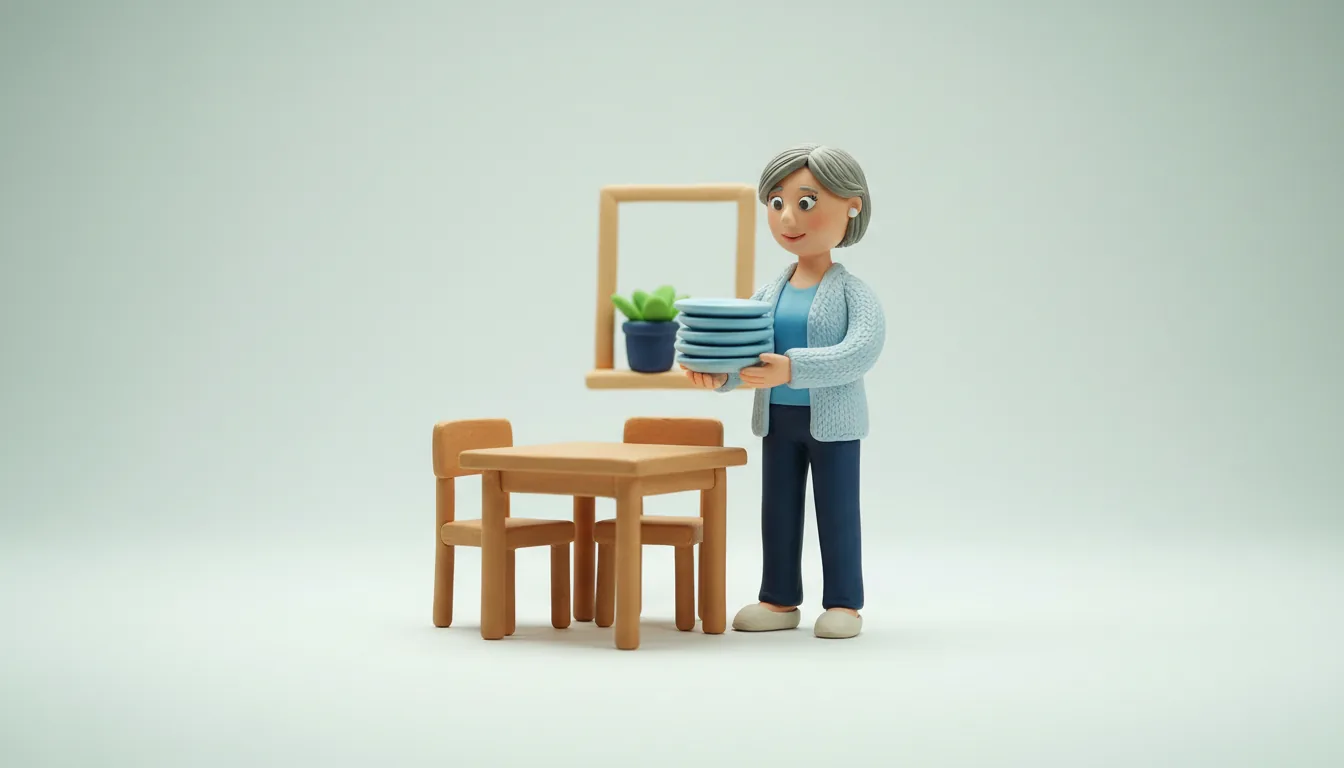
An identity crisis is a stretch of time when the person you have been no longer fits the life you are living, and you don't yet know who comes next. In real life it often shows up as a run of small moments. It can follow a move, a breakup, a new job, retirement or the children leaving home, and it can happen at 25, at 40 or at 65. People sometimes call it a quarter-life or midlife crisis, but the age matters less than the change that set it off.
An example: the week after her youngest leaves for college, Marta sets the table for four. She has the plates in her hands before she remembers that only she and her husband will be eating. She laughs, puts two plates back and sits down. Later that week a new neighbor asks what she does, and she doesn't know what to say. For twenty-two years the honest answer has been "I'm Sam and Lily's mom." That's still true, but it no longer fills her days, and nothing else has moved in yet.
What "identity crisis" means in everyday life
The phrase means a time when you are unsure who you are, what you value or where you belong. The psychologist Erik Erikson used it for a stage of the teenage years, and today people use it at any age. In daily life it's less grand than it sounds. Many people feel it as a gap between an old role and a new one. You were half of a couple, and now you are single. You were the new person at work, and now you run the team. You were the one everybody in town knew, and now you live in a city where nobody knows your name.
A role tells you what to do with your time, who needs you and what to say when someone asks about you. When it ends or changes shape, those answers go with it. That is unsettling, but it is also very common, and for many people it passes as they build a new picture of themselves.
What an identity crisis feels like
It rarely shows up as one clear feeling. More often it's a set of small, odd moments.
- A simple question like "So what do you do?" makes you stall.
- Hobbies you used to love feel flat, and new ones haven't started to matter yet.
- You look at your clothes, your shelves or your calendar and wonder who chose them.
- Weekends feel too long, or you keep busy so you don't have to notice.
- You miss a role more than a person, like being needed every evening or being the expert in the room.
- You feel restless and tired at the same time.
These moments are normal. They mean you are somewhere between an old version of yourself and a new one. If the feeling becomes heavy or stays for a long time, talk to someone you trust.
The changes that often set it off
Some changes take a role away. Others hand you one you didn't expect.
- A move to a new city, where nobody knows your story yet.
- A breakup or a divorce, when you stop being half of a pair and many habits go with it.
- Grown children leaving home, and days that lose the shape they had for twenty years.
- A promotion, a layoff, a new career or retirement.
- A big birthday, like 30, 50 or 70, which can make you look at your life from the outside.
The change doesn't have to be a bad one. People feel it after a wedding, a long hoped-for move or a dream job too, because even good news can leave the old self behind.
Questions that help when you don't know who you are now
You don't need all the answers at once. A few honest questions are a better start than a big plan. Write them down, or think about them on a walk.
- What did I enjoy before this role took up most of my time?
- Is it the person I miss, or the part I used to play?
- Which parts of my old life still fit, and which ones am I keeping out of habit?
- What was I doing the last time an afternoon flew by?
- Who do I feel most like myself around?
- What would I try this year if nobody I know were watching?
If writing helps you think, the journal prompts for self-discovery have more questions in the same spirit. Once things feel steadier, a letter to your future self keeps a record of who you are right now.
Small steps while you find your footing
An identity crisis rarely ends with one big decision. It fades slowly, as small new habits start to feel like you.
- Keep one or two routines from before, like a morning walk or a Sunday call. They give the week something solid to stand on.
- Say yes to one small invitation a week, such as a class, a club or coffee with a neighbor. Keep what you like and drop the rest without guilt.
- Call one old friend who knew you before the change. They can remind you of the parts of you that haven't gone anywhere.
- Practice a new answer to "What do you do?" Something like "I've just moved, and I'm finding my way around" is enough for now.
- Give it time. Many people need months, not weeks, before a new life feels like their own.
How different types go through it
People don't all lose their footing in the same way. Typeza sees personality type as part of the difference. Eight of the 16 types:
- Ideator often enjoys the fresh start at first, then gets lost in too many new plans at once. One idea followed through helps more than ten begun.
- Mentor wants to know what it all means and needs to talk it through with someone who listens closely.
- Inspector feels the loss of routine most. A new weekly plan, even a simple one, brings back a sense of ground.
- Commander feels lost without a goal or a team to lead, and often finds footing by taking on a new project.
- Dreamer needs time at their own pace, and often joins in gladly once someone books the first class or picks a date.
- Guardian knows exactly who they trust, so a move away from those people can hit hard. Honest friends who keep their word help them settle.
- Counselor is careful about who they let close, so a new town can feel lonely for a while. Easy, slow time with one friend helps.
- Craftsman often finds the way back through the body and the hands, in a sport, a garden or a workshop.
Your type doesn't change because your life did, which can be a comfort when so much else has moved. Knowing it is also one way to build self-awareness, since it puts a name on patterns you have had all along.
See who you are beyond the roles you play
When a role that filled your days comes to an end, a description of your type can remind you who you are apart from it. Take the personality test; it's free and puts your strengths and sticking points into words. It won't tell you what to do next, though it can give you a few clues about where to start. If a friend or partner is facing the same change, pass them your result's link, and once they answer you will both have a relationship type to read about. For a longer path, how to find yourself goes through it step by step.
Questions people ask
Can you have an identity crisis at any age?
Yes. It comes with change, not with a certain birthday. People feel it in their twenties, in their forties and after retirement.
How long does an identity crisis last?
It differs for everyone. For many people it eases over a few months, as new routines and new people start to feel like part of their life.
Sources
- Wikipedia, "Identity crisis". In Erik Erikson's theory of personality development, the identity crisis is a stage of adolescence.
Written by Virko Kask, founder of Typeza
Written with the help of AI tools.
One question for two, every week
A question to ask your partner, friend or family, and how different types tend to answer it.
Free. Unsubscribe any time.