
How to write a letter to your future self, and when to open it
A letter to your future self is a note you write today and read later, usually after one year or five. You describe where you are, what you hope for and what you want to ask the person you are becoming. The best ones are honest and full of small details you would otherwise forget.
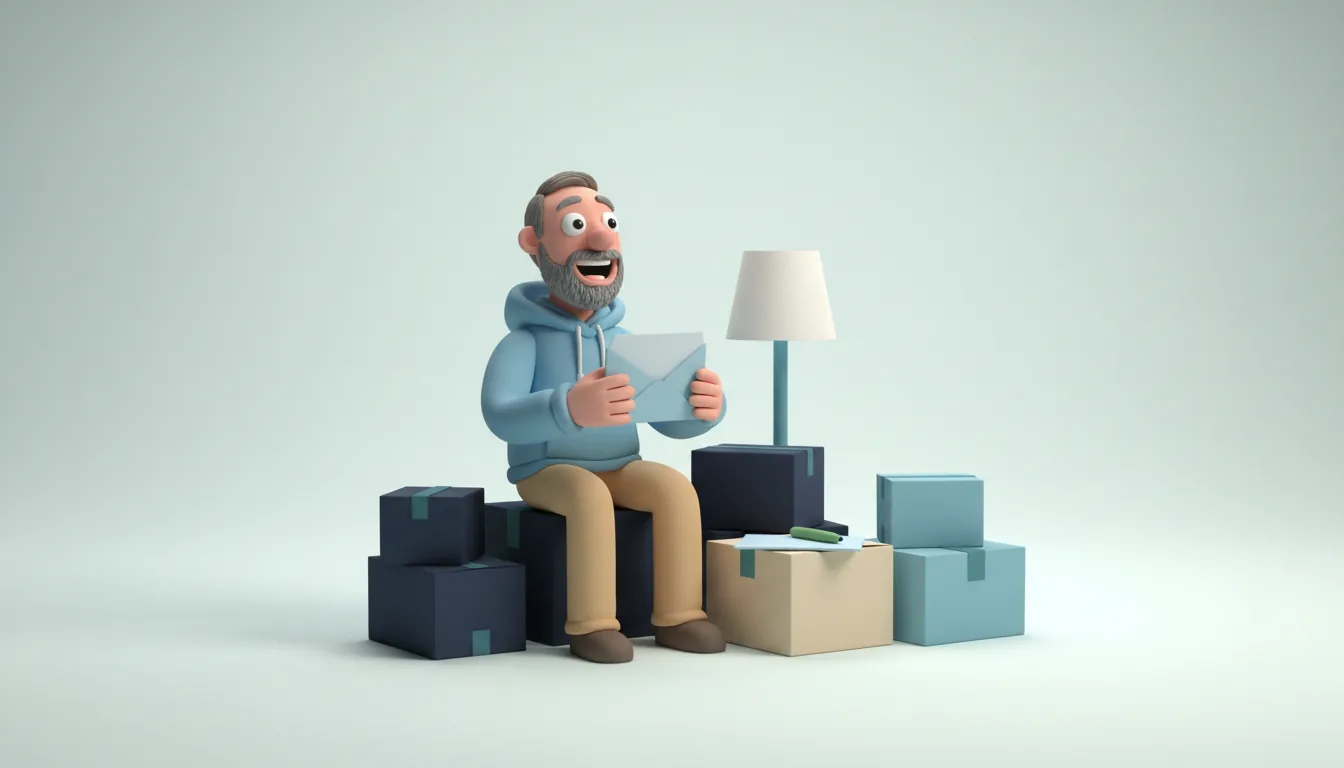
An example: Rafael was emptying his desk for a move when he found an envelope in his own handwriting: "Open after five years." He had written it at 37 and forgotten it almost at once. Now he was 42. He sat down on a moving box and opened it. "Are you still saying you'll learn guitar?" the letter began. He had learned four songs, badly. "I hope you and Ana are talking more. I hope Dad is OK. I'm scared about the new apartment, it's so much money." He laughed at the guitar, went quiet at the line about his dad, and realized he had not worried about the apartment in years. Then he found a pen and started the next letter.
Why write to the person you will be
Memory keeps the big events and drops the texture. In five years you will remember the move or the new relationship. You will forget what you worried about on an ordinary Tuesday, the song you played on repeat and how you felt about your friends that spring. A letter keeps all of that.
It also lets you compare yourself with your own past, which is kinder than comparing yourself with anyone else. And it sends a little encouragement forward, to arrive on a day when you may need it.
Many people write one on New Year's Eve or in the first quiet days of January, when looking back and looking ahead come easily. A birthday or any calm evening works just as well.
What to write in a letter to your future self
Four parts make a good letter. You don't need all of them, and none needs to be long.
Where you are right now
Start with a snapshot. Where do you live, what does a normal weekday look like, what are you reading, what do you cook on Sundays? Then add what is on your mind: the decision you are stuck on, the thing you are excited about, the worry that keeps coming back.
- "Right now I live in a flat with a squeaky floor and a neighbor who sings opera on Sundays."
- "This month I can't stop thinking about whether to move closer to Mom."
What you hope will happen
Write your hopes as hopes. "I hope you finally took that trip to Norway" reads kinder than "You must have gone to Norway by now." Mix big hopes with small ones: a place, a habit, a skill, a feeling you want more of. If you are unsure which hopes are really yours, life goals has examples to start from.
Questions only future you can answer
Questions turn the letter into a conversation, and they are often the part people enjoy most when they open it.
- "Do you still talk to Leila every week?"
- "What turned out to matter that I'm ignoring right now?"
- "Did the thing I'm most afraid of ever happen?"
- "What would you tell me now, if you could?"
A few lines about your people
Say something about the people in your life today: who you see most, who you miss, who made this year better. Friends and family change slowly, and it is moving to read how you saw them back then. "Grandpa still calls every Sunday at seven." "I hope you and Sam made up properly." Years later, those are often the lines people read twice.
How to start a letter to your future self
The opening is where many people get stuck, so keep it simple. "Dear future me" is the classic start, and it works fine. A few others:
- "Hi, it's me, from five years ago."
- "Dear Rafael at 47,"
- "I'm writing this at the kitchen table, and the kettle just clicked off."
After that, write the way you talk. Nobody else will read it, so there is no need to sound wise, and one or two handwritten pages is plenty. If writing about yourself feels stiff, a few warm-up questions from journal prompts for self-discovery can loosen things up first.
Example lines, by personality type
People write very different letters. Some fill four pages with feelings, some write a list of predictions, some write six lines and seal the envelope. Some of that follows personality type. Here are lines from six types, ordered as on the types page:
- Vitalizer: writes about people and the mood of the year. "Who did you laugh with this week? I hope Sunday dinners are still loud and the table is still too small."
- Analyst: likes predictions to check later. "I predict I'll still be reading about space at midnight and still have no houseplant that survived. Prove me wrong on one of them."
- Diplomat: writes about experiences. "Did you go to Lisbon, or did you just keep talking about it? If you haven't, book it tonight."
- Entrepreneur: checks on projects. "Is the cabin finished? If not, what got in the way, and is it still worth it?"
- Organizer: reminds themselves to rest. "I hope you took a full week off in August and let someone else cook for once."
- Craftsman: keeps it short and practical. "Is the table I built still standing? It should be. Check the legs."
Read the one closest to you, then borrow a line from a type unlike yours. A planner's letter gets warmer with one question about friends, and a letter full of feelings gets more useful with one prediction.
When to open it
One year is a popular choice. It is long enough for things to change and short enough that you still remember writing it. Five years brings the biggest surprises: people move, gain and lose friends, take up new hobbies, and the letter can read like a message from someone you used to know. Ten years is for patient people.
You can also pick a date that matters, such as a round birthday, an anniversary or the day a big plan should be done. Some people write a new letter on the same day every year and open last year's, so there is always one waiting.
When the day comes, read it somewhere quiet. Notice what came true and what didn't, and go easy on the person who wrote it, since they did not know what you know now. If the letter shows you hardly recognize yourself anymore, identity crisis has small steps for finding your footing again.
How to keep it so you find it again
A letter only helps if it turns up on time.
- Seal it and write the opening date on the front. That keeps you from peeking early.
- Store it with the papers you never lose. A folder of important documents is safer than a drawer you might empty in a hurry.
- Give it to someone you trust. A friend or a sibling can hand it over on the day, which turns the opening into a small event.
- Send an email to your future self. Some websites will deliver a message on a date you choose. Keep a paper copy too, in case an address stops working.
Rafael's letter had survived two moves in a drawer, which was mostly luck.
Rafael's new letter
This time Rafael wanted the letter to say something about who he is, beyond what he does. The new envelope says "Open after five years," and this time it sits in the folder with his passport.
Put your type in the letter
A letter about who you are is easier to write once you have words for your type, and it gives your future self something clear to check. Once the free personality test has given you a type, you can copy its name and a line or two from the profile into the letter, with a question underneath: "Does this still sound like you?" To include someone you care about, the same test can go to them from your result. After they answer, you can both look up your relationship type, a page about what feels natural for you two and what tends to grate.
Questions people ask
How do you write a letter to your future self?
Describe where you are now, write down your hopes, ask a few questions only future you can answer and add a line about the people in your life. Then seal it, date it and keep it somewhere safe.
What should I write in a letter to my future self?
Everyday details, current worries, big and small hopes, predictions and questions. The ordinary details are the ones you will enjoy most later.
When should I open a letter to my future self?
After one year for a quick look back, or after five years for bigger changes. A birthday or another date that matters to you works too.
What does "do it for your future self" mean?
It means doing something now that the person you will be later will thank you for, like saving a little, keeping a promise or writing a letter like this one.
Written by Virko Kask, founder of Typeza
Written with the help of AI tools.
One question for two, every week
A question to ask your partner, friend or family, and how different types tend to answer it.
Free. Unsubscribe any time.