
Positive affirmations that sound like you, sorted by personality
An affirmation is a short positive sentence you say or read to yourself on purpose, so a helpful thought is close by when the day gets hard. The best ones sound like you on a normal day. A line written for somebody else usually doesn't.
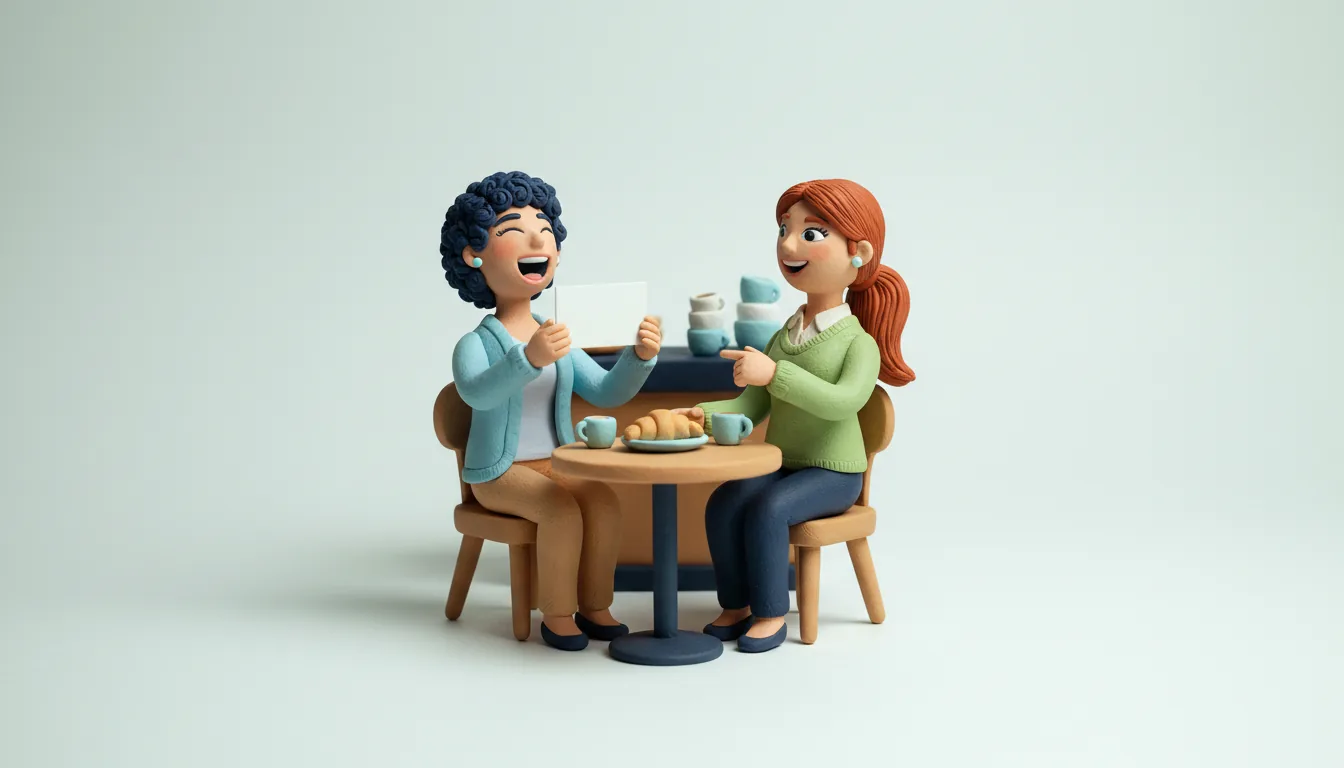
An example: the card in Juno's hand was blank. The one on her bathroom mirror said "I am radiant, confident and unstoppable," copied from a list online, and for a week she had read it every morning while brushing her teeth. "It makes me laugh," she told Tamsin across the café table. "I've never felt radiant before nine in my life." Tamsin laughed too, then pointed at the new card. "So write what you'd actually say on a bad Monday." Juno thought about it while her coffee went cold. Then she wrote: "I've fixed worse things than this before lunch." It went on the mirror that evening, and it's still there.
Why a line from a list can sound hollow
Many lists of positive affirmations are written for nobody in particular. That's why so many of them blur together: you are enough, you are powerful, you shine. Some people love those lines. Others feel a small cringe every time they read one, and they stop after a week.
An affirmation works when you can half believe it right now. It helps if it matches how you talk, what you value and what usually goes wrong for you. A planner who freezes when plans fall apart needs a different line from a dreamer who never starts. A cheerful line you don't believe also makes it harder to keep a positive mindset, because part of you argues back each time.
Positive affirmations for each of the 16 types
Personality type shapes what you need to hear. Here are two lines for each of the 16 types, and for many of them a note on why the same words fall flat for someone else.
- Ideator might say "I don't need the whole plan to take the first step" or "A dead end is just a puzzle." A careful planner hears that as an excuse to skip the plan.
- Harmonizer does well with "A calm evening counts as a good day" and "I can rest before everything is done." A go-getter may read it as giving up.
- Vitalizer needs "My warmth matters even when nobody says thank you" and "I can look after others and keep some for me."
- Analyst trusts "I can change my mind when the facts change" and "A clear answer is worth the wait." Bubbly lines about pure joy sound like noise to them.
- Mentor can use "My feelings are worth saying out loud" and "I can lift other people and still ask for help."
- Inspector likes "I did what I said I would do today" and "Steady work holds everything up." "I go with the flow" makes them uneasy.
- Commander says "I've handled harder things than this" and "I can be strong and still listen." Soft, floaty lines feel limp to them.
- Dreamer gets more from "I can trust what I sense before I can explain it" and "One small practical step is enough today." A line about crushing goals feels like shouting.
- Diplomat might pick "I can enjoy tonight and still keep tomorrow's promise" or "My energy makes a room better."
- Strategist trusts "Seeing the risk early is a gift" and "I can act before I'm completely sure." Sunny lines that ignore the risks sound naive to them.
- Entrepreneur needs "Rest is part of the work" and "I'm more than what I got done today."
- Guardian leans on "I can trust slowly and still be warm" and "I can forgive and keep what I learned."
- Organizer needs "I've done enough for today, and I'm allowed to stop" and "Asking for help is a practical choice." Juno is one, which is why "radiant" never worked.
- Counselor does well with "Other people's moods aren't mine to carry" and "Saying no kindly is still kind."
- Encourager might say "I can finish one thing before I start the next" or "My curiosity is a strength, and so is follow-through."
- Craftsman likes "Doing it well is how I show I care" and "I don't have to talk much to be good company." Big lines about shining feel like too much.
One-word affirmations and very short lines
A single word on a sticky note or a phone lock screen can do the same job:
- Steady
- Enough
- Onward
- Curious
- Brave
- Patient
- Ready
- Here
Short lines of three to five words work the same way: "One thing at a time." "I can do hard things." "This will pass." "I know what I'm doing."
Plain self love affirmations
Self love lines don't have to be gushing. Plain ones often stick better:
- "I can like myself on a messy day."
- "I talk to myself the way I'd talk to a friend."
- "I don't have to earn a rest."
- "My worth doesn't rise and fall with my to-do list."
Saying the line is the first half. The other half is acting on it, which is what self respect looks like day to day.
Positive affirmations for others
The same idea works on the people around you. A short, specific line from a friend or partner can stay with someone for years. Some to borrow:
- "You're good at this."
- "I trust your judgment."
- "You handled that well."
- "I'm glad you're in my life."
- "Take your time. I'm not going anywhere."
Match the line to the person. A friend who loves results will like "You handled that." A friend who feels everything deeply may need "I can see how much you care." When the moment calls for more than one line, it helps to know how to say I'm proud of you so it lands.
How to pick your three
Three lines are easy to remember and enough for most days:
- Mark every line that made you nod. Start with your type and its neighbors, then look through the short lines.
- Say each one out loud. If you'd be embarrassed for a friend to hear it, cross it out.
- Give each line a job. One for a hard morning, one for a tired evening, one for the moment you doubt yourself.
- Rewrite them in your own words. Keep them short, in the present tense and close to true already.
- Put them where your eyes land. A mirror, a lock screen, the inside of a notebook.
- Swap one out when it stops working. A line that worked in spring can feel stale by fall.
Some people keep their three at the top of a list of things to be grateful for, so they read both at once.
Find out which lines will sound like you
An affirmation sticks when it names a strength you already have, and your type is a good map of those. On the free personality test, your answers bring up your type, what it does well, what wears it down and what it needs. Send the friend who always knows the right words a link from your result page. Once they have answered, your shared relationship type can show why some people find the right line for you so easily.
Questions people ask
What are affirmations?
Short positive sentences you repeat to yourself on purpose, like "I've handled harder things than this," so a useful thought is ready when you need it.
What is a good positive affirmation?
One you can half believe today, in words you'd really use, like "One thing at a time."
How do you write your own affirmations?
Keep it short and in the present tense. Write about something that's already a little true, use your own words, and test it by saying it out loud.
Do affirmations work?
For many people they're a handy reminder of a thought that helps. They can't change facts. In one study, people with low self-esteem who repeated "I'm a lovable person" felt worse afterwards than people who didn't, while people with high self-esteem felt a little better. So choose lines you can half believe.
What are some short positive affirmations for others?
"You've got this," "I trust you," "You handled that well" and "I'm glad you're here" are short and easy to say. The more specific the line, the more it means.
How do you do affirmations?
Pick a set moment, like brushing your teeth or waiting for the kettle, and say your lines slowly, out loud if you can. Then read them again when the hard part of the day arrives, because that's when they help most.
Sources
- Wood, Perunovic and Lee, "Positive self-statements: Power for some, peril for others", Psychological Science, 2009: people with low self-esteem felt worse after repeating "I'm a lovable person," and people with high self-esteem felt only a little better.
Written by Virko Kask, founder of Typeza
Written with the help of AI tools.
One question for two, every week
A question to ask your partner, friend or family, and how different types tend to answer it.
Free. Unsubscribe any time.