
I'm proud of you: why it matters, and how to say it so it lands
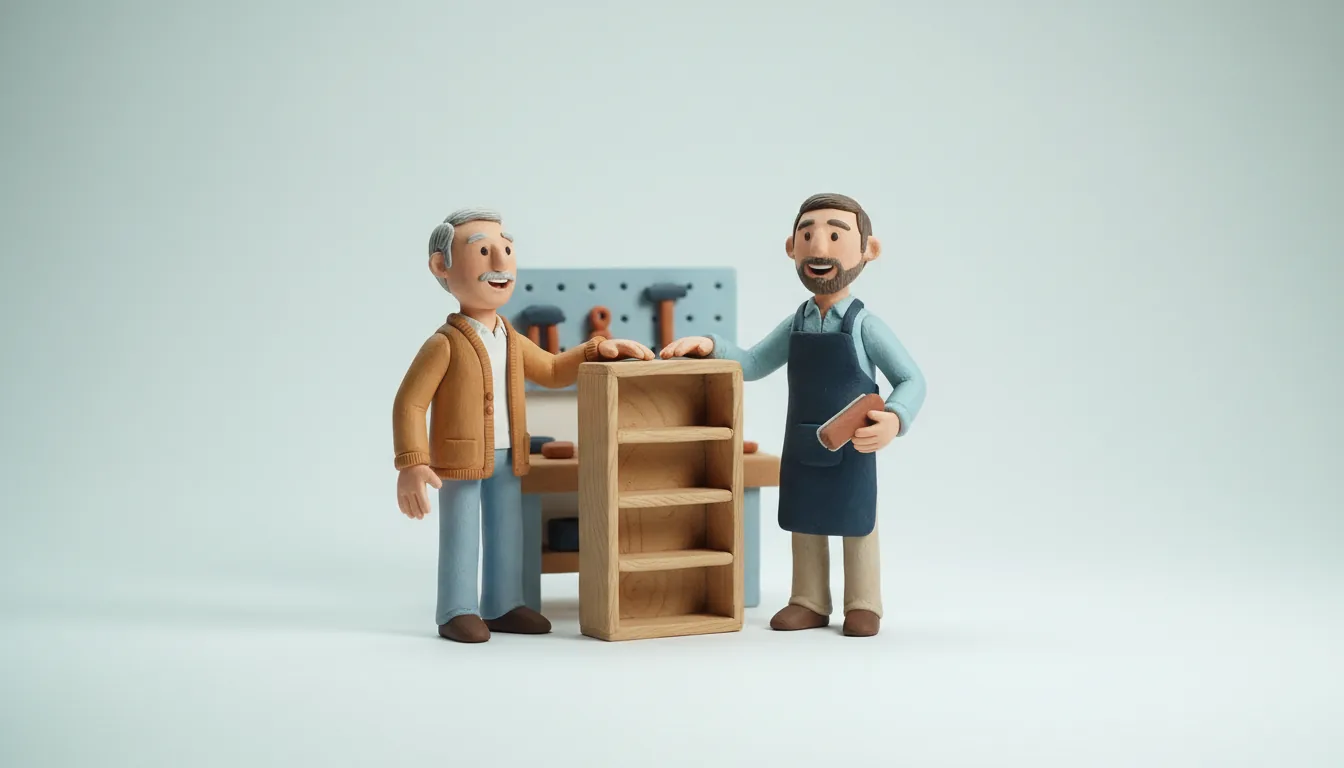
"I'm proud of you" tells someone that you saw what they did, that you know what it cost them, and that it makes you glad to be close to them. For an adult it can mean even more than it did in childhood, because many grown-ups rarely hear it. Said well, it's one of the shortest and warmest sentences there is.
An example: Walt was a carpenter for forty years, and he has always spoken more with his hands than with words. When his son Marcus, now 42, finished his first real piece of furniture, an oak bookshelf built in the garage over three months of weekends, Walt drove over to see it. He ran his hand along the top edge, checked the joints at the back and tapped a shelf to hear how solid it was. "Good joints," he said. Marcus stood next to him with the sanding block still in his hand. Then, at the car, Walt turned around. "I'm proud of you, son." Marcus told his wife about it three times that evening.
Why four short words weigh so much for a grown-up
Children get stickers, report cards and applause. Adult life has far fewer of those. You can spend years on a skill, a home, a garden or a hard family situation without anyone saying a word about it. People may assume adults don't need the praise.
That's why the sentence hits harder later in life. It says that somebody was watching and that the effort counted. Pride also feels different from a compliment. A compliment is about something you are or have. Pride is about something you did, often something you had to push for, and it carries a bit of the speaker's own heart, because they feel it too.
From a parent, a partner or a friend
The same sentence sounds different depending on who says it.
From a parent, it reaches a long way back. Even at 42, many people still listen for it from a mother or father. A parent who says it to a grown child is also saying "I see the adult you've become."
From a partner, it shows they notice what you carry. Partners see the late nights, the nerves before a big day and the slow progress nobody else knows about, so their pride feels earned.
From a friend, it often comes as a surprise, and that helps it land. Friends may say it less often than family, so "I'm really proud of you" from an old friend can stay with a person for years.
How to say it so it lands
The words are easy. Saying them so they reach the other person takes a little care.
- Name the effort as well as the result. "I'm proud of how you kept going after the first plan fell apart" means more than "Congrats on the new place."
- Leave out the "but." "I'm proud of you, but next time..." wipes out the first half. Save advice for another day.
- Keep it short. One or two sentences, said while looking at them, is plenty.
- Say it soon. Pride said the same week feels alive. Pride said a year later is still welcome, so late is better than never.
- Watch the tone with older people. Said to a parent or an older relative, it can sound like you're grading them. "I admire how you handled that" often fits better.
- Let them have the moment. Don't follow it straight away with a story about your own success.
Proud of you, or proud for you?
Both are used, and they mean slightly different things. "Proud of you" means you take some pride in the person, as if a bit of their success belongs to you too, which is why parents, partners and close friends use it. "Proud for you" puts the other person's joy at the center without claiming any of it, much like "happy for you." Use it when you're less close, or when "proud of you" might sound like it comes from above.
Lines to borrow, from very short to a little longer
- "Very proud of you today."
- "I saw how hard you worked for this. I'm so proud of you."
- "We are so proud of you, and we're bringing cake."
- "You didn't give up when it got boring. That's the part I'm proudest of."
- "Watching you do this has been one of the best parts of my year."
- "I knew you could. It's still something to see you actually do it."
- "I'm proud of what you did, and even prouder of how you went about it."
Say them out loud, write them in a card or send one as a text. What matters most is that you noticed. For news like a new home or a promotion, there are more lines in congratulations messages.
People who say it easily, and people who show it
Some people say "I'm proud of you" at every graduation and birthday. Others have hardly ever said it out loud and show it in a dozen other ways, like Walt with his hand on the bookshelf. Personality type plays a part. Eight of the types show it well, listed as the types page lists them:
- Vitalizer: says it warmly and often, ideally in front of everyone at the party.
- Mentor: says it with feeling, and often adds what they see in you for the years ahead.
- Inspector: praises rarely and precisely. A short "well done, that was done properly" from them is high praise.
- Strategist: may say it months later, in one quiet line, once they're sure it was earned.
- Guardian: shows pride by standing up for you and telling the people they trust all about you.
- Organizer: shows it with help. They turn up with tools, food or a lift, and the help is the message.
- Encourager: says it early and easily, sometimes before you've even finished, because they already believed you would.
- Craftsman: looks closely at what you made, notices the quality and may say only "nice work." From them, that counts.
If someone in your life never says the words, look at what they do instead. And if you're the one who can't get the sentence out, other ways of showing appreciation can carry the message until the words come.
How to answer when someone says it to you
Plenty of adults freeze when they hear it. They brush it off, make a joke or rush to point out what went wrong. A simple answer works best:
- "Thank you. That means a lot coming from you."
- "Thanks. I'm proud of it too."
- "I couldn't have done it without your help." (Only if it's true.)
- A hug, if that's how the two of you work.
Try not to argue with it. When someone says "I'm proud of you" and you answer "Oh, it was nothing," their words bounce off you. Taking praise well is a skill of its own, and how to respond to a compliment has more lines for it.
The bookshelf in Walt's living room
Marcus built a second bookshelf in the spring. It stands in Walt's living room now.
Find out why some parents say it so rarely
A parent who says "I'm proud of you" once in a decade may be saying it all the time with their hands, and type helps you hear it. Take the free family compatibility test one evening. Afterward, email your mother or father the link from your result. Once your parent finishes, your relationship type tells you both where a parent and grown child like you understand each other easily and where you talk past each other.
Questions people ask
What does "I'm proud of you" mean?
It means the speaker saw what you did, knows the effort it took and feels glad to be close to you. It's praise for the effort as much as for the result.
Is it weird to tell a friend you're proud of them?
No. Friends don't say it often, which is why it can mean so much. Keep it short and name what you saw: "I'm really proud of how you handled the move."
Can you say "I'm proud of you" to your parents?
Yes, though it can sound like you're grading them. "I admire how you handled that" or "I'm so happy for you" often fits better with a parent or another older person.
How do I respond when someone says they're proud of me?
Thank them and let it in. "Thank you, that means a lot coming from you" is enough. Try not to brush it off with "it was nothing."
What's the difference between proud of you and proud for you?
"Proud of you" means you share a little in the person's success, as close family and friends do. "Proud for you" puts their joy first without claiming any of it.
Written by Virko Kask, founder of Typeza
Written with the help of AI tools.
One question for two, every week
A question to ask your partner, friend or family, and how different types tend to answer it.
Free. Unsubscribe any time.