
How to respond to a compliment when saying thanks feels awkward
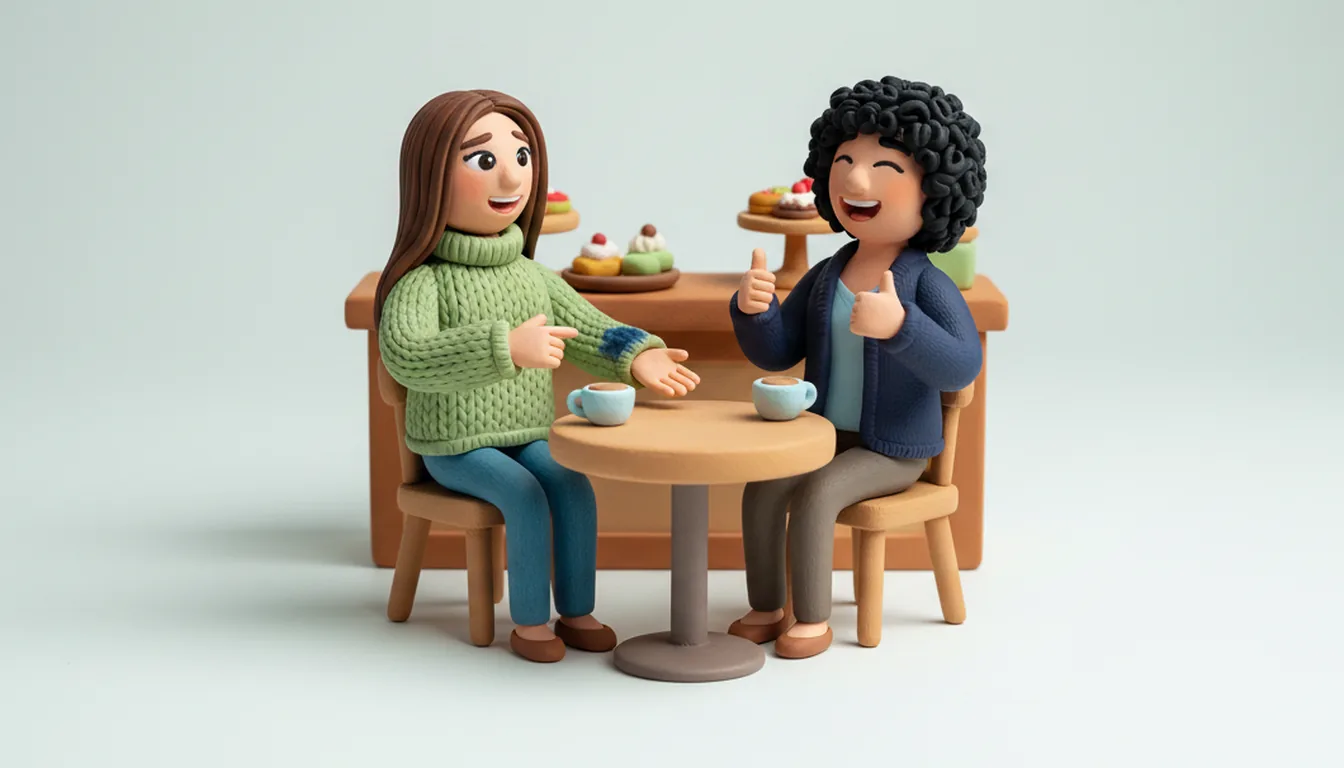
The simplest way to respond to a compliment is to say thank you and stop there. If that feels too bare, add one short, true detail: "Thanks, I made it myself" or "Thank you, it took me ages." You don't need to argue with the praise, shrink it or pay it back on the spot. Some people find this easy and others find it painful, and the difference often comes from personality, the way they were raised and what kind of praise they're getting.
An example: Claire knits her own sweaters, and when her friend Rosa said the green one was beautiful over coffee at their usual café, Claire answered with a list of its faults. The left sleeve is longer, she dropped a stitch near the collar and the wool was on sale anyway. Rosa put her coffee down. "I wanted to ask you to make me one," she said, "and you just talked me out of it." Claire laughed, but it stung a little, because she does this every time. Rosa, who takes praise as easily as she gives it, told her to try one sentence next time: "Thank you, I made it." Claire practiced it on the walk home and felt silly. The next compliment came two days later, and the sentence worked.
Why a compliment can be hard to take
A compliment asks you to agree with something nice about yourself, out loud, in front of someone. For many people that feels like bragging. Others feel put on the spot, like the moment calls for a speech. And some simply don't believe it, because they can see the flaws the other person missed, like Claire with her sleeve.
It also matters what the compliment is about. Praise for something you worked hard on can feel lovely. Praise for something you don't value, like your looks when you care more about your ideas, can feel oddly empty.
Why some people brush praise off and others take it in
Some people who brush compliments off grew up in homes where modesty was the polite choice. Saying "Oh, this old thing" was good manners, and taking praise was showing off. Some also feel they now owe something back, so they rush to return the compliment before the moment passes.
People who take compliments easily often see them as a small gift. You accept a gift, you say thanks and you enjoy it. They don't read praise as a test they need to pass.
Neither habit shows how confident someone is. Brushers can be very sure of themselves in private. Takers can be full of doubt and still have learned that "thank you" is the smoothest reply.
What to say when someone compliments you
Short is best. Pick one that sounds like you:
- "Thank you, that's kind of you."
- "Thanks, I'm really happy with how it turned out."
- "That means a lot, coming from you."
- "Thank you, I worked hard on it."
- "Thanks, you made my day."
- "Thank you. I almost didn't wear it, so I'm glad I did."
- "Thanks! I'll tell my sister, she helped."
Leave out the "but." "Thanks, but it's nothing special" turns a nice moment into a small argument. If the praise feels too big, you can still say thank you and change the subject a second later.
Replies that fit your personality
The best reply is the one you can say without wincing. Here are four styles to try.
If you'd rather not be the center of attention
Keep it tiny and move on: "Thank you," then a question back. "Thanks, how was your weekend?" takes the spotlight off you without rejecting the kind words.
If you like to share the credit
Say thanks first, then name the people who helped. "Thank you, my partner did the garden, I just did the painting." Just make sure the thanks comes before the sharing.
If humor is how you cope
A light joke is fine as long as it doesn't put you down. "Thanks, I'll let it go to my head for exactly five minutes" works. "Thanks, it hides my terrible arms" does not.
If you enjoy keeping the conversation going
Turn the compliment into a chat. "Thanks! I found the recipe on a trip to Lisbon, do you cook much?" People who love talking often find this the easiest route.
Replying to a compliment in a text
Praise by message is easier in one way, because nobody sees you blush, and harder in another, because a plain "thanks" can look cold on a screen. Add a little warmth:
- "Thank you for the compliment, that made my morning."
- "Aw, thanks. I was nervous about that one."
- "Thanks for saying so, it really helps to hear."
Don't wait an hour to reply because you're thinking of something clever. A quick, warm answer reads better than a perfect late one, and it's fine to skip the emoji if that isn't you.
When the compliment is about how you look
Compliments on your looks can feel the most awkward, especially from people you don't know well. A simple "Thank you" is always enough. You don't have to explain your haircut, name the store or point out what you think is wrong. With friends and partners, you can give a little more: "Thanks, I feel good in it."
If a compliment from someone feels uncomfortable or off, you don't owe a warm reply. A polite "Thanks" and a change of topic are enough. And if praise comes with a sting attached, like "You look great for your age," there's a separate guide to the backhanded compliment and how to answer one.
How to give a compliment that lands
The way to give praise depends on the person getting it. Some people want it said in front of others, and some would rather hear it alone. Some care about what they made, and others care about who they are. Six of the 16 types make the point well:
- Ideator loves to hear that an idea was clever or surprising. Praise their thinking, and ask a follow-up question about it.
- Mentor wants praise with feeling. Tell them how something they said or did moved you.
- Commander values results. "You got that done fast, and it worked" lands better than general warmth.
- Dreamer is touched by gentle, private praise. A quiet word about their taste or their kindness goes far.
- Organizer works hard and rarely hears it. Name the effort: "I saw how much you put into this."
- Encourager lights up when you notice their insight into people. "You were right about her" can mean more than any praise for their looks.
If you're stuck for words, the list of words people use to describe themselves can help you find a specific one for someone else. A specific compliment usually beats a general one. For partners, how to compliment your partner has examples you can adapt.
When is National Compliment Day this year?
National Compliment Day falls on January 24 every year. It's an unofficial day for telling at least one person something kind and true. It's also a good day to practice the other half: when someone compliments you back, say thank you and let it sit.
Find out how your type takes praise
Some people soak up a compliment and others argue with it, and your type explains part of which one you do. Take the free personality test, and it describes the strengths your type tends to have, which are often easier to accept once you see them in writing. Then hand the link on your result page to a friend who praises you often. Once your friend has answered, your shared relationship type shows where praise flows easily between you and where a kind word might land oddly.
Questions people ask
How do you respond to a compliment?
With a short thank you. Arguing with the praise or paying it back at once makes the moment longer, not kinder.
How do you accept a compliment without sounding arrogant?
"Thank you, that's kind of you" is never arrogant. Arrogance comes from bragging on top of it, and a short thanks does the opposite.
What do you say when someone compliments you?
"Thank you," "That means a lot" or "Thanks, I worked hard on it." Pick the one that sounds most like you.
Why do I feel awkward when someone compliments me?
Taking praise can feel like bragging, or like being put on the spot. It gets easier with practice.
When is National Compliment Day each year?
National Compliment Day is on January 24 every year.
Written by Virko Kask, founder of Typeza
Written with the help of AI tools.
One question for two, every week
A question to ask your partner, friend or family, and how different types tend to answer it.
Free. Unsubscribe any time.