
Things to be grateful for: a list, and why yours looks different
Things to be grateful for fall into a few groups: the people in your life, everyday things you'd miss if they were gone, small moments in an ordinary day, and things about yourself. A good gratitude list doesn't need to sound deep. It needs to be true for you, which is exactly why one person's list can look nothing like a friend's.
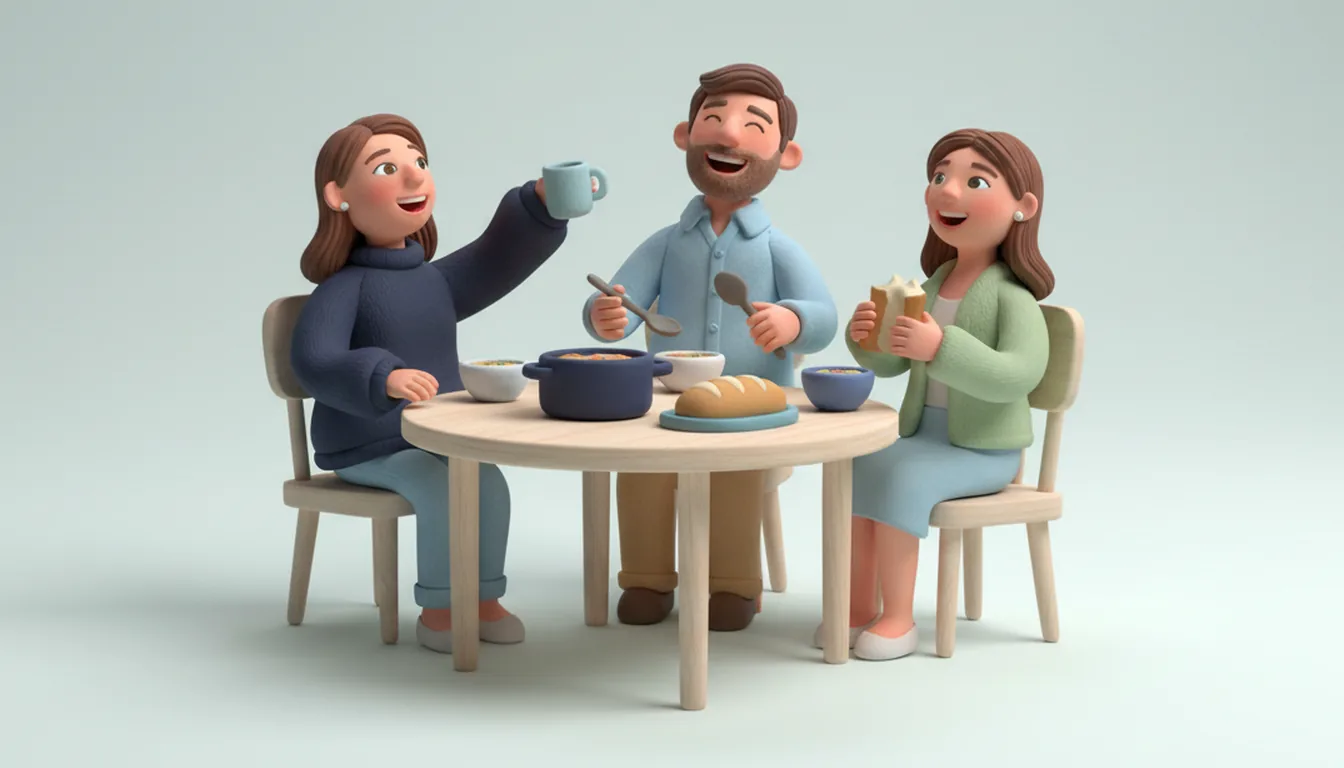
An example: Ines, Tom and Grace met as roommates years ago, and they still have dinner together most Sunday nights. Before anyone eats, each of them names one thing from the week they're grateful for. Ines nearly always names a person: her sister calling out of the blue, a neighbor who carried her shopping up three floors. Tom names things. The new bakery on his corner, the bus that came on time, the first cold morning he got to wear his favorite sweater. Grace usually names something she did herself, like finishing a hard piece of work or running farther than the week before. For a long time Ines privately thought Tom wasn't taking the ritual seriously. Then one night he said, "The little stuff is what I notice. If I said something big, I'd be making it up." Ines realized he was more honest about it than she was.
A list of things to be grateful for
Pick the lines that make you think "yes, that one," and skip the rest.
People in your life
- A friend who answers the phone on the first ring
- A parent who still asks whether you've eaten
- A brother or sister who remembers the same childhood jokes
- A partner who makes the coffee without being asked
- The neighbor who takes in your packages
- An old friend you can call after a year and pick up where you left off
- A coworker who covers for you on a bad day
- Someone who taught you a skill you use every week
- A person who told you a hard truth kindly
- Grandparents, alive or remembered, and the stories they left
Everyday things you stop noticing
- Hot water whenever you turn the tap
- A bed that is just right
- A kitchen with enough food for the week
- A body that gets you up the stairs
- Your favorite mug
- A library card
- A phone that lets you hear a voice from another country
- A window with a view of a tree
- Shoes that don't hurt
- A quiet street at night
Small moments in an ordinary day
- The first sip of coffee before anyone else is awake
- A song you love coming on by chance
- Clean sheets on a Sunday night
- Laughing so hard at dinner that you can't finish your sentence
- A stranger holding a door
- The smell of rain on a hot sidewalk
- A message from a friend that says "this made me think of you"
- Getting home just before the storm starts
- A long walk with no particular place to go
- The moment a hard day is finally over
Things about yourself
- A skill you worked hard for
- The way you treat people who can't do anything for you
- Your sense of humor, even when it's odd
- A mistake you learned from
- Your curiosity
- The fact that you kept going through a hard stretch
- Something you're good at that nobody taught you
- The friends you chose, which says something good about you
Why your list looks nothing like a friend's
Two people can live similar lives and still write very different gratitude lists. Part of it is circumstance. Someone who just moved to a new city notices old friends. Someone who has had a loud, busy month is grateful for a quiet evening. A person who spent a winter with a broken leg will be thankful for stairs for years.
Part of it is personality. Some people notice people first. Others notice how things work, whether a plan held or a room feels calm. Some are thankful for what they managed to do, and some for the new thing they tried. No kind of gratitude is more correct than the others. Ines notices people, Tom notices things, and Grace notices her own effort, and all three are telling the truth. The same split shows up when people try to say what makes them happy.
What each type tends to be thankful for
Personality type shapes what jumps out at you as a good thing. Here are six of the 16 types:
- Harmonizer: comfort and calm. A warm kitchen, a good meal, a peaceful evening with nobody in a rush.
- Vitalizer: people and shared joy. A full table, a good laugh, a friend's happy news.
- Inspector: things that work as they should. A train on time, a tidy drawer, a plan that held.
- Dreamer: quiet moments with meaning. The light late in the day, a song that fits the mood, one deep conversation.
- Entrepreneur: progress and time well spent. A productive morning, a finished task, a goal that moved forward.
- Encourager: growth in other people. A friend who found her confidence, a new person met, an idea that clicked.
If you share a home or a dinner table with someone, their list can tell you a lot about what they need from you.
What to say when someone asks what you're thankful for
On Thanksgiving, the fourth Thursday of November, someone at many tables asks the question, and friends ask it again at Friendsgiving. People freeze because they think the answer has to be big. It doesn't. One specific thing, said in a sentence or two, works better than a long speech.
A few ways to answer:
- Name a person at the table and one thing they did this year.
- Name a small thing you'd really miss, like the bakery, the dog or the new couch.
- Name something that went better than you feared.
- Name something you did yourself that you're quietly proud of.
Light answers are fine too. "I'm thankful the oven worked this year" gets a laugh, and it's honest.
How to keep a grateful attitude on ordinary days
Feeling grateful once a year is easy. Keeping it up in a normal week takes a few small habits, and none of them needs special tools.
- Tie it to a moment you already have. While the kettle boils or the car warms up, name one thing from the day that went right.
- Say it to someone. Saying good things out loud can help you notice them. Tell the friend who helped, or mention one good thing at dinner the way Ines, Tom and Grace do. When the thanks belong to a person, how to show appreciation has ways to tell them.
- Notice when you compare. Scrolling through other people's best days makes your own look small. Put the phone down and look at what's actually in front of you.
- Keep it specific. "My family" is vague. "My dad fixing my bike chain on Saturday" is a real memory, and you'll feel it.
- Let hard weeks be hard. Being grateful doesn't mean pretending everything is fine. On a rough week, one small true thing is enough.
Some people write three lines in a notebook each night, and others never write anything down. Either way works to maintain a grateful attitude.
Find out what you tend to notice
What lands on your gratitude list, like a finished job, a warm room or a good talk, often follows your type. A free personality test describes your type's strong points and the places it slips. To compare with a friend or partner, send them the link from your result. When they finish, your relationship type shows what feels easy for you two and where your two lists would look different.
Questions people ask
What are 5 things to be grateful for?
A person who supports you, a safe place to sleep, a body that carries you through the day, a small daily pleasure like your morning coffee, and something about yourself that you've worked on.
What does it mean to be thankful?
It means noticing something good in your life and feeling glad about it, often with a sense that someone or something helped you to it.
What is a gratitude list?
A short list of things you're grateful for, written down or said out loud. It can be daily, weekly or once a year, and it works best when each item is specific.
Is there a day for gratitude?
Yes. World Gratitude Day is September 21, every year. It is an informal day that started in New York in the 1960s. A simple way to mark it is to pick three things from the list above, or to send one thank-you message to someone who helped you this year.
Sources
- Sri Chinmoy Centre, "World Gratitude Day": September 21, and the idea's start at a United Nations reception in New York in the 1960s.
Written by Virko Kask, founder of Typeza
Written with the help of AI tools.
One question for two, every week
A question to ask your partner, friend or family, and how different types tend to answer it.
Free. Unsubscribe any time.