
Friendsgiving: how to host one your whole friend group enjoys
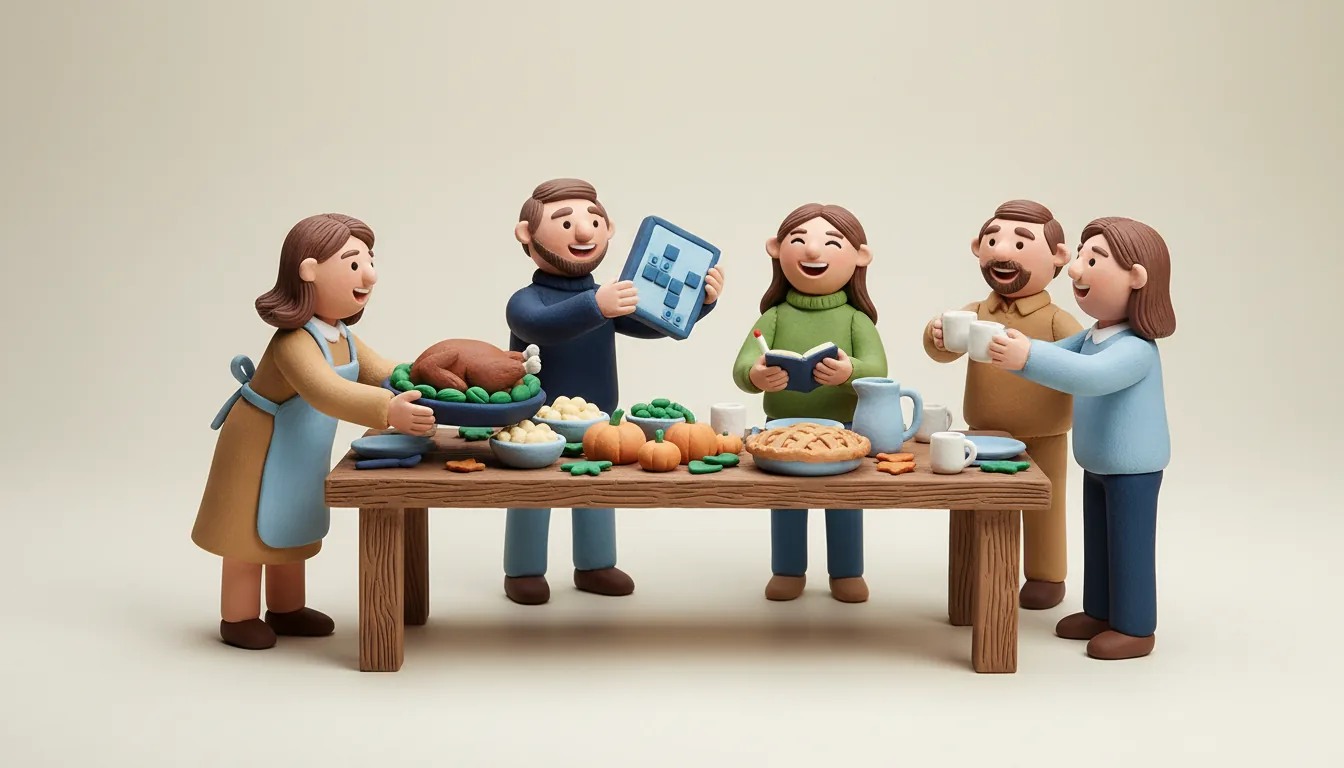
Friendsgiving is a Thanksgiving-style meal shared with friends instead of family, usually as a potluck and usually on a weekend close to Thanksgiving. There are no fixed rules about the food or the day. What makes one feel good is simpler: every friend gets a part that suits them, including the friend who only wants to show up.
An example: Owen agreed to host Friendsgiving back in August, when November still felt far away. By the second week of November the group chat had 140 unread messages. Hana had made a shared list with columns. Marco had promised "a game nobody has played before." Bea had asked twice whether she could just bring ice. Jonah had not replied at all, which everyone knew meant he would walk in at seven with a bag of rolls from the gas station and the best stories of the night.
What is Friendsgiving?
The name joins "friends" and "Thanksgiving." It began as an easy answer for people who could not travel home for the holiday, or did not want to, and it spread because it turned out to be fun on its own. The word was first used online in 2007, searches for it took off from about 2013, and Merriam-Webster added it to the dictionary in 2020.
A Friendsgiving can be a full turkey dinner with place cards, or a pile of takeout boxes on a living room floor. Many fall somewhere in between: one person hosts and makes the main dish, and everyone else brings something. Many people now do both, with Friendsgiving one weekend and family Thanksgiving the next.
When is Friendsgiving?
There is no official date. Thanksgiving falls on the fourth Thursday of November, and many groups hold Friendsgiving on the weekend before it, while people are still in town. Some prefer the weekend after and turn it into a leftovers party.
The best day is the one most of your friends can make. Put a poll in the group chat about three weeks ahead with two or three dates, and pick the winner within a day. The same chat often plans December 31 next, and New Year's Eve ideas has ideas for a night that suits the whole group.
How to host a Friendsgiving without doing everything yourself
Hosting gets easier once you remember it's a dinner for friends. Nobody is expecting a restaurant. A plan that works for many groups:
- Pick the date and the size. Count chairs before you count friends.
- Decide what you will cook. Usually the host makes the main dish: a turkey for a crowd, a roast chicken for six, or a big pot of something simpler.
- Make one shared list. Sides, desserts, bread, drinks and ice, with a name next to each. This prevents the classic Friendsgiving with four bowls of mashed potatoes and no vegetables.
- Ask about food needs early. Who eats no meat, who can't have nuts or gluten. One question in the chat saves a quiet guest from a dinner of bread rolls.
- Give a start time and a food time. "Come at five, we eat at six" leaves room for the late ones.
- Plan the clean-up in advance. Ask two people ahead of time to stay for the washing up.
On a tight budget, a theme can do more than an expensive menu. "Comfort food from where you grew up," "everything orange" or "breakfast for dinner" turns a cheap potluck into something people talk about all evening.
The four friends who make a Friendsgiving work
Many friend groups sort themselves into the same few jobs without anyone deciding. When the jobs fit the people, the night runs itself. When they don't, the host ends up doing all of them.
The host
The host offers the space and holds the evening together. A good host doesn't need the most impressive turkey. They need a warm room, enough chairs and the calm to say "it's fine" when the gravy goes lumpy.
The planner
Hana is the planner. She makes the list, sends the reminder and notices that nobody has signed up for dessert. Planners get teased for it, and every group needs one. If you are the host and the planner at once, hand one of the two jobs to a friend.
The one who brings the games
Marco arrives with a box under his arm and a plan for after dinner. The game bringer keeps the evening alive once the plates are empty. The trick is to pick for the people in the room: a long strategy game for the competitive crowd, something silly for everyone else.
The one who just shows up
Jonah brings store-bought rolls and himself, and the night is better for it. The drop-in friend is often the best company at the table, because they carry no stress about the food. Give them one easy job, such as ice or napkins, and let them talk.
Other parts appear too: the friend who quietly washes dishes all night, or the one who makes sure a shy new partner isn't left alone in the kitchen. The roles in a friend group tend to follow people from one gathering to the next, and a Friendsgiving table makes them easy to spot.
What to bring to Friendsgiving
The best thing to bring is whatever the shared list asks for. If there is no list, or the host says "just bring yourself," pick from these:
- A side dish that travels well. Roasted vegetables, a grain salad, stuffing, green beans, mac and cheese or sweet potatoes. Anything that tastes good at room temperature makes life easier for the host.
- Dessert. A pie, a tray of brownies, cookies or a fruit crumble. Dessert is an easy course to forget.
- Bread and starters. Rolls, a loaf with good butter, a cheese board, or crackers and dips for the hour before dinner.
- Something you didn't cook. A bakery pie, a fruit platter, good chocolates or a bag of clementines.
- Drinks everyone can enjoy. Sparkling water, warm apple cider, juice, and coffee or tea for after dinner, plus a big bag of ice.
- Things the host may run out of. Folding chairs, serving spoons, foil or containers for leftovers.
Friendsgiving games and things to do after dinner
Games after a Friendsgiving meal don't need a board or a printout, only a table of people who like each other. After the food, many groups need a gentle push to stay at the table. Choose by the mood of your friends.
- Groups that love to talk: a thankful round, where each person names one good thing from their year, or two truths and a lie, played with stories from the past twelve months.
- Competitive groups: a pie ranking with secret votes, a quick quiz about the group itself ("whose first car was a red van?"), or charades.
- Quieter groups: a jigsaw puzzle on a side table, a slow card game, or a walk around the block before dessert.
- Every group: a gratitude jar, where each guest writes a short note to the friend on their left, and the notes are read out over pie.
Before anyone leaves, take a group photo and write the names and the date on the back. Some groups end up treating the dinner as a kind of friendiversary for the whole circle.
Games for the Friendsgiving table
These work at a family table of grown-ups too, and none of them needs anything printed.
- Pass the pumpkin. A small pumpkin goes around the table while music plays. Whoever holds it when the music stops pulls a question from a bowl, like "What was the best meal you ate this year?"
- Guess the November. Everyone brings one photo from a past Thanksgiving, and the table guesses the year from the hair and the clothes.
- Napkin sketches. One person draws a word like "stuffing" or "parade" on a paper napkin, and the others have one minute to guess it.
- The leftovers menu. Teams get three minutes to invent tomorrow's best dish from tonight's leftovers, and the host picks a winner.
- Touch football in the yard. A slow, friendly game is the old Thanksgiving way to wake up after the meal.
A Commander will head straight for the football, and a Counselor may happily answer pumpkin questions until midnight.
For a party with friends earlier in the fall, fall party ideas has backyard games that need only what's already at home.
When the table is family instead, games for after Thanksgiving dinner has charades prompts, a pictionary relay and minute challenges from the kitchen.
For the pause while the next game is set up, Thanksgiving jokes has puns and one-liners about the leftovers.
Which type ends up with which job
Who becomes the host, the planner or the drop-in friend has a lot to do with personality. At a Friendsgiving, seven of the 16 types often look like this:
- Ideator: brings the odd new game or the theme idea, and starts a long debate about whether pie counts as a side dish.
- Harmonizer: makes the room cozy with soft light and the right music, and notices who is still hungry.
- Vitalizer: the born host who loves a full house, greets everyone at the door and keeps the mood high all evening.
- Inspector: owns the shared list and the timings, and sends a polite nudge to whoever still hasn't signed up.
- Diplomat: gets the shy guests playing, starts the thankful round and makes even a burnt dish feel like part of the fun.
- Strategist: thinks of what everyone else forgot, like the leftover containers or a second oven timer.
- Organizer: carries in the extra chairs, carves the turkey and is still drying plates at midnight, usually without being asked.
Find out what each friend brings to the group
Who makes the shared list, who brings a game and who walks in late with the best stories often comes down to type. Before the potluck planning starts, take the free friendship compatibility test. Then drop the link from your result into the Friendsgiving group chat. Every friend who answers gets a relationship type with you, so you learn which friendships run smoothly and which need a little more patience.
Questions people ask
What is Friendsgiving day?
Friendsgiving day is whichever day your group picks. Many groups choose a weekend before Thanksgiving, which falls on the fourth Thursday of November.
When did Friendsgiving start?
Friends have shared autumn meals for a very long time. The word itself was first used online in 2007 and became common in the 2010s, as more people lived far from family and started November traditions with the friends they made as adults.
What are good Friendsgiving themes?
Easy ones are comfort food from where everyone grew up, a dish from a country you'd like to visit, recipes from a grandparent, or every dish starting with the same letter. A theme costs nothing, and it gives each guest a small story to tell about what they brought.
What should I bring to Friendsgiving if I can't cook?
Bring something store-bought, like a bakery pie, rolls, a fruit platter, drinks, ice or extra chairs. Ask the host what is still missing from the list. As a guest at a family Thanksgiving dinner, the same rule works: ask first, then bring a pie, flowers or something for the next morning's breakfast.
What do you text friends on Thanksgiving?
Keep it short and about them, like "Happy Thanksgiving! This year was better because you were in it," or "Saving you a slice of pie in spirit. Happy Thanksgiving." To family far away, "Happy Thanksgiving from my table to yours, I wish you were here" says the main thing.
Sources
- Wikipedia, "Friendsgiving": first used online in 2007, searched regularly from 2013, added to Merriam-Webster in 2020.
Written by Virko Kask, founder of Typeza
Written with the help of AI tools.
One question for two, every week
A question to ask your partner, friend or family, and how different types tend to answer it.
Free. Unsubscribe any time.