
Friend group dynamics: the roles, the drama, and why some groups just click
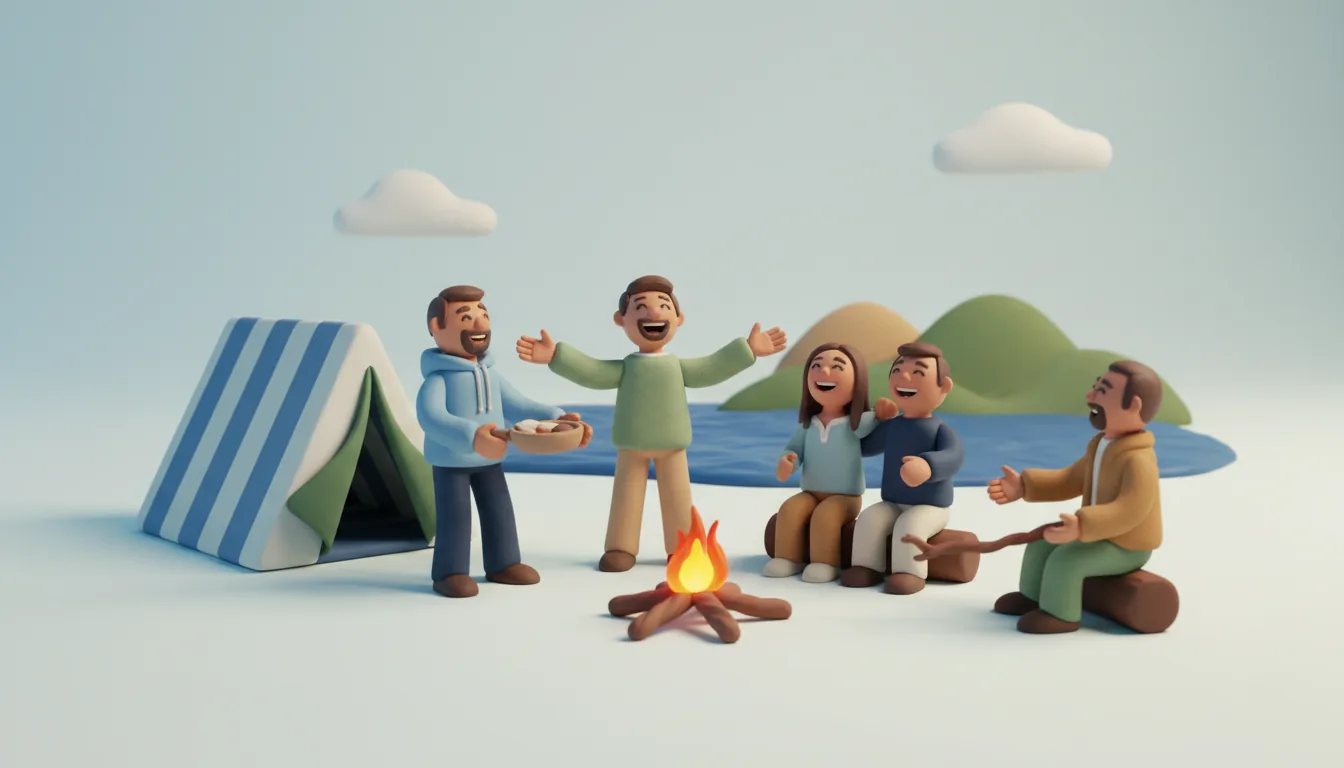
Friend group dynamics are the patterns in how a group of friends gets along: the roles people take, which pairs are close, and where the friction starts. You may know a group that just worked, where the jokes landed and the silences were easy. You may also know one that never quite did, even though everyone in it was nice. This article goes through the roles, where the drama comes from, why groups of three are so hard, and why some groups feel like home from the first evening.
What is a friend group?
A friend group is a set of friends who spend time together as a group as well as in pairs. They have a group chat, a regular table, shared jokes and a shared history. Some groups form at school or university, some at work, some around a sport or a street.
Here is the part that is easy to miss. A friend group is also a set of pairs. Five friends make ten pairs, and every pair is its own relationship, with its own relationship dynamics. From the outside the group looks like one thing. From the inside it is ten different friendships at the same table.
What are the roles in a friend group?
Lists of friend group roles name the same characters again and again.
- The planner books the table and sends the reminder.
- The host has the blankets, the snacks and the sofa everyone ends up on.
- The mood-lifter makes the evening fun.
- The peacekeeper knows who is upset with whom and quietly fixes it.
- The ideas person suggests the trip nobody else would have thought of.
- The mover gets things going and decides when the group cannot.
- The one who sees trouble coming says it is time to leave.
Nobody applies for these roles. People drift into them, and they drift into the same ones in every group they join. Typeza's theory, socionics, has an answer for that. It sorts information into eight kinds, and every personality type is at ease with some and has to work at the rest. People take the role where their strongest kind lies.
The planner leans on Structural Logic or Practical Logic. The host is strong in Sensing of Senses, which covers comfort, food and a room that feels good. The mood-lifter is strong in Ethics of Emotions, the peacekeeper in Ethics of Relationships. The ideas person is strong in Intuition of Opportunities. The mover is strong in Sensing of Will, and the one who sees trouble coming is strong in Intuition of Time.
This is also why a group can feel like something is missing. A group with three planners and no host has great plans and cold evenings. A group with no planner has warm evenings that never get organized. For a group of women stuck in that loop, girls' night ideas sorts plans by the kind of group you are. The group chat has its own cast, and group chat names for friends shows who plays what.
Why do some friend groups click?
Those 16 types also fall into four groups called quadras. People in the same quadra share values: what they find funny, what a good evening looks like, what is worth talking about. Friends from one quadra seldom take offense at each other's words, and an evening together leaves them rested.
There is a neat fact underneath this. Take four people whose types make up one quadra. Every pair among them is Duality, Activation or Mirror, three of the most comfortable relationship types. A group like that clicks almost at once, and people describe it as finding their people.
Most real friend groups are mixed, and that is fine. A mixed group has more variety and more friction. It works when the comfortable pairs outnumber the hard ones, or when the hard pairs keep a little distance inside the group.
The same idea explains a feeling many people know: sitting in a group of kind people and still feeling slightly outside. Often nobody did anything. You value different things from the people around you, and the group's jokes and plans grew around their values. It is a question of fit, and it says nothing bad about you.
Where does friend group drama come from?
Friend group drama rarely involves the whole group. Usually it comes from one or two pairs inside it.
A few relationship types are hard up close and fine at a distance, and a group gives them that distance. Super-ego is the clearest case. Two people who admire each other at a dinner for eight find each other hard on a weekend for two. Conflict works the same way, more strongly: fascinating across the room, painful side by side. In Supervision, one friend keeps landing on the other's weakest point without meaning to, and in a group it happens less often.
So drama tends to start when the group shrinks. A trip where the room plan puts the wrong two together. A shared flat. A wedding where two friends have to organize something as a team. The group setting was protecting a pair, and the protection went away.
How to deal with friend group drama
Look at the pair first. Fights in a friend group often run between the same two people. Naming that takes a lot of heat out of it, because the rest of the group can stop taking sides.
Choose formats that suit the hard pairs. Dinners and parties suit almost everyone. Long trips, shared houses and joint projects suit the comfortable pairs and test the hard ones. You can plan around that and keep the group whole. Traveling with friends covers how to plan a group trip.
Do not ask two people to become close because they are both close to you. Your two best friends can be a hard pair for each other. That is about the two of them, and it says nothing about your taste in friends.
Why are friendships of three so hard?
A trio has three pairs, and three pairs are rarely equal. One pair is usually closer, and the third person feels it even when nobody says it. If two of the three are duals, they handle each other with ease, and the third friend can start to feel like a guest.
Trios can still last for decades. The ones that last usually stop expecting the three pairs to be the same and let each pair be what it is. Plenty of trio friendships are really one close pair and two good friendships, and that is a good outcome. A compatibility test looks at one pair at a time, so three friends get three results to compare.
Do you need a friend group?
The sitcom picture of adult life is six friends on one sofa every evening. Many people feel they have failed if they do not have that. Some call this belief the friend group fallacy: the idea that a real social life needs one tight group.
Many adults have friends who never meet each other: one from school, one from work, one from the climbing gym. That is a normal shape for a social life. It also suits some relationship types better. A friendship that works one to one and badly in a crowd is still a good friendship.
How to see the pairs in your group
You cannot see relationship types from the outside, and a group hides them even better than a pair does. A friend group compatibility test works pair by pair. Each person takes the free friendship compatibility test on their own. When everyone has a type, Typeza shows the relationship type for each pair, what comes easily between those two and where they tend to rub. The types of friends article describes the most common one-to-one patterns, and the relationship types pages cover all 16.
Questions people ask
What is a friend group?
A set of friends who spend time together as a group, with shared plans, jokes and history.
What are the roles in a friend group?
The planner, the host, the mood-lifter, the peacekeeper, the ideas person, the mover and the one who sees trouble coming. People often keep one role in every group.
What does "your vibe attracts your tribe" mean?
It means the mood and values you give off draw in people who share them. Someone who's always up for a weekend hike ends up with friends who hike, and someone who loves long dinners and slow talk collects friends who stay late at the table. That's close to how quadras work, since people relax most around those who value the same things. It's less true of groups that formed by chance, like the people from one office or one street, who share a place more than a vibe.
Why do I feel left out in my friend group?
Often the group's jokes and plans grew around values you do not share, even when everyone is kind. That happens when most of the group comes from one quadra and you come from another, since people relax most with their own quadra. If it happens with family or a partner's friends too, feeling left out covers what to do and how to bring it up.
How do you deal with drama in a friend group?
Find the pair it comes from, and plan things that give those two some distance, like dinners instead of long trips.
Why are friendships of three so hard?
One of the three pairs is usually closer than the other two, and the third person feels it.
Is it better to have a big or small friend group?
It depends on what you want from friends. A big group gives you plenty of plans and people to call, and a small one gives you more time with each friend. In both, what counts is whether the pairs inside the group work.
What is another word for a friend group?
Common words are circle, crew, squad, gang and group of friends. Circle of friends sounds a little more formal, while squad and crew sound playful and close.
Written by Virko Kask, founder of Typeza
Written with the help of AI tools.
One question for two, every week
A question to ask your partner, friend or family, and how different types tend to answer it.
Free. Unsubscribe any time.