
Relationship Dynamics: The 16 Types Explained
By Virko Kask, founder of Typeza
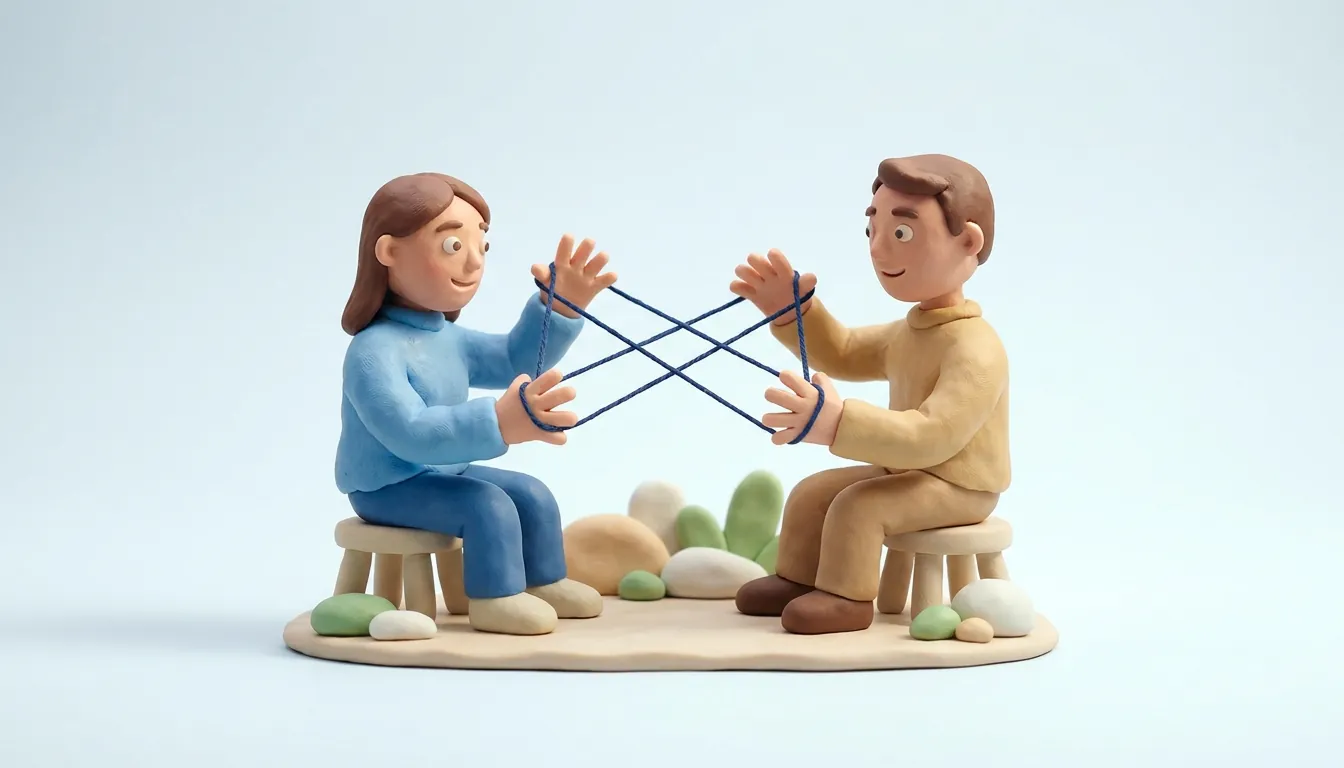
Most people know someone they can talk to for hours and someone they always end up arguing with. The difference often lies in the relationship dynamic, the pattern that forms between two particular people and repeats whatever they happen to be doing.
Socionics describes 16 personality types and, for any two of them, one of 16 relationship types. Each one is a dynamic of its own, with its own places where the two people fit and where they rub.
What are relationship dynamics?
A relationship dynamic is the way two people keep affecting each other, for example whose words land and whose go past. It belongs to the pair, not to either person's character. Someone calm and patient can keep losing their temper in one particular relationship, and nobody around them understands why.
The theory behind the 16 relationship types grew out of that puzzle: why people who all mean well still irritate and hurt each other. Its answer is that every pair of types exchanges information in its own way. What comes naturally to one person lands in the other either where they want help or on a sore spot, and neither of them chose it.
So a dynamic repeats. It follows from the two types, and talking it through once does not make it go away, but knowing the pattern makes it much easier to live with.
Three ways a dynamic can feel
Each of the 16 is a different form of information exchange, and they feel very different. One brings short emotional flashes or a quick closeness, another stays even and steady and grows stronger over time, and the business-like ones bring neither closeness nor conflict.
Being drawn to someone is not always better for you than being pushed away. A dynamic can pull two people together and still wear them down, while another helps both of them use their strengths.
The first weeks of a relationship therefore say little about where it is going. A dynamic with a strong pull at the start can wear thin, and one that feels unremarkable at first can keep deepening for years. How to know if you're compatible with someone looks at this difference between chemistry and compatibility in more detail.
The 16 types of relationship dynamics
On Typeza, the 16 are sorted into three groups by how they usually feel up close: comfortable, neutral and tense. Two of them are one-directional, so each has two sides with names of their own, which makes 16 pages for 14 dynamics. The short descriptions below are examples of relationship dynamics as they tend to play out between two people, and the compatibility chart shows which one any two types have.
Comfortable dynamics
Duality. Each of you handles with ease what tires the other, so responsibilities divide themselves without negotiating. It rarely starts with fireworks. At first, duals often find each other simply comfortable to be around, and the relationship deepens with time.
Activation. Even a short meeting lifts both of you, but too much time together, especially under pressure, turns that energy into fatigue.
Semi-duality. It has most of what makes Duality work, with one weak area you share. You teach each other a lot, but when trouble comes in that area, neither of you can help.
Mirror. You care about the same things and look at them from opposite sides, one of you turning outward to act and the other inward to reflect. Each keeps giving the other a slightly different angle, and the small gap between your views can drive you mad.
Order: Supplier and Orderer. This one runs in one direction. The orderer's view of the world lands on the supplier's motivation, so the supplier wants to help and to be closer. The orderer gets eager help they never asked for and wants more room.
Neutral dynamics
Identity. Two people of the same type understand each other completely, but nobody fills the gaps, because they share every strength and every blind spot.
Kindred. You want the same things and take different routes to them. You grasp each other's motives well, but joint projects turn into mutual irritation, because each of you has to do it your own way.
Business. You handle practical things the same way, so working together is easy, but you rarely get close. The relationship tends to fade when the shared task ends.
Mirage. Few relationships are as restful. You can help each other with plenty of practical matters while staying oddly far apart on what matters most, so it is hard to build shared goals on.
Extinguishment. You care about the same subjects and see them from opposite sides. You talk easily but rarely agree, and each of you tends to dampen the other's momentum.
Quasi-identity. You look similar on paper and still never quite connect. You use the same words for different things, so conversations arrive nowhere. It is more frustrating than harmful.
Supervision: Supervisor and Supervisee. This one runs in one direction too. The supervisor sees the other's weak spot clearly and, simply by saying what they notice, presses where the supervisee is least defended. It works far better at a distance than up close.
Tense dynamics
Conflict. You are opposite on every basic dimension, the greatest difference there is. It often fascinates at first, but up close each of you presses exactly where the other is least able to take it.
Super-ego. You tend to admire each other from a distance and strain each other up close. Your strongest sides land on each other's insecurities, so formal settings work and daily closeness does not.
Healthy and unhealthy relationship dynamics
A comfortable dynamic is not automatically healthy, and a tense one is not automatically unhealthy. There is no proof that any form of relationship is harmful always and in every case. Hard dynamics lose their force when a person also has complementary people in their life, and every relationship works well at its own safe distance.
Whether the dynamics of a relationship are healthy depends mostly on how close the two of you are and how much of your life rests on it. A conflict relationship can be fine with a colleague you see at a weekly meeting and punishing with someone you live with. An activation partner can lift you for an evening and exhaust you on a long trip together.
The people around you matter too. The 16 types form four groups of four, called quadras. Inside such a group, people share interests, understand each other and rarely hear anything hurtful in each other's words, and time together takes away tiredness and lifts the mood. A life with a few such people in it can carry a harder dynamic elsewhere.
An unhealthy dynamic usually shows one of two signs. Either you cannot get the distance the relationship needs, or one person keeps trying to turn the other into someone else. The second happens most often when a person has no complementary partner and tries to remake someone close into one. A type cannot be changed, and whoever cannot hold out in that struggle gives up part of who they are, which is a road to neurosis.
One-directional dynamics: who holds the power
In most dynamics the pull or the friction runs equally both ways. In Order and Supervision it does not: one person's influence on the other is stronger than the other way round. This is the closest the 16 come to a power dynamic, and neither person chose it.
An argument between an orderer and a supplier shows what this looks like. The orderer does not quite take in the supplier's arguments, and the supplier feels their words go past, even on a subject they know well, so they either fall silent or flare up. From the outside, one looks composed and the other poorly informed or touchy. The orderer means no harm, and often does not even believe the other person is really upset.
Distance changes a lot here. In a wide circle, like a workplace where people come and go, the supplier can take the orderer's wishes and carry them out in their own way. In a small group like a family, where the two stay close for years, every passing remark from the orderer can land as a demand the supplier cannot act on, and the strain builds.
The advice for the orderer is to watch the tone of voice, since even an innocent joke can land as a reproach, and to apologize when the other person is hurt, even without feeling guilty, because they need to know it was not meant.
Supervision works in a similar way: the supervisor's ordinary remarks reach the supervisee's most sensitive area, and the kindest move is to say less than you see. No one is always on the stronger side, though. Every type supervises one type and is supervised by another.
Why two people handle the same dynamic differently
Your type also shapes how you respond to a dynamic. Here extroverted and introverted describe where attention goes first, to people and things as they are or to the relationships between them, not how sociable someone is.
When a relationship bothers them, people of extroverted types tend to change the relationship: they step back, see the person less or treat them differently, and leave the other person as they are. They take any attempt to re-educate them badly. People of introverted types tend to keep the relationship and try to change the person within it. To them, people can be replaced more easily than relationships.
It helps to know which of the two you are dealing with. A partner who quietly keeps their distance may not be rejecting you, and one who keeps asking you to change may be trying to keep the relationship, not to criticize you.
How to find your relationship dynamic
Your dynamic follows from your two personality types, so it is only as accurate as those types. On Typeza, each of you takes the free test on your own. When both types are known, you see which of the 16 relationship types you have, with a short summary and what it tends to feel like from each side. Take the free compatibility test.
If you already know both types, the compatibility chart shows the dynamic for any pair, and each relationship type has its own page with the full picture.
Questions people ask
What are relationship dynamics?
The recurring patterns in how two people affect each other: whose words land, who sets things in motion, where friction starts and how the relationship changes over time. They come from the pair, not from either person alone.
What are the types of relationship dynamics?
One way to sort them is by the personality types of the two people. That gives 16 relationship types, from Duality, the most complementary, to Conflict, the most demanding, grouped as comfortable, neutral and tense.
What makes a relationship dynamic healthy?
The right distance for that dynamic, and two people who accept each other as they are. Even a tense dynamic can work at a distance, especially when both people have complementary relationships elsewhere in their lives.
Can a relationship dynamic change?
The underlying dynamic stays, because each person's type stays the same for life. What changes is how close you are, how much rests on the relationship and how well you both know the pattern, and that changes how the dynamic feels.
What is a power dynamic in a relationship?
A pattern where one person's influence on the other is stronger than the reverse. Among the 16 relationship types, Order (Supplier and Orderer) and Supervision work this way by structure, without anyone choosing it.