
Feeling left out: with friends, with family and in your partner's circle
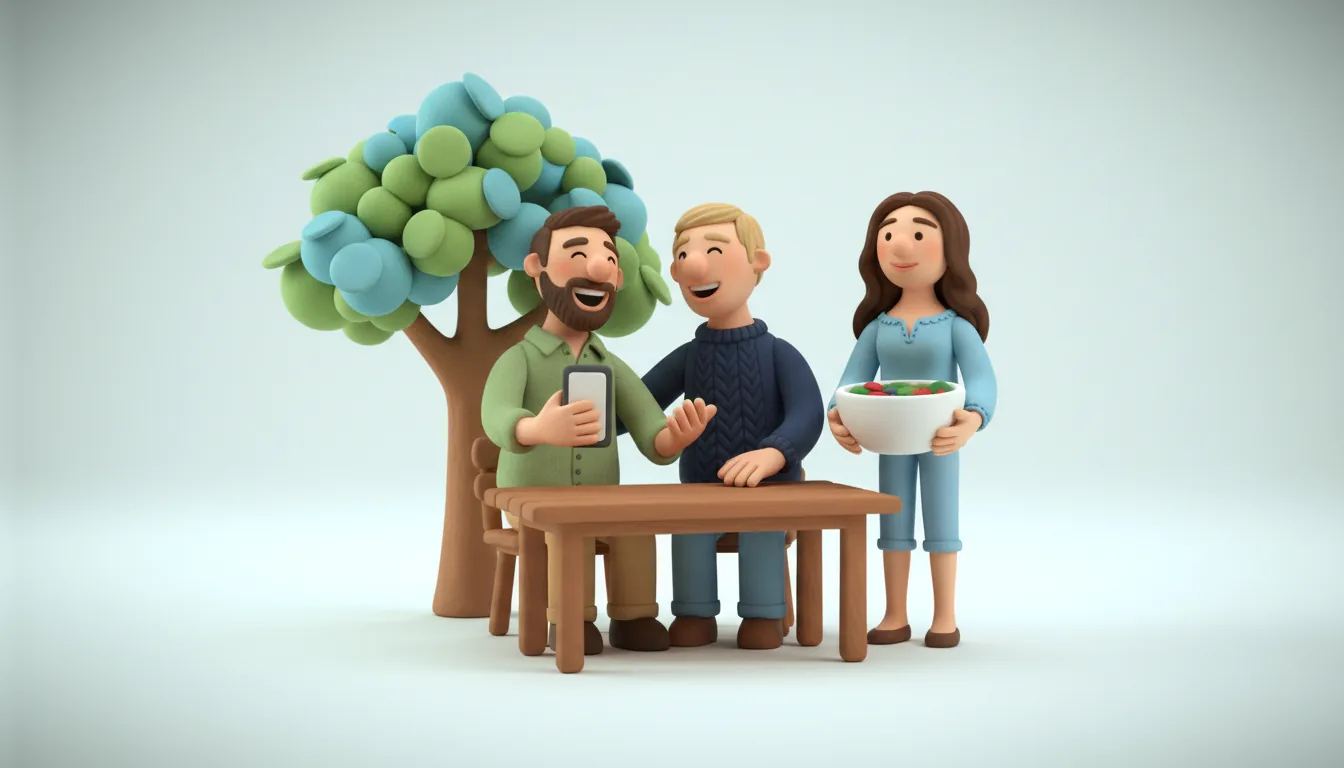
Feeling left out is the sense that the people around you share something you're outside of, right now. It shows up in friend groups, at family gatherings and among a partner's friends. Often nobody means it. That doesn't make it sting less, but it changes what helps.
An example: the lunch is in Callum's backyard, at the wooden table under his little tree. Freya carries out the salad she made in a big white bowl just as Callum holds up his phone. "You have to see this," he says to Hollis, Freya's husband. The two men lean in and laugh until Hollis has to wipe his eyes. It's a video from the group chat of their old house share, where eight friends are planning a weekend in the mountains. Freya stands at the end of the table with the bowl, smiling politely, waiting for a gap. It takes four minutes. Nobody is being unkind. They just haven't noticed her. On the drive home she says, "I felt like the caterer today." Hollis is surprised. He thought lunch went well.
Three places it tends to happen
In your own friend group
Plans get made in a chat you're not in. The photos from Saturday appear on Sunday, and you didn't know there was a Saturday. Or you were there, but every joke came from a trip you missed. If you move between several circles, you may be a floater friend, welcome in many groups and at the center of none, which makes these moments more common.
At family gatherings
Families run on old roles. The siblings who live nearby share news you hear last. Cousins talk about people you've never met. A new partner, or the relative who moved away, can sit through a whole dinner without one question coming their way.
Among your partner's friends
This is Freya's lunch. Your partner's old friends share years of stories, nicknames and places. They aren't shutting you out, but they're speaking a language you only half know, and your partner, happy to be with them, forgets to translate.
Why it happens when nobody means it
A few ordinary things cause much of it:
- Pace. Some groups talk fast and cut in. If you wait for a pause, it may never come.
- Topics. Shared memories, a sport, a show everyone watched. Talk drifts to what most people know.
- Where plans live. A trip planned in a chat of eight leaves out the ninth person without anyone choosing to.
- History. People who have known each other for years fall back into old habits when they're together.
- Seating. At a long table, the people at the far end often hear a different conversation.
Every group also has its own roles and pairs, and friend group dynamics decide a lot about who ends up in the middle. None of this means you did anything wrong. If it's one person who seems cool with you rather than the whole group, start with the signs someone doesn't like you.
What to do on your own first
Before you say anything, a few things are worth trying.
- Check the facts. Was it a plan for everyone, or a small one that grew? Sometimes a trip starts as two people and becomes six without anyone thinking it through.
- Make one plan yourself. Host the next dinner, pick the hike, start the chat. The person who plans is rarely left out of the plan.
- Find one person. At a big gathering, sit next to the relative or friend you like best. One good conversation changes the whole evening.
- Open a door into the talk. Ask about the old story: "Wait, who's Big Dave?" Many people love explaining.
- Keep other circles going. A friend group, a family and a partner's crowd shouldn't be your only places to belong.
If you're always the one reaching out and still end up outside, look at whether it's a one-sided friendship rather than a run of bad luck.
How to bring it up without sounding like a complaint
When it keeps happening, say something. Keep it short: what happened, how it felt, and one small ask.
- To a friend: "I saw the photos from the lake. I'd have loved to come. Could you add me next time?"
- To family: "I hear about everyone's news last. Could someone add me to the family chat?"
- To your partner: "At lunch I felt invisible for a few minutes. When the old stories start, could you bring me in?"
Avoid "you always" and "nobody ever." They start a debate about the past. A small ask about next time is easy to say yes to.
Hollis says yes in the car. At the next lunch he turns to Freya halfway through a story and says, "This was the summer Callum's tent blew into the lake," and she's part of the story from then on.
How each type tends to feel it
Everyone feels left out sometimes. Typeza sees personality type as part of how it shows and what helps. Eight of the 16 types:
- Harmonizer: goes quiet and starts thinking about home. A seat near someone warm helps more than a big welcome.
- Vitalizer: feels it fast and strongly. She may get louder to get back in, or step out of the room to collect herself.
- Mentor: wonders if it's personal and replays the moment later. A kind word from the host clears it up quickly.
- Inspector: notices exactly who was asked and when. He may say nothing for weeks, so ask him directly.
- Dreamer: often senses the shift in the room before anyone else does. Take her hunch seriously when she mentions it, and a quiet message afterward means a lot.
- Guardian: knows exactly whom she trusts. Being left out by one of those few people hurts far more than being missed by a crowd.
- Counselor: often spots the other person who's left out and goes to sit with them. He looks after others before he admits he felt it too.
- Encourager: shrugs and finds a new group across the room. It stings later, when the photos come out.
If you might be the one leaving someone out
Many people who leave others out would be horrified to hear it. A few habits help:
- When you tell an old story, give the newcomer one line of background.
- Move plans for the whole group out of the small chat.
- Look around before a long laugh with an old friend. Is anyone standing?
- At a long table, swap seats halfway through.
- Ask the quietest person one real question.
Find out why some conversations feel like hard work
Talking with some people feels easy, and with others it feels like hard work even when they are friendly, and type is often part of the gap. Start with the free friendship compatibility test. Then send the person you find hard to talk to the link from your result, so they can take the same test. When they finish, your relationship type shows where your talks tend to stall and what works between you.
Questions people ask
Is it normal to feel left out as an adult?
Yes. It happens at every age, in friend groups, families and new places. It's a feeling, and it isn't proof that people don't like you.
How can I tell if I'm being left out on purpose?
Look for a pattern over months: plans that skip only you, chats that go quiet when you join, invites that come after everything is set. One missed invite is usually an accident.
Why do my friends ignore me?
Often they don't mean to. A busy week, a fast group chat or a loud table can hide a message, so one slow reply means little. If a friend stays quiet for weeks but answers everyone else, ask them once, kindly, if something is wrong.
Written by Virko Kask, founder of Typeza
Written with the help of AI tools.
One question for two, every week
A question to ask your partner, friend or family, and how different types tend to answer it.
Free. Unsubscribe any time.