
How to deal with a drama queen in your friend group or family
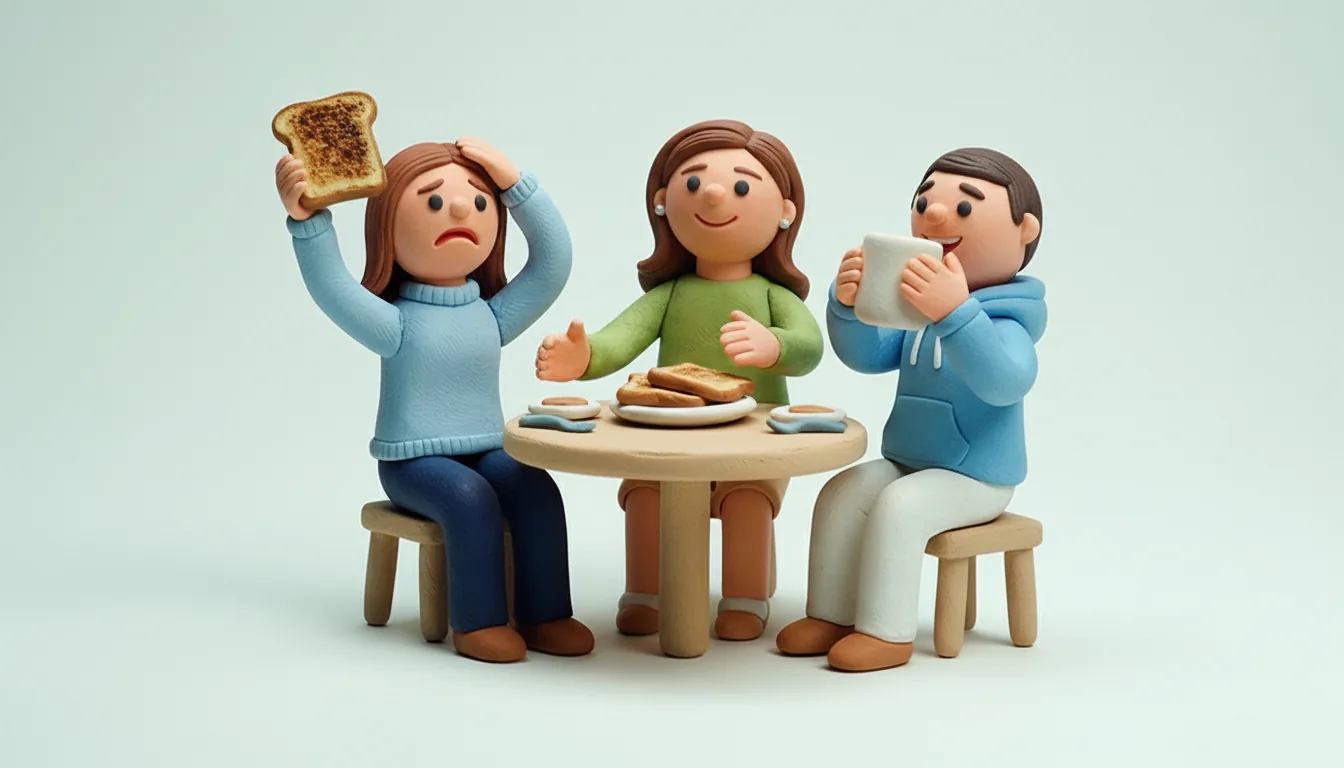
To deal with a drama queen, stay calm, answer the feeling and not its size, give attention on calm days too and set gentle limits. Below are the signs, the reasons behind the pattern and what to do in a friend group or a family.
An example: at brunch, Jess's toast comes out a little burnt. She holds it up to the light like evidence. "Of course. Of course this happens to me today." Mia slides her own plate across the table without a word. Tom hides behind his coffee mug so Jess will not see him smile. That evening, Jess posts a photo of her new haircut in the group chat. Forty minutes pass without a reply, and then comes the next message: "Wow. Okay. I guess nobody cares." Her friends love Jess. She is funny, generous and the first one to turn up when someone is sick. They are also a little tired.
What is a drama queen?
A drama queen is someone who reacts to everyday problems as if they were disasters. A late text becomes a sign that nobody likes them. A small change of plan becomes a betrayal. The feelings are big, loud and often public. Men get the same label, sometimes as drama king.
It is a nickname, and usually a teasing one. People say it with an eye roll, and sometimes with real fondness. It does not describe a condition, and it says more about how the behavior lands on others than about what the person feels inside.
Signs you have a drama queen in your friend group
Many groups have one. You may recognize a few of these:
- Small problems get long, emotional retellings.
- They often feel left out, even when nobody meant to leave them out.
- Group chats go quiet and then explode around them.
- They need a lot of reassurance after minor events.
- Every plan seems to have a crisis attached.
- They are hurt when others do not react with the same strength.
- Conflicts between other people somehow end up being about them.
A couple of these in a hard week is normal for anyone. The label fits when it happens over and over.
Why some people turn small things into big scenes
To friends it can look like a show. To the person in the middle of it, it often feels real. A few common reasons sit behind the pattern:
- Their feelings come out big. Some people feel and show everything at full volume. A small hurt is still a hurt to them, and it comes out loud.
- They want to be noticed. If a person feels unseen, a scene is a quick way to get attention, even the wrong kind.
- It worked before. In some families, the loudest child got the help. The habit can follow a person into adult life.
- Stress is spilling over. A rough month at home or a worry they have not shared can make a burnt piece of toast the thing that finally sets them off.
- They are bored. A quiet life can feel flat, and drama fills the space.
None of these makes the behavior easier to live with. Knowing the reason does make it easier not to take it personally.
Big feelings and quiet feelings: what type has to do with it
People have different ways of handling emotion. Some show it, and some keep it inside. When a loud feeler and a quiet one share a friend group or a family, the quiet one may reach for the drama queen label.
Some types tend to express their feelings openly:
- Vitalizer: warm and full of feeling, they can be swept away by their own mood and expect others to feel it too.
- Mentor: they feel things with real intensity and love to share them. On a bad day that intensity can tip into melodrama.
- Diplomat: quick and full of energy, they can swing from high to low fast when things go wrong.
Others tend to keep their feelings low and steady:
- Analyst: they would rather think a problem through than talk about how it feels.
- Inspector: calm and controlled, they can find loud emotion hard to read.
- Strategist: they look at the long view and may seem cool when others are upset.
- Craftsman: they show care by doing, and long emotional talks wear them out.
Neither style is better. A loud feeler is often the person who makes a party fun and makes sure a friend in trouble is never alone. A quiet one is often the steady hand in a crisis. Trouble starts when each expects the other to react like them. In some of the 16 relationship types, such as Conflict, the difference in style is especially sharp, and one person's feelings can seem too much to the other. Our guide to communication styles in relationships goes deeper into how these styles clash and fit.
How to deal with a drama queen
You cannot change another person, but you can change how you respond. These steps can help.
- Stay calm yourself. Drama can grow when others match its volume. Speak slowly and keep your voice low.
- Answer the feeling, not the size of it. "That sounds really annoying" helps more than "It's only toast."
- Do not argue about whether it is a big deal. You will not win, and it can make the scene longer.
- Give attention on calm days too. If the only way to get your interest is a crisis, the crises may keep coming. Reply to the haircut photo before it becomes a scene.
- Set gentle limits. "I can talk for ten minutes, then I need to go."
- Stay out of the middle. When drama involves two other friends, do not carry messages between them. Suggest they talk to each other.
- Talk about it in private. Pick a calm moment, not the heat of the scene. Use "I" sentences: "I feel worn out when every plan turns into a crisis."
The friend group dynamics article has more on the roles people play in groups and why some groups handle drama better than others.
When the drama queen is family
With friends you can step back for a while. With a sister, an aunt or a mother, you share birthdays, holidays and a family chat. The same steps work, with a few extras.
- Plan short visits. A long weekend gives more room for a scene than an afternoon.
- Bring a buffer. A partner or a cousin who stays calm can help keep the room calm too.
- Agree on topics with the rest of the family. If politics or money always set things off, leave them for another day.
- Keep your own life private if you need to. You do not owe every detail to someone who turns news into a storm. How news travels between friends and relatives is covered in spill the tea.
For a relative who is difficult in quieter ways, there are tips on how to deal with difficult people at family dinners and on group trips.
When to draw a line
Some drama is tiring and harmless. Some is not. If a friend or relative uses scenes to control you, makes you feel guilty for having your own plans, or turns every conversation into an emergency that drains you for days, it is fine to step back. You can still care about someone and see them less.
If you are not sure whether a friendship is worth keeping, our article on the frenemy looks at friends who bring as much stress as joy.
What if you are the drama queen?
If you recognized yourself in Jess, that is not a reason for shame. Big feelings are part of who you are, and the people around you probably love that warmth. A few habits can help: wait ten minutes before posting when you are hurt, tell friends what you need ("Can you just listen?"), and ask about their week before telling yours.
See why your friend feels everything so loudly
Mia and Jess still react to the same news in very different ways. If you want to understand a friend like that, start with the free friendship compatibility test. It shows your type at the end. A free account lets you keep the result and invite your friend. When she has taken it too, you see the relationship type you share and how it tends to feel to each of you, which can help explain why her big moments hit you so hard.
Questions people ask
What is another word for drama queen?
Drama king, attention seeker or overdramatic person are common ones. All of them are informal and a bit teasing.
Sources
- Dictionary.com, "drama queen": an informal term for "a person who often has exaggerated or overly emotional reactions to events or situations."
Written by Virko Kask, founder of Typeza
Written with the help of AI tools.
One question for two, every week
A question to ask your partner, friend or family, and how different types tend to answer it.
Free. Unsubscribe any time.