
Spill the tea: what it means, and why some friends share everything
To spill the tea means to share the latest news or gossip, usually the juicy kind about people you both know. The phrase comes from Black drag culture, where the letter T stood for truth. It spread into everyday slang with help from the TV show RuPaul's Drag Race, which started in 2009.
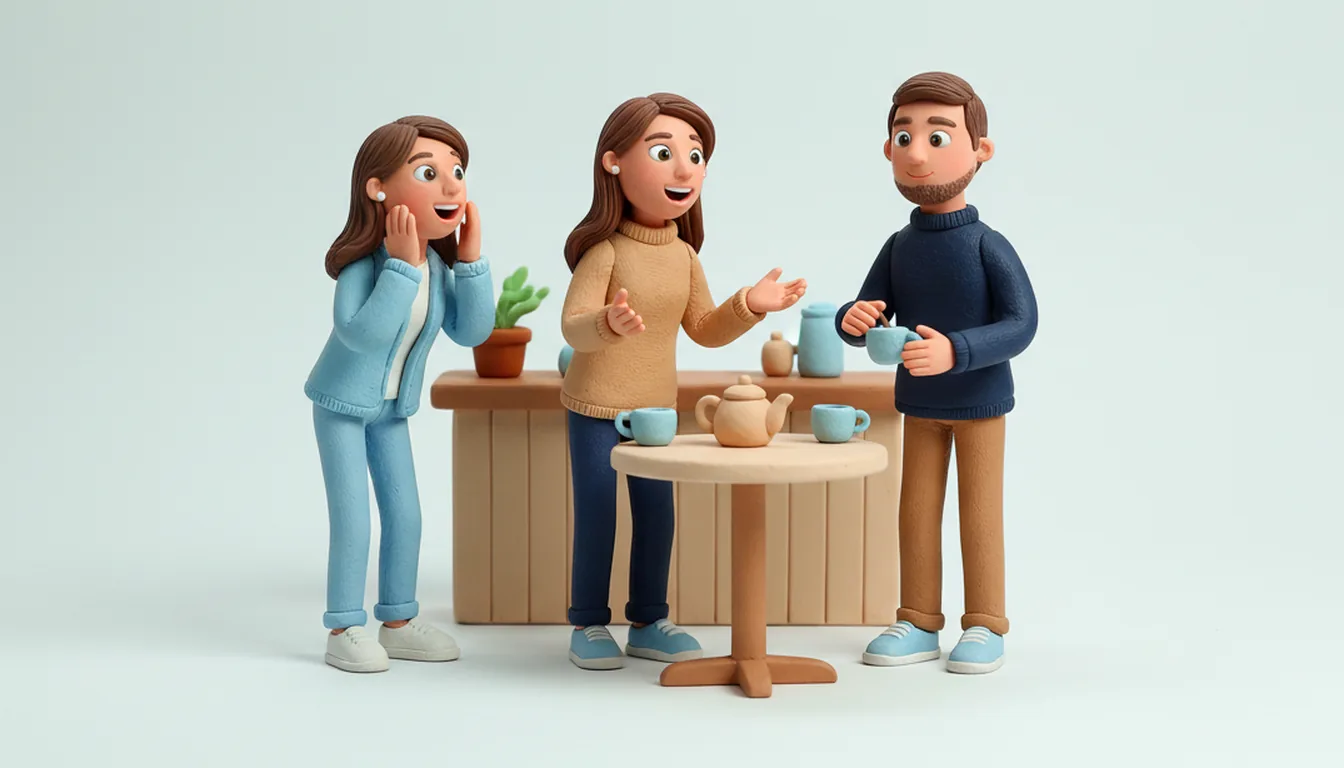
An example: Tasha didn't even take her coat off. She put her phone face down on the café table, leaned in and said, "Okay. I have tea." Mei set her cup down so fast it rattled. Felix kept stirring his. The three of them have met at the same corner café every Thursday since college, and their parts never change. Tasha arrives with news. Mei wants every detail. Felix listens, smiles and says almost nothing, which is exactly why half their friends tell him things they tell nobody else.
This Thursday's tea was big. Jen, their old roommate, was moving back to town and getting married in the spring. Tasha had heard it from Jen's sister at the farmers market. Mei squealed. Felix put his spoon down and said, "I know. She told me a month ago. She wanted to tell you both herself on Saturday."
Spill, what's the tea, and other ways to say it
The phrase comes in a few forms, and friends switch between them without thinking.
- Spill the tea. Tell me the news. "Come on, spill the tea about your sister's trip."
- What's the tea? What's going on, what did I miss? Some friends use it as a greeting.
- Spill. The one-word version, mostly in texts.
- Spilled the tea. Someone already told. "Her brother spilled the tea about the surprise party, so we moved it to Sunday."
- Hot tea. News so fresh nobody else has heard it.
- Sipping tea. Watching the drama with interest and staying out of it.
- Spill the T. The older spelling, with T for truth.
When someone asks you to spill the tea, they aren't asking for anything mean. Often they just want to be let in on what's new.
Good tea and bad tea
A lot of tea is harmless. A cousin is engaged, a friend finally booked the trip to Japan, the neighbors adopted a very loud puppy. People are glad you passed it on, and the person it's about would happily tell it themselves.
Tea turns sour when it's somebody's secret, when it's private news like a breakup or a health scare told before they are ready, or when the point of telling it is to make someone look small. Jen's wedding news was good news, and it still wasn't Tasha's to share first.
One question sorts most of it: would you tell it the same way if the person were sitting at the table? If yes, it's probably fine. If you would lower your voice or change the details, keep it in the pot.
Tellers and vaults
Many friend groups have both kinds.
Tellers share everything, their own news first. For them, telling you is a way of being close. They want you in on the story, and good news doesn't feel real until it has been passed on. Families have tellers too: the aunt who keeps the family group chat busy, or the brother who calls you first with every bit of news, even the small stuff.
Vaults keep what they are told. Felix is one. A vault thinks a story belongs to the person it's about, so they wait for that person to tell it. Some vaults keep their own news just as quietly, which is why their friends find out three weeks late that they moved apartments.
Neither kind is better. A group made only of tellers has no secrets, and a group made only of vaults has very quiet Thursdays. Every friend group runs best with a mix, as long as the tellers know who the vaults are.
Why some friends share everything, by personality type
Whether someone tells all or keeps it close has something to do with personality. Here is how eight of the 16 types tend to handle the tea:
- Vitalizer: news brings people together, and good news feels twice as good once it's shared. Often the first to call when someone gets engaged.
- Mentor: tells a story with feeling, and remembers what it meant to everyone in it. Their tea comes with emotion and a little drama.
- Inspector: discreet by habit. Asked to keep it quiet, they do, and they're a little puzzled when others don't.
- Diplomat: talks to everyone, so they often know the news first. They share it fast and move on to the next thing.
- Strategist: slow to repeat secondhand stories. Bring them tea and they may ask how you know.
- Guardian: loyal and serious about trust. A secret told to them stays locked, and a friend who spreads theirs may not get a second chance.
- Counselor: thinks first about how the person in the story feels. They hear the tea kindly, then ask how that person is doing.
- Encourager: curious about people and good at connecting them, so news travels through them. It's usually the hopeful kind, about who is starting something new.
These are leanings, not rules. A Guardian can love a good story, and a Vitalizer can keep a secret for years when it matters.
How to enjoy the tea and stay kind
You don't have to give up news to be a good friend. A few habits keep it friendly.
- Ask whose news it is. Engagements, pregnancies, moves and breakups belong to the people living them. Let them tell it.
- Share good news more than bad. "Did you hear Sam got the apartment?" makes everyone smile. Somebody's bad week is better asked about than reported.
- Leave out the guesses. Secondhand stories grow with every retelling, so treat them the way you would any rumor and take them with a grain of salt.
- Watch the table. If someone goes quiet, the person in the story may be their friend too. Change the subject.
- Bring your own tea. The easiest news to share is yours: the cake that collapsed, the class you signed up for, the plant you finally kept alive.
If you're a teller who sometimes says more than you meant to, the ideas in how to stop oversharing can help without making you go quiet.
When the tea is about you
Sooner or later you hear your own news from someone you didn't tell. Often it's harmless, like a friend excited that you got a dog. It can still sting when the news was private.
- Pause first. Find out what was said before you decide how you feel about it.
- Talk to the one who passed it on. Alone and calmly: "I told you that in confidence, and I heard it back from Ana. Can we keep my things between us?"
- Correct the facts once. A short "That's not quite what happened" is enough. Long explanations keep the story alive.
- Tell your news first next time. Once people have heard it from you, there is less to pass around.
- Notice patterns. One slip is human. A friend who keeps spreading your private things is telling you how much to share with them.
Families work the same way. If your mom told the whole group chat about your new apartment before you did, a quiet word works better than a reply in front of everyone.
See why some friends tell everything and others keep it
Some people can't sit on news for a day while others keep it for a month, and part of that comes from type. Find out which type you are with the free friendship compatibility test. Send the friend who is a vault, or the one who tells all, a link from your result. As soon as they have answered, your relationship type tells you which parts of your friendship run on their own and which ones need looking after.
Questions people ask
What does spill the tea mean?
It means to tell the latest news or gossip. When a friend says "spill the tea," they want you to share what's going on, usually about people you both know.
Where did spill the tea come from?
T meant a person's own truth: their business, what was going on in their life. A well-known early example in print is from a 1994 bestseller, quoting a Black drag performer in Savannah, Georgia.
What does spilled the tea mean?
It means someone has already shared the news or the secret. "She spilled the tea" means she told everyone.
Is saying spill the tea rude?
No. It's a playful way to ask for news. What makes tea rude is the content, like a secret that wasn't yours to tell or a story meant to embarrass someone.
What is the difference between tea and gossip?
They are close. Tea is the slang word, and it can be any fresh news, including your own. Gossip usually means talk about someone who isn't there.
Sources
- Dictionary.com, "Tea". Tea comes from Black drag culture, T is short for truth, and the slang spread in part through RuPaul's Drag Race from 2009. The early print example is The Lady Chablis, quoted in John Berendt's "Midnight in the Garden of Good and Evil" (1994).
Written by Virko Kask, founder of Typeza
Written with the help of AI tools.
One question for two, every week
A question to ask your partner, friend or family, and how different types tend to answer it.
Free. Unsubscribe any time.