
How to deal with difficult people in your family and friend group
Dealing with difficult people you love starts with one question: difficult for whom? Many relatives and friends who tire us out are decent people. Their way of talking, planning or joking clashes with ours, and both sides go home tired. Once you see that, it gets easier to stay calm at the table, say what you need in a few plain words and draw a line on the rare days you need one.
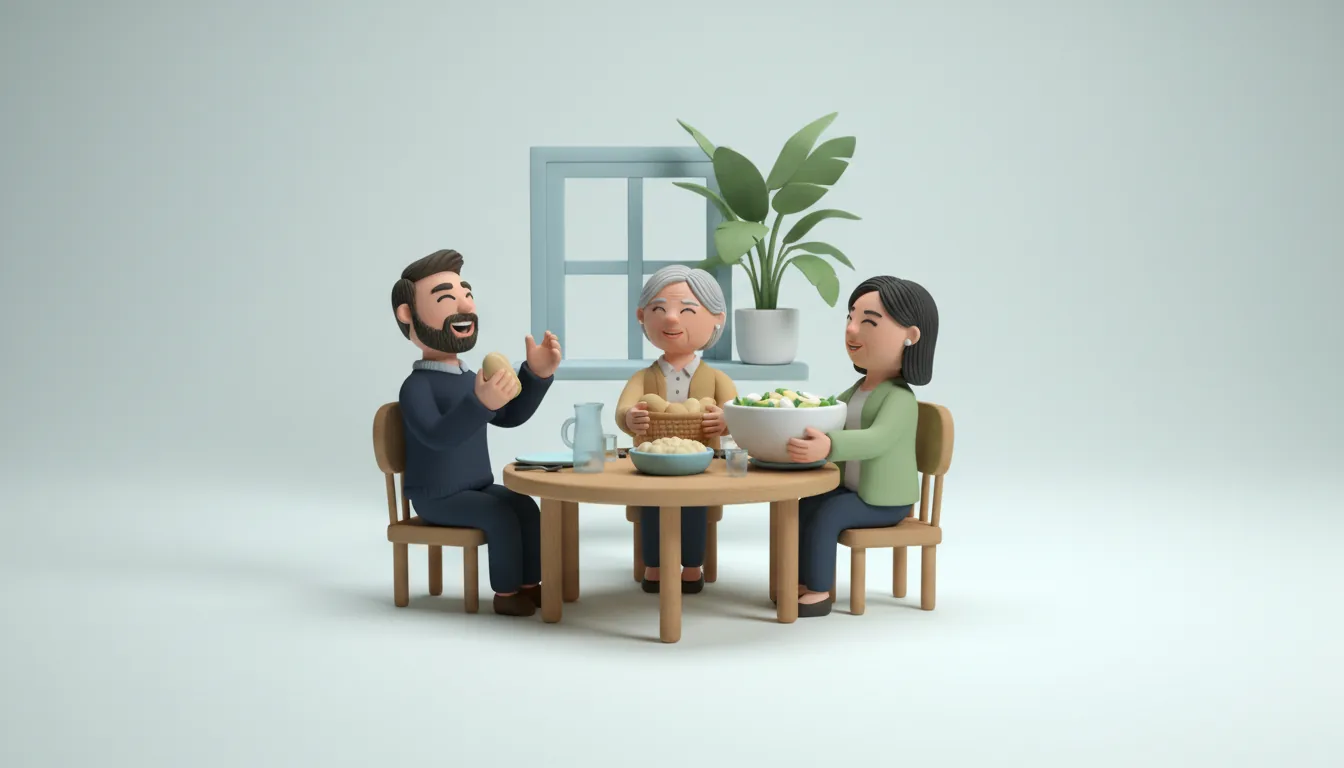
An example: every second Sunday, Hana has lunch at her mother's round table by the window. Her sister is away with friends this time, but her sister's husband, Mateo, comes anyway. He likes her mother's cooking more than most restaurants. Over the potatoes, Hana says she's thinking of selling her car and getting around by bike and bus. Mateo holds up a bread roll like a pointer and goes through every reason it will fail: the rain, the hill up to her street, the Sunday bus that comes once an hour. He laughs the whole time. Hana holds the salad bowl in both hands, smiles and says almost nothing. Her mother lifts the bread basket and asks who wants more. On the drive home, Hana starts planning an excuse for the next lunch. That evening her mother phones. "Mateo asked if you were all right," she says. "He thought you two had a lovely talk."
Difficult for whom?
Mateo is the same man his wife calls the best company she knows. Hana's mother likes him because he eats seconds and argues about the news with her. Hana finds him exhausting.
So the label often describes the fit between two people more than a fixed fact about one of them. A few things sit behind much of it.
- Pace. One person decides fast and talks fast. The other needs a minute, and by then the topic has moved on.
- What counts as polite. For some people, a blunt opinion is a sign of respect. For others it feels like a slap.
- How interest shows. Mateo shows interest by arguing. Hana shows it by listening. Each reads the other's way as a lack of interest.
- Old roles. Around a family table, grown adults slide back into parts they played as kids, like the clever one or the peacemaker.
When two types clash
Typeza sees personality type as part of everyday friction. Each of us has a few sore spots, and someone else can press on them without knowing they are there.
Some pairs of types run into this more than others. In the relationship type called Conflict, each person's natural way of doing things lands on the other's weakest point, so both feel misunderstood while both are trying. In Super-ego, two people often respect each other from across the room and wear each other out over a long day under one roof. Neither makes anyone a bad person, and knowing it helps you plan a lunch instead of a weekend.
None of this excuses rudeness. Still, many of the people we call difficult are simply different in a way that happens to be hard for us.
The difficult people you meet at family tables
Each comes with one small thing that helps.
- The debater turns any plan into an argument and enjoys every minute. Answer once, then agree to disagree with a smile.
- The adviser knows a better way to water your plants and spend your money. Say thanks and change only what you want to change.
- The teaser makes the same joke every visit, about your cooking or your old haircut. Tell them once, in private, that this one stopped being funny.
- The one in charge takes over the kitchen, the seating and the timing. Give them a job that is really theirs.
- The quiet sulker goes silent when things don't go their way. Leave the door open and don't chase.
The relative who finds a problem in everything shows most of the signs of a negative person. The friend who says it sideways, with a sigh or a pointed "fine," shows up in plenty of these passive aggressive examples.
Getting through a family dinner with a hard relative
You see most hard relatives now and then, at a birthday or a Sunday lunch.
- Pick your seat. Beside the person is often easier than across the table, where every glance turns into eye contact.
- Bring two easy topics. A trip, a recipe, someone's new dog. When the talk heads somewhere sore, you have somewhere else to go.
- Answer once. "Maybe you're right about the hill. I'll tell you in May how it went." Then turn to someone else.
- Leave on time. Say when you'll go before you arrive, and go then.
If one remark stays with you on the drive home, these habits for not taking things personally were written for that drive.
A group trip with a friend who tires you out
Friends are harder in one way. You chose them, and a long weekend away gives you no easy exit. Many friend groups have one person who wants every hour planned and another who sleeps until noon and then wants to change the plan.
Settle the big things before anyone books: a rough budget, how plans get made and how much of each day people spend together. A friend who knows on Tuesday that Saturday afternoon is free time won't feel left out on Saturday.
On the trip, split up for a few hours now and then. If one friend keeps annoying everyone, one person should talk to them, alone and kindly.
What each type finds hard in other people
Eight of the 16 types, with what bothers each one and what they do that bothers others:
- Ideator loses patience with "we've always done it this way." Others tire of the debating and the plans that change overnight.
- Harmonizer finds raised voices at the table hard to bear. Others can feel that every serious topic gets smoothed over.
- Analyst is worn down by claims with no reasons behind them. Others hear the corrections and the even tone as cold.
- Inspector struggles with lateness and plans changed at the last minute. Others can feel watched.
- Commander has no patience for hints and dithering. Others find the push and the volume a lot.
- Dreamer dislikes being rushed or spoken to sharply. Others find it hard to get a straight yes or no.
- Organizer minds people who don't do their share. Others hear a steady stream of instructions.
- Counselor is hurt by coldness, even inside a joke. Others worry about saying the wrong thing.
Read the list both ways. The trait that makes your cousin hard for you is often the one that makes her easy for someone else.
Drawing a line, and saying it calmly
Often a seat change and a shorter visit are enough. It's time to say something when the same remark comes back after you've asked once, when you dread a visit for days, or when you start skipping people you love to avoid one person.
A calm line has three parts: what happens, how it lands and what you'd like instead. Say it early, in private, and keep it short.
- "When you joke about my cooking in front of everyone, I feel small. If something's wrong with it, tell me in the kitchen."
- "I'm happy to talk about my plans. After one round of reasons they won't work, I'd like to change the subject."
Then do what you said. If the jokes keep coming, leave a little early, warmly and without a scene. A line works because you hold it every time, not because it's loud. The point is to keep seeing each other on terms you can both live with.
The next Sunday lunch
Two weeks later Hana goes back, partly for the potatoes. Her mother has told her that Mateo argues with everyone he likes.
Find out why one relative wears you out
A relative who tires you out may simply be a different type, with a way of talking that lands on your sore spots. Before the next family lunch, take the free family compatibility test. Send the relative you find hard the link from your result. Once they have answered, your relationship type describes what comes easily between you and where two people like you keep misreading each other.
Questions people ask
Is it okay to see a difficult relative less often?
Yes. Shorter or rarer visits are a fair way to keep a relationship going. A lunch can work where a week under one roof doesn't.
Written by Virko Kask, founder of Typeza
Written with the help of AI tools.
One question for two, every week
A question to ask your partner, friend or family, and how different types tend to answer it.
Free. Unsubscribe any time.