
What does petulant mean? Sulking, pouting and how to respond
What do you call a grown adult who sulks, pouts or goes silent because something didn't go their way? Petulant is the word. It describes a sudden, sulky irritation over something small, a mood that seems too young for the person showing it. It shows in a cupboard door shut a bit too hard or a one-word answer.
Its near neighbors are sulky, peevish, huffy, grumpy and pouty, and the opposite is someone easygoing who can hear no and move on. It's said PECH-uh-lunt, and the noun is petulance.
The small signs of a big sulk
Petulance is easy to spot once you know it. Some signs you'd see in an adult:
- One-word answers. "Fine." "Sure." "Whatever you want."
- The pout and the loud sigh. The face says what the mouth won't.
- Doors and drawers closed harder than needed. Nothing breaks, but everyone hears it.
- Leaving the room to make a point, often with a reason that doesn't quite hold up.
- "I don't care," said in a way that shows they care a lot.
- A mood that fills the room, so everyone else starts moving carefully around it.
- Small digs later on. "Well, we could have gone somewhere else," a week after the trip.
Often the mood passes quickly, once the person gets their way or once someone gives in. That second ending is part of why the habit sticks.
Petulant, sulky or passive aggressive?
Sulky is the closest word, and the two overlap a lot. Sulking is the act of going quiet and cross, while petulant covers the whole grumpy mood around it, often with a flash of irritation. Passive aggressive behavior hides anger behind polite words or "forgetting," whereas petulance is out in the open and you can see the pout. Spiteful goes further, because a spiteful person wants to hurt you and a petulant one mostly wants you to notice. Losing a game brings out its own version, which our article on the sore loser covers. A surly person is something else again, because surly is a rude, short tone aimed at others, with no sulk behind it.
Quiet, hurt or petulant?
Not every quiet face after a no is petulance. Some people need a few minutes alone to cool down, and from the outside that can look like sulking. Someone tired or busy with their own thoughts can give short answers with no point to make at all. A stoic person who goes quiet after a letdown is steadying themselves, and that's a very different thing.
One way to tell them apart is to ask whether the mood wants an audience. If the person seems to want you to see it and feel bad, it's petulance. If they just want some space, give it to them, and the talk usually comes later.
A green corner in a sand-colored room
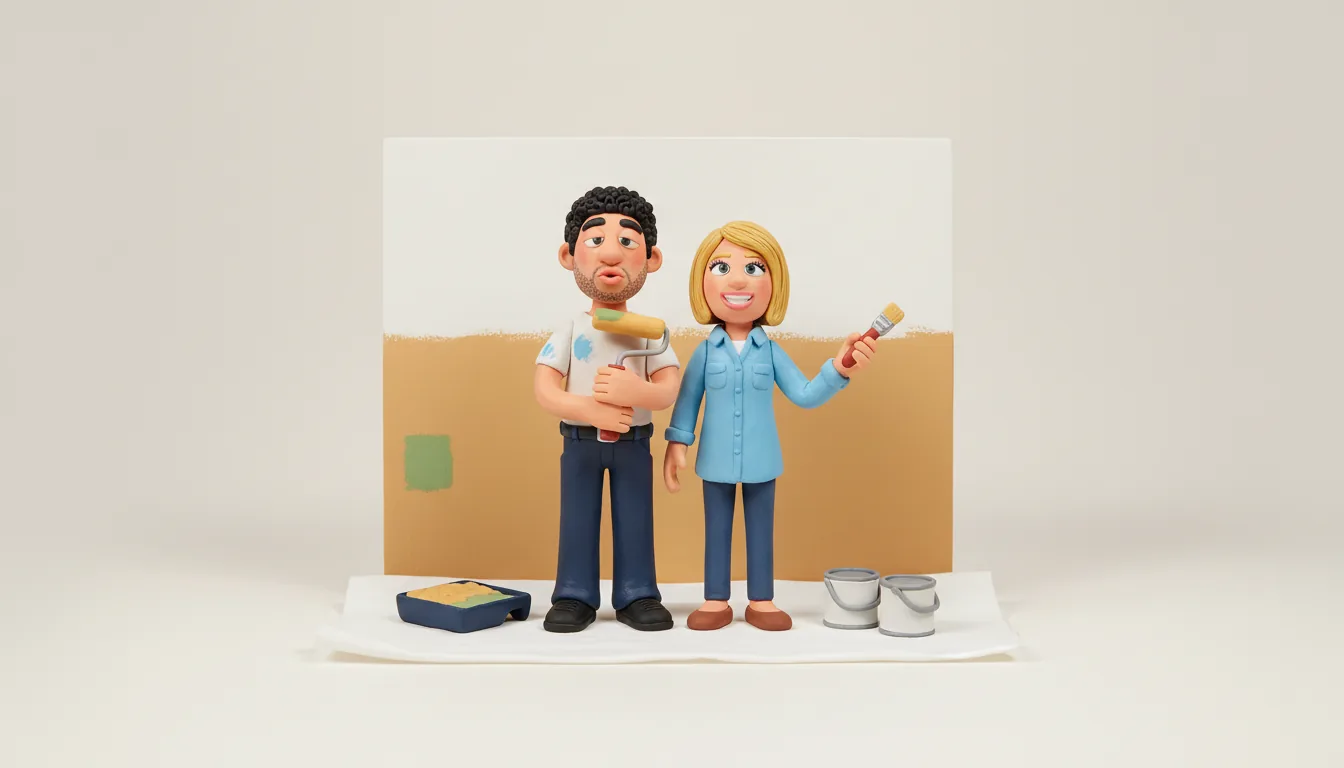
An example: Olek, 36, wanted the living room leaf green. Petra, 35, wanted a warm sand color. They settled it in ten minutes at the paint counter, with a long line behind them, and sand won.
On painting day Olek was petulant from the first coat. He answered every question with one word, sighed loudly at the roller and left for twenty minutes "to get more tape," though there was plenty.
When he came back, Petra said, "You seem annoyed about the color. Want to talk about it?" He said it was fine. So she opened the little sample pot of green and pointed at the low corner by the window. "That corner's yours." Olek rolled a small green square low on the wall, then turned round with his lower lip pushed out, this time as a joke.
That evening he told her what had really bothered him. The choice had felt rushed, and he'd felt like his say didn't count. They agreed to take longer over the next big decision.
A petulant partner or friend
With a partner, petulance often shows up around small decisions: what to watch, where to eat, whose family to visit first. Once in a while it's harmless. When it becomes the main way someone handles a no, the other person starts saying yes just to avoid the mood, and that slowly wears a relationship down.
With a friend, it often looks like silence in the group chat after a plan they didn't like, or turning up and then making it clear they'd rather be elsewhere. Someone who needs things a certain way most of the time might get called high maintenance, and petulance is often how that need shows when it isn't met.
If you live with someone like this, pick a calm evening to talk, well away from the next decision. Say what you see and how it feels on your side, then ask what would help them speak up sooner.
Types that flare fast and types that wait
How a letdown shows on someone's face is partly a matter of personality type. The Analyst tends to step back and wait for a calm, sensible talk, and a sulk can feel like pressure to them. The Mentor feels things strongly and shows hurt right away, and the mood often passes as fast as it came. The Diplomat reacts quickly and openly when something doesn't go their way, then moves on. The Counselor prefers gentle words and may feel a pout or a loud door as a quiet push to give in.
So the same short pout can be a passing moment to one person and a big deal to another. Type theory describes typical reactions like these, and it can't predict how any one couple will handle a disagreement. Treat it as background for understanding each other, not as advice.
How to respond to petulant behavior
- Stay calm and don't match the mood. Two sulking people make a long afternoon.
- Name it lightly. "You seem annoyed about this. Want to talk?" is enough.
- Don't give in just to end the sulk. If sulking works, it comes back.
- Talk about the real thing later, once the mood has passed and you can both listen.
- Leave an easy way back. A joke or a small offer lets the other person rejoin the day without feeling silly.
- Look at the decision itself. Did they get a real say, or was it rushed?
For patterns that keep coming back with someone close to you, our guide on how to deal with difficult people has more ideas.
Catching your own petulant moments
Many people have a petulant moment now and then. You might notice yourself answering "fine" when it isn't, wanting someone to see your mood without telling them why, or going over a decision again and again in your head.
What helps is saying the real thing in one sentence, like "I wanted green, and it felt like we decided too fast." If you need a few minutes first, ask for them out loud. Once you've said it, let the mood go, even if the answer is still no.
Find what sits under the pout, for both of you
Typeza shows how two people's types tend to react when one of them hears no, and why one goes quiet while the other wants to talk it through. Begin with the free personality test, and then invite your partner or friend to take it too.
Questions people ask
What does petulance mean?
Petulance is the noun for a sulky, irritable mood when things don't go your way. "His petulance lasted the whole drive home" is a typical use.
How do you use petulantly in a sentence?
"She petulantly pushed her plate away when the plan changed." Petulantly means doing something in a sulky, grumpy way.
What is another word for petulant?
Sulky is the closest, and touchy or pettish also work. For petulantly, try sulkily or huffily.
Is petulant the same as rude?
Not quite. Rude is about disrespect toward others, while petulant is about a sulky mood when you don't get your way. A petulant person can be perfectly polite and still pout.
Is it petulant to want time alone after an argument?
No. Saying "I need half an hour, then let's talk" is a clear request. It turns petulant when the silence is meant as a punishment and nobody knows when it will end.
Can a petulant person change?
Yes. Petulance is often a habit, and habits shift once someone notices them and finds a better way to say what they want.
Sources
- Dictionary.com, "petulant": the meaning, the pronunciation and the synonyms.
Written by Virko Kask, founder of Typeza
Written with the help of AI tools.
One question for two, every week
A question to ask your partner, friend or family, and how different types tend to answer it.
Free. Unsubscribe any time.