
What does surly mean? When short answers come across as rude
Surly means bad-tempered and unfriendly in a rude way, the kind of manner that shows in short answers, a sour face and no greeting. You've met it if you've ever said good morning to someone and got a grunt back.
It's said SUR-lee. The spelling dates from the 1560s and grew out of an older "sirly," from "sir," which meant lordly or arrogant. That sense is long gone, and today surly means gruff and rude. Close words are gruff, curt, sour, crabby and churlish. The opposite is friendly and warm, someone who says hello first and seems glad to see you.
How surly sounds
Surly is mostly a tone. You hear it before you can say exactly what's wrong:
- One-word answers, like "Fine," "Yep" or "Whatever."
- A grunt or a nod in place of a hello.
- No question back. You ask about their weekend, and the talk ends there.
- A sigh when asked for something, even something small.
- Doing the task while making it clear they'd rather not.
- A flat or sharp voice that makes a normal request sound like a bother.
Surly, grumpy, sullen or petulant?
Grumpy is a passing bad mood, often harmless and sometimes funny, like a friend who's grumpy until lunch. Sullen is silent and gloomy, with a heavy quiet that fills the room. Petulant is a sulk when things don't go your way, with a pout you can see. Surly is aimed outward. It's the rude, unfriendly way someone talks to you, and it can last well beyond one bad morning.
The surly server, colleague or relative
You may meet surly in a few familiar places. There's the server who drops the plates on the table without a word and looks past you when you ask for water. There's the colleague whose answers come in two words, so you're never sure if they're annoyed or simply busy. And there's the relative who answers every question at a family dinner with "It's fine," then goes back to their plate.
None of these is a disaster on its own. Over time, though, a surly tone wears people down and makes them stop asking. When it's a relative you see every holiday, how to deal with difficult people can help you get through the dinner in one piece.
Why someone seems surly but isn't
A lot of what sounds surly is something else. Tiredness is a common cause, and many people are short with everyone before their first hour awake. Some people are quiet by nature and don't do small talk, so a plain "yes" is all they think the question needs. Others are thinking hard about something and answer without looking up. Shyness can sound gruff too, especially with strangers.
It's also easy to mix up surly with cold. A cold personality keeps a distance and shows little feeling, while surly carries an edge of irritation. Many people who come across as one or the other are kind once you know them, and it's worth giving a short answer a second chance before deciding what it means.
Gruff to one ear, plain to another
Personality type can change how a short answer sounds, both to the speaker and to the listener. The Harmonizer often cares a lot about a pleasant tone and may hear a curt reply as a sign that something is wrong. The Inspector tends to say what's needed in as few words as possible and means nothing by it. The Strategist often saves talk for what matters to them, which can sound surly to people who expect a chat. The Counselor usually listens closely to how things are said and can take brevity as coldness.
So the same "Fine" can be plain to one person and grumpy to another. Type theory points to typical patterns here, and individuals vary a lot. Please read it as a reason to ask before judging, and not as advice.
Tulips from a man who never smiles
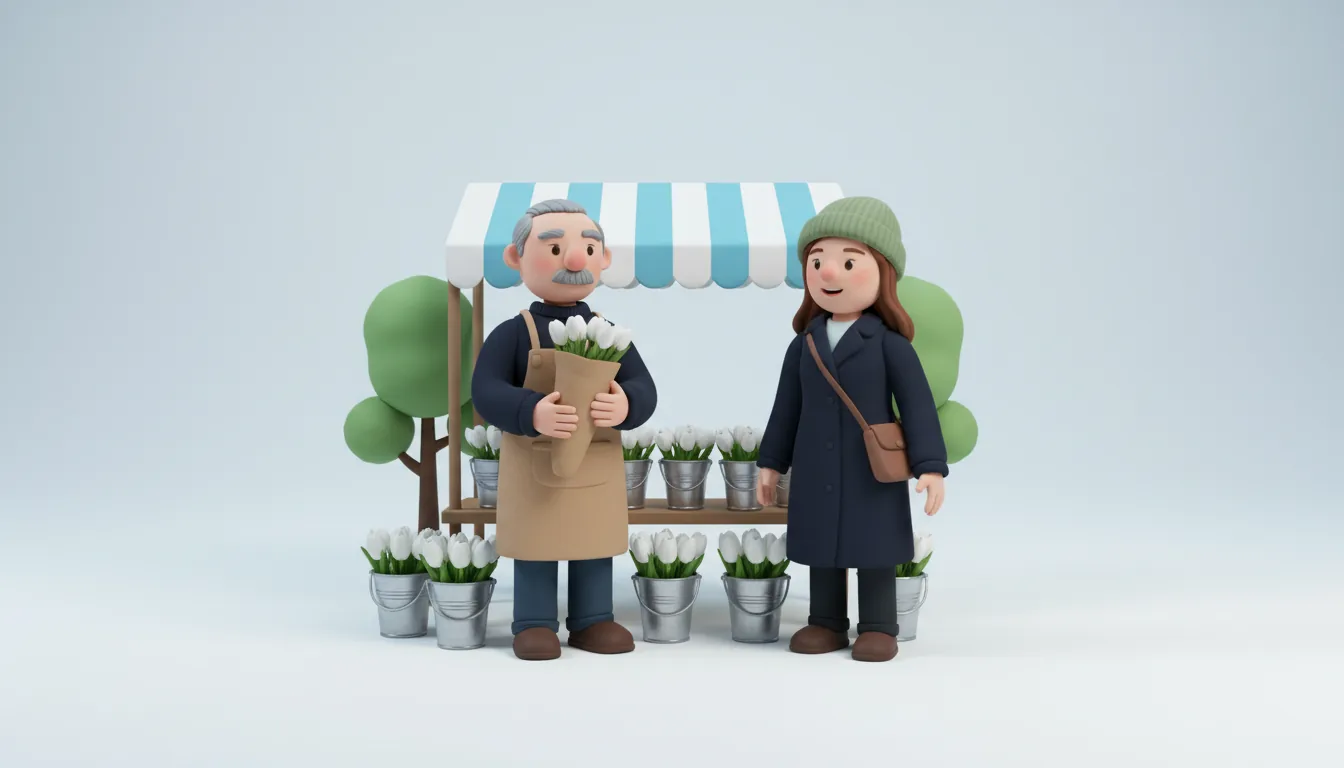
An example: Marta, 41, picks up flowers every Saturday at the weekend market. For most of a year, she got them from Bruno, 64, who runs the flower stall near the fountain. Bruno doesn't smile. When she said good morning, he said "Tulips?" When she said yes, he said "Seven," wrapped them in brown paper and turned to the next person.
Marta decided he didn't like her. She almost started going to the stall at the other end.
Then one busy Saturday in spring, she arrived late and the tulips were nearly gone. Bruno reached under his table and pulled out a bunch he'd set aside, the white ones she always picked. "Kept these," he said. "You come late." His daughter, who runs the stall next to his, laughed. "He's been up since four. He talks to the flowers more than to people."
Marta still gets one-word answers, and she has stopped hearing them as rude. Bruno notices more than he says.
How to talk to a surly person
You can't change someone's tone, but you can keep it from spoiling yours:
- Don't match it. A friendly, short reply keeps things easy without making a show of it.
- Keep your own message clear. Ask one plain question and wait for the answer.
- Pick your timing. Some people are far easier after breakfast or at the end of a task.
- Mention it once, if they're close to you. "You sounded short this morning. Is everything okay?" said kindly, at a calm moment.
- Notice what they do. Like Bruno, some people show care in deeds and save words.
Staying calm yourself does more than any clever reply. A surly moment passes faster when nobody adds heat to it.
When the short answers are yours
If people have called you surly, it's worth a look, even if you mean no harm. Try saying hello first and asking one question back. A few habits of affable people help a lot, and none of them takes a big personality. Being blunt and loud is a different thing, and brash covers the moment when honest energy turns into plain rudeness. At the other end from surly is the presumptuous person, who acts closer than they are.
If you know you're short before breakfast, tell the people you live with. Something like "I'm slow before eight, it's never about you" saves a lot of hurt feelings. A partner who knows your mornings won't ask big questions at seven. They also won't take your one-word answers as a sign that something's wrong between you.
Hear a short answer the way it's meant
Typeza compares two people's types and shows the pattern between them, like the one who says little next to the one who listens for tone. Your type comes out of the free personality test, so that part comes first. After that, you can invite a relative or a friend and talk over how each of you hears the other.
Questions people ask
What does surly mean in simple words?
Surly means rude and unfriendly. A surly person gives short, grumpy answers and doesn't seem to want to talk.
Where does the word surly come from?
It comes from an older word, "sirly," built on "sir," which meant lordly or arrogant. The spelling surly is first recorded in the 1560s, and the lordly sense is now obsolete.
What is the opposite of surly?
Friendly is the plainest opposite. Affable is a close one, for someone who's easy and pleasant to talk to.
Is surly the same as rude?
Close, but surly is more specific. Rude covers many kinds of bad manners, while surly is about a grumpy, unfriendly tone and short answers.
What does surliness mean?
Surliness is the quality of being surly. It's the gruff, unfriendly manner itself, as in "his morning surliness."
Can a surly person be kind?
Yes, often. Many people with a gruff manner are helpful and loyal once you know them. Their kindness tends to show in what they do, like saving you the last bunch of tulips, more than in how they talk.
How do you use surly in a sentence?
"The surly waiter barely looked up when we asked for the bill." You can also use the noun: "His surliness disappeared once he'd eaten."
How do you pronounce surly?
It's SUR-lee, and it rhymes with "early."
Sources
- Dictionary.com, "surly". The meanings, the pronunciation and the origin in obsolete "sirly" (lordly, arrogant), first recorded 1560-70.
- Wiktionary, "surly". The 16th-century change from sirly, and the pronunciation.
Written by Virko Kask, founder of Typeza
Written with the help of AI tools.
One question for two, every week
A question to ask your partner, friend or family, and how different types tend to answer it.
Free. Unsubscribe any time.