
Cold personality: why some people seem cold, and what is behind it
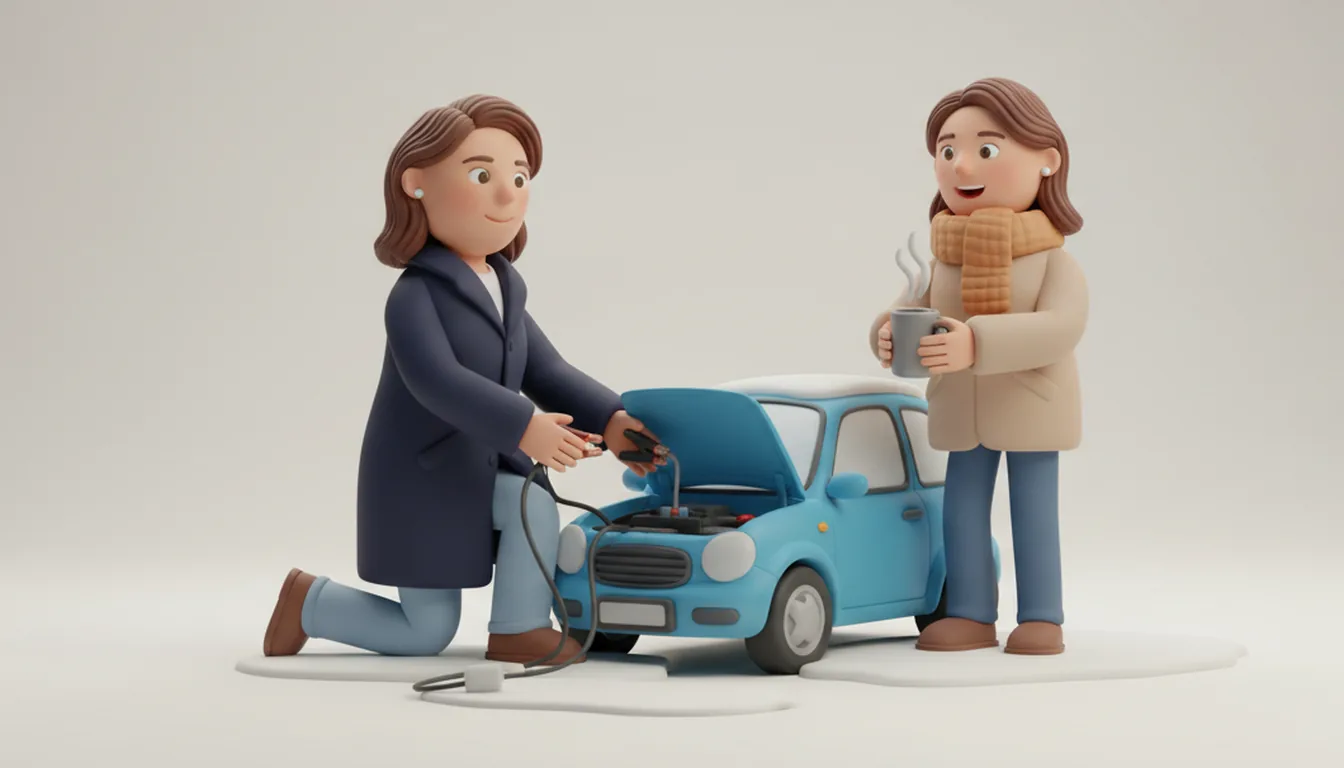
When people say someone has a cold personality, they usually mean the person seems distant and hard to reach. They show little warmth on the surface, keep their feelings private and can come across as cool or even unfriendly. Often, though, what looks like coldness is a calm or reserved style. The care is there. It shows up in deeds, in loyalty over the years, or in a text about your battery.
An example: for two years, Lena was sure her sister-in-law didn't like her. Agnes shook hands when everyone else hugged. She answered questions in one sentence and sent texts without a single exclamation mark. When Lena told a long story about her new garden, Agnes said, "That sounds like a lot of work," and went back to her salad. Then one February night Lena's car died on a dark road forty minutes from home. Agnes picked up on the second ring and arrived with jumper cables, a blanket and a thermos of tea. Ten minutes later the engine was running. She left with a nod. The next morning she texted: "Check your battery this week."
What does it mean to have a cold personality?
In everyday speech, a cold person is someone whose outward manner lacks warmth. The word describes how they come across more than what they feel. People say things like "hard to read," "keeps everyone at arm's length" or "never says how they feel."
That makes "cold" a judgment from the outside. The same calm face can belong to someone who doesn't care, to someone who cares quietly, or to someone who had a long day. One meeting is rarely enough to tell which.
Signs someone has a cold personality
- They rarely start a hug, and may stiffen when hugged.
- Their face stays calm when others are laughing or upset.
- They give short answers and seldom ask questions back.
- They don't share much about their own life or feelings.
- Their texts are brief and plain.
- They meet strong emotion with practical advice.
- They seem fine spending a lot of time alone.
- They say exactly what they think, without softening it.
- They take a long time to call anyone a friend.
Any of these can mean low interest. Most of them can also belong to a reserved person who is fully engaged and simply doesn't show it on the outside.
Cold or reserved?
A reserved person keeps their thoughts and feelings to themselves until they trust you. They tend to be polite and a little formal, and slow to open up. Once they do, they often turn out to be warm and steady friends.
Coldness, in the stronger sense, is a lack of warmth toward others. Over time the difference shows:
- A reserved person warms up as trust grows. A cold person stays distant even with people they have known for years.
- A reserved person shows care through actions, like Agnes with her jumper cables. A cold person rarely puts themselves out for anyone.
- A reserved person listens closely, even when they say little. A cold person doesn't seem to take in what you said.
- A reserved person may just be shy or private. A cold person keeps people away on purpose.
Many people who get called cold are on the reserved side of that list. A close cousin of the label is emotionally unavailable, which is about how far someone lets you into their feelings.
Someone stoic isn't cold either. They take hard days quietly and show little on their face, yet they can care about you a great deal.
Cold-hearted is something else
A cold-hearted person differs from someone with a cool manner. Cold-hearted describes how a person treats others: without sympathy, and without caring when they cause hurt. In everyday life, the signs of a cold-hearted person look like this:
- They don't apologize when they have clearly hurt someone.
- They laugh at other people's bad luck.
- They are kind only to people who can do something for them.
- They brush off your feelings as drama, every single time.
A cool, quiet person can be the kindest one in the room, and a smiling, chatty person can be cold-hearted. Manner and heart are separate things.
Why some people come across as cold
- Logic comes first for them. They think a situation through before they feel it out loud, and the feelings show up later, often in private.
- They value privacy. Personal things are for people they trust, and trust takes time.
- They show care in deeds. Fixing your car, checking on your health, remembering what you need. Words feel less useful to them.
- They are calm by nature. Their face doesn't move much, and others read that as lack of interest. Nonchalant people get the same reaction.
- They are tired or stressed. Anyone can seem cold in a hard week.
- They learned to keep a cool face. Some people found out early that a calm surface kept them safe in a busy family or a tough school, and the habit stuck. Personality masks explains how roles like that form.
The types most often called cold
In Typeza, some personality types lead with logic or privacy, and they get called cold more often than others. In types page order:
- Analyst puts accuracy first. Their precise way of speaking can sound cold, while inside they are working hard to be fair.
- Inspector keeps things correct and in order. In a hard moment they may skip the warm words and go straight to what needs doing.
- Strategist has little patience for chit-chat and often voices doubts. They keep a small circle and care a great deal about the people in it.
- Guardian is careful about who gets close. They watch new people for a long time, and once someone is in, their loyalty is fierce.
- Craftsman says little about feelings and a lot with their hands. They show they care by fixing things and turning up.
Other types can seem cold in certain moods or places too, and each of these five can be very warm with the right people. Type shows where a person's warmth lives. It doesn't measure how much of it there is.
How to get close to someone who seems cold
- Give it time. Reserved people warm up slowly. Keep inviting them without pushing, since sitting closer is often how someone you took for an enemy turns out to be shy.
- Notice what they do. A ride to the airport, a fixed shelf, a remembered appointment. That is often how they say they care.
- Ask about things before feelings. Their hobby, their opinion of a film, how something works. Feelings may come later.
- Respect their space. A quiet evening with them can mean more than a loud party.
- Don't take short replies personally. A one-line text may be all they ever write to anyone.
If people tell you that you seem cold
Maybe you have heard it from a partner, a friend or a new group. Your personality is fine as it is. A few small habits can still let your warmth show more:
- Say one kind thing out loud when you think it.
- Ask a second question about someone's day.
- Smile on purpose at hellos and goodbyes.
- Tell people when you are tired, so they don't read your quiet as distance.
- Let the people close to you know how you show care, so they know to look for it.
A strong, direct manner gets misread in a similar way. Strong personality looks at that side of it.
See if your type reads as cool to others
Lena has stopped waiting for hugs from Agnes. She watches for the thermos instead. Your personality type can show if your own calm reads as cool to others, and where your warmth really lives. In the free Typeza personality test, you read two statements and choose the one that fits you better, 41 times. When you finish, your type is right there, with your position on four base traits, among them the one between logic and feeling. Your type's profile is free, needs no account and names your strong points along with the things you find hard.
If someone close to you finds you hard to read, send them an invite to the same test from your result. You'll need a free account for the invite. After they answer, your relationship type shows up for both of you, with what each side tends to need.
Questions people ask
What is a cold person?
In everyday speech, someone whose manner lacks warmth. They seem private and slow to show feelings. Many people called cold are reserved and care a great deal.
What does it mean to be reserved as a person?
It means you keep your thoughts and feelings to yourself until you trust someone, and what a reserved person is like explains how that differs from being cold.
Is having a cold personality bad?
Not in itself. A cool manner can come with deep loyalty and kindness. It turns into a problem when people close to you feel shut out, and then small changes in how you show care can help.
Can a cold person be loving?
Yes. Many people who seem cold love deeply and show it through actions and loyalty more than through words or hugs.
What is the opposite of a cold personality?
A warm personality: someone who shows feelings easily, makes people feel welcome and opens up quickly. Warm and cool people can be great friends, since each one finds easy what the other finds hard.
Sources
- Dictionary.com, "cold". The sense of not affectionate, cordial or friendly, which describes a manner.
- Dictionary.com, "cold-hearted". Lacking sympathy or feeling, which describes how a person treats others.
Written by Virko Kask, founder of Typeza
Written with the help of AI tools.
One question for two, every week
A question to ask your partner, friend or family, and how different types tend to answer it.
Free. Unsubscribe any time.