
What does stoic mean? The stoic face, and calm that isn't cold
In everyday English, stoic describes a person who shows little of what they feel and takes setbacks without complaining. A stoic friend hears that their plans fell through, says "Well, that's that," and goes on with the evening.
Close words are composed, unflappable, impassive, self-controlled and long-suffering. The opposite is someone open and expressive with every feeling, like the vivacious person whose face tells you the whole story before they say a word.
From a painted porch in Athens to everyday English
The word comes from a school of thinkers founded in Athens around 300 BC. They met under a painted porch, a stoa, and took their name from it. They taught that a person should stay unmoved by joy or grief and accept what can't be changed without complaint. Today, when people call someone stoic, they rarely mean the philosophy. They mean the calm face and the quiet way of getting through a hard day.
Greer and the bookshelf
An example: Greer is 41 and had led one project at work for a whole year. On a Thursday she learned it was going to another team. At dinner she told her husband Tiago, 43, in one sentence: "They gave the project to Lund's team." Then she asked him to pass the salad.
Tiago waited for more, and nothing came. He asked how she felt, and she said, "It's fine, these things happen." He went to bed feeling shut out, as if she'd closed a door on him.
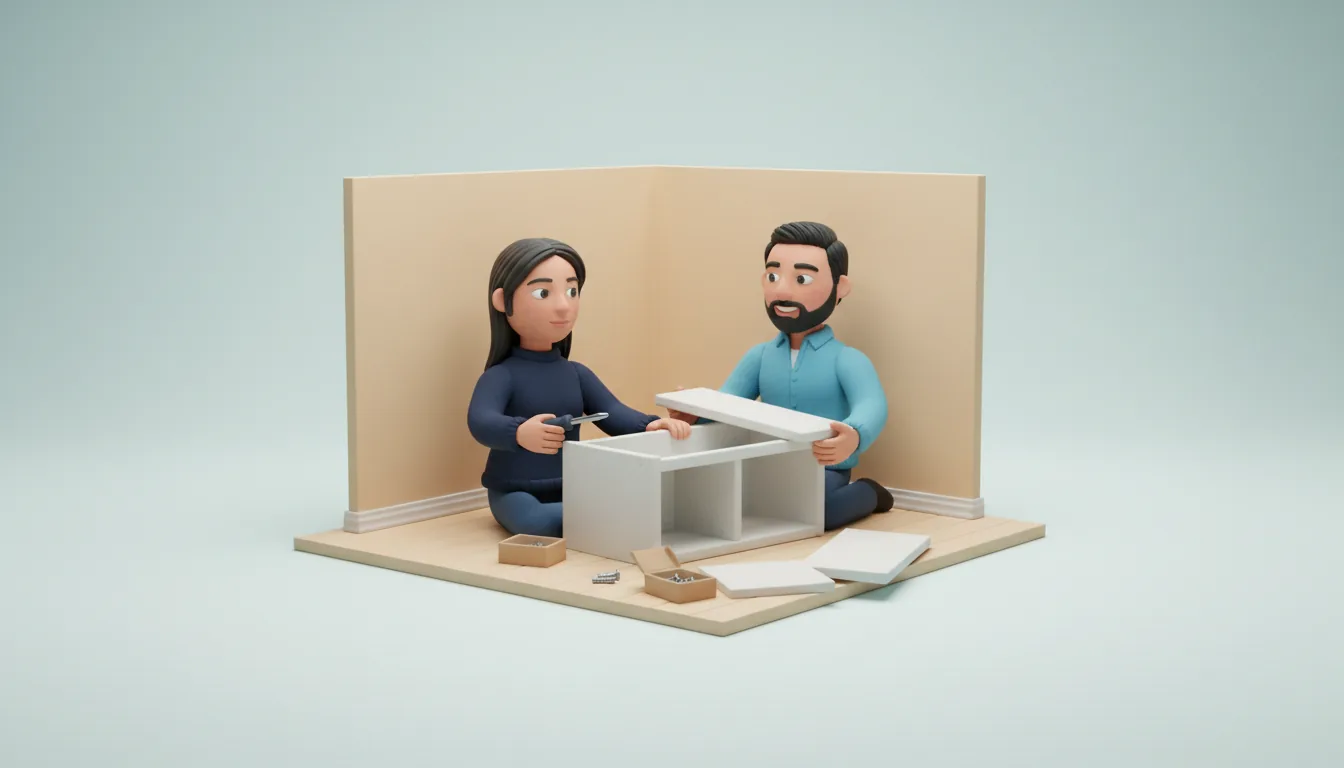
On Saturday morning Greer sat on the living room floor with a flat-pack bookshelf, a screwdriver and a small box of screws. Her face was calm and still. Tiago almost left her to it. Instead he sat down and held a shelf steady while she worked.
Twenty minutes in, without looking up, she said, "I really wanted to finish that project." Then she talked for an hour, about the work, the people on it and what she might ask for next. The bookshelf took the rest of the morning.
Greer did want to talk. She just needed her hands busy and him close by before the words could come.
The stoic face
A stoic face, look or expression stays mostly still when you'd expect a reaction. The mouth stays level, the eyes stay steady and the eyebrows don't jump. People who look stoic often seem calm in photos even when the moment was exciting.
This can confuse anyone who reads faces closely. A stoic look usually means "I'm handling it inside," yet it often gets taken for boredom or judgment. Ask a stoic person how they're doing and you may get a calm "fine" that's mostly true and only a little incomplete.
How a stoic person handles a hard day
Some stoic personality traits you'd notice over time:
- They keep complaints short. A bad day at work gets one sentence, if it gets one at all.
- They stay level in an argument. Voices may rise around them while theirs stays flat.
- They work through things in private. A letdown gets thought over on a walk alone, and you hear about it later, or never.
- They act more than they talk. Worry turns into tasks, like fixing, sorting and planning.
- They don't ask for much. Even when help would be welcome, they wait for someone to offer it.
- They're steady for others. In a tense moment, people turn to the stoic one because they don't panic.
Stoic, cold or calm?
These three get mixed up often. A calm person is at ease, and you can usually see the ease. A stoic person may feel a lot inside and simply keep it there. A cold personality keeps other people at a distance, while a stoic person can be very warm and still show little. Stoic also differs from reserved, which is about how slowly someone opens up, and from nonchalant, which means not caring much, or seeming not to. Some stoic people are quiet in general, though plenty talk a lot about everything except their own feelings. When feelings stay locked away even from a partner for years, people reach for a heavier label, emotionally unavailable.
Stoic silence is also very different from sulking. A stoic person goes quiet to steady themselves, and a petulant one goes quiet so that you'll notice.
Loving someone who keeps it in
A stoic partner can feel solid and puzzling at the same time. You know they'll stay steady through a hard week. You may still wonder whether they're happy, since happiness also shows up quietly with them. Many stoic partners show love through what they do: the car gets fixed, the trip gets planned, the shelf gets built. If you need to hear the words now and then, it's fair to ask for them.
A stoic parent looks different once you're an adult yourself. You might remember a mother or father who said little at big moments and still turned up at every single one. Some people learn only as adults how much that parent worried.
A stoic friend is often the one you call when something goes wrong, because they won't panic. They may rarely call you about their own troubles. That can feel one-sided until you notice they're simply private about themselves.
Steady types and open types
How much feeling shows on the outside is one place where personality type plays a part. The Vitalizer lives through shared emotion and may read a calm face as not caring. The Inspector tends to keep feelings in order and stays level so others have something firm to lean on. The Guardian often feels deeply and shows it through loyalty and care, rarely through words. The Encourager likes to talk feelings through openly and can take long silences as distance.
So in a pair like Greer and Tiago, one person may hold back to be the steady support, while the other reads the same silence as a closed door. Type theory describes common tendencies like these, and it can't tell you what goes on inside one real person. Use it to picture how your partner sees the moment, and don't treat it as advice.
How to get closer to a stoic person
- Do something side by side. Many stoic people talk more while their hands are busy, on a walk, cooking or building something.
- Ask small, concrete questions. "What was the hardest part of today?" works better than "How do you feel?"
- Give it time. A stoic person often needs a day or two before they're ready to talk.
- Notice how they show care. Fixed things, kept promises and quiet help often stand in for words.
- Say what you need. "I'd like to hear about it, even a little" is a fair request, and many stoic people will try.
- Don't push for a big show of feeling. A calm face doesn't mean nothing is there.
Find out how your silence reads to someone else
Typeza compares two people's types and shows who goes quiet in a hard week and who needs to talk it all out. Take the free personality test first, then invite the person whose calm you'd like to understand.
Questions people ask
What does stoic mean in simple words?
Stoic means showing little emotion and putting up with hard things without complaining. It's about how a person handles feelings, and it says nothing about whether they have them.
Is it good to be stoic?
In a tense moment it helps a lot, because a stoic person stays clear-headed. It works less well when no one close to them ever hears what they feel. Calm in public and a few close people to talk to works well.
What is the opposite of stoic?
Common opposites are expressive and emotional. Someone lively and open might be called vivacious.
What is another word for stoic?
Composed, unflappable, impassive, self-possessed and long-suffering are close. Each has its own shade, and impassive is the coldest of them.
How do you use stoic in a sentence?
"She stayed stoic through the whole meeting and only smiled once she got home." People also say "a stoic face" or "he took it stoically."
Are stoic men different from stoic women?
The meaning is the same for everyone. People often use it for men who "don't talk about feelings," but plenty of women are just as stoic, and plenty of men are not.
Sources
- Dictionary.com, "stoic". Unmoved by joy or grief and accepting what can't be helped without complaint, from Greek stoa.
- Wikipedia, "Stoicism". Founded by Zeno of Citium in Athens around 300 BC and named after the Stoa Poikile, the painted porch.
Written by Virko Kask, founder of Typeza
Written with the help of AI tools.
One question for two, every week
A question to ask your partner, friend or family, and how different types tend to answer it.
Free. Unsubscribe any time.