
What does vivacious mean? Lively people and the quiet ones around them
Vivacious means lively, bright and full of warm energy around other people. A vivacious person talks with their whole face and both hands, laughs easily and tends to lift the mood of a room just by walking into it.
The word sits close to lively, spirited, sparkling, animated and full of life. Its opposites are flat, listless and subdued, and in a calmer, steadier sense there's stoic, for someone who keeps most of what they feel out of sight.
Signs of a vivacious person
You usually notice vivacity before you notice anything else about someone.
- Their face moves a lot. Eyebrows go up, eyes widen, and the smile comes fast and stays.
- They tell stories with their hands. A trip to the market turns into a short show with sound effects.
- They laugh out loud, often at their own story before anyone else does.
- They pick up the mood of a group and make it a little louder and warmer.
- They're curious about people. Questions come quickly, and they remember your answers next time.
- They recover fast. A small letdown gets a sigh, a joke and then a new plan.
None of this needs a crowd. A vivacious person can be just as lively with one friend on a walk. What you notice most is the warmth behind the energy, which is why vivacious sits comfortably on lists of positive personality traits.
Vivacious, bubbly or outgoing?
These words get swapped a lot, and they point at slightly different things. Outgoing is about how easily you go towards people, and extrovert is about where your energy comes from; our guide to telling an introvert or extrovert apart explains that part. Vivacious describes how much life shows in you while you're there, so a vivacious introvert is entirely possible: lively with friends, tired afterwards. Bubbly is the lighter, more playful cousin, often used for someone cheerful and giggly, and it can sound a little less grown up than vivacious.
Sunniva in the orchard
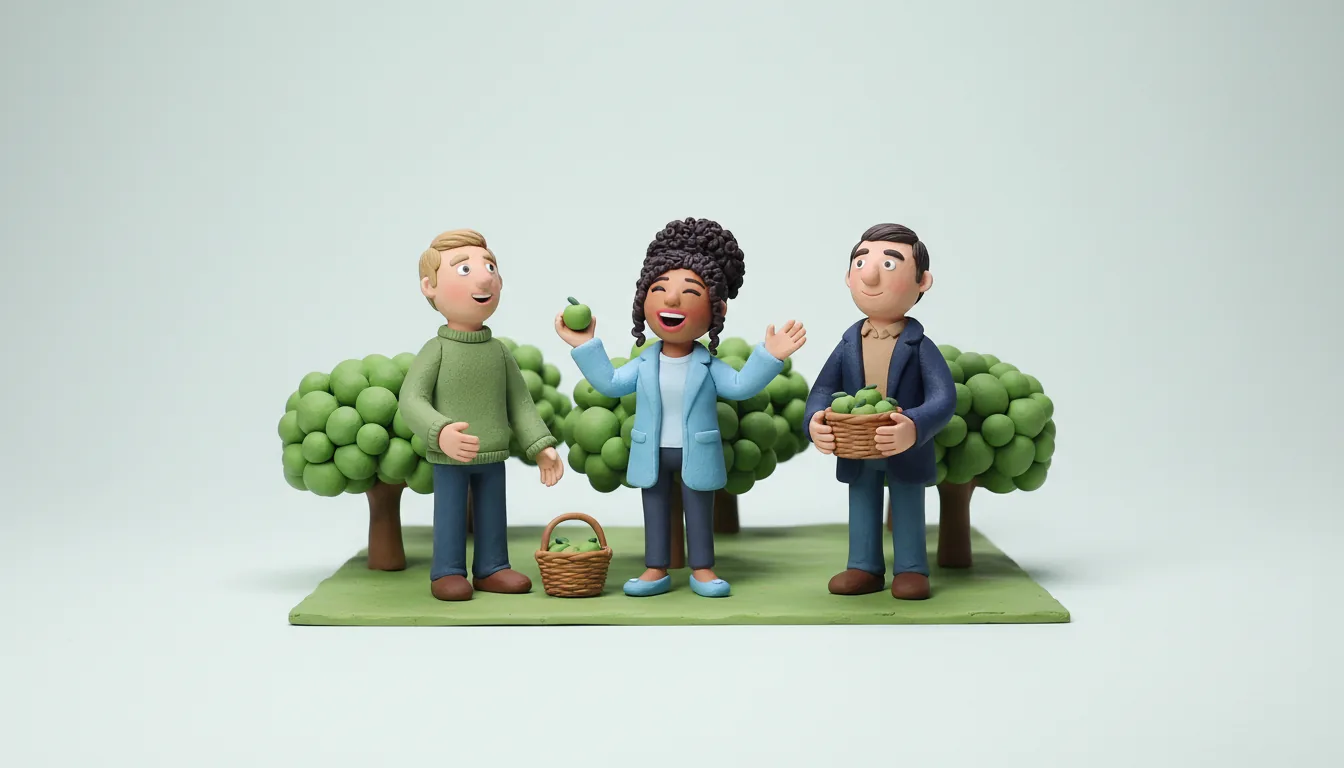
An example: Sunniva, 33, can make an afternoon of picking apples sound like a great adventure. One Sunday in autumn she and her partner Kalle went to an orchard with Kalle's older brother Joris, who is known in the family for saying about ten words an hour.
Within five minutes Sunniva was holding up a green apple and telling the story of the time she got lost in a corn maze and came out at the wrong farm. Kalle laughed so hard he had to stop picking. Joris held the full basket and smiled a small, calm smile.
On the drive home Sunniva quietly asked Kalle whether his brother found her too much. Kalle said no. Joris liked her a lot, and he'd also said that after a day like that, he liked a quiet ride home. So Sunniva left the radio off, and Joris dozed in the back seat. At the next family lunch, he saved her the chair next to his.
Her energy made the day for Kalle, and Joris enjoyed it too, in his own quieter way.
Where the word comes from, and who gets called vivacious
Vivacious goes back to the Latin vivere, to live, and it's said vih-VAY-shus. The noun is vivacity, which simply means liveliness, as in "Her vivacity filled the whole kitchen." People use the word as praise, and it shows up most often in descriptions of women. Nothing in the meaning is tied to gender, though, and a man with the same quick, warm energy is just as vivacious.
If you want kind words for a lively friend, cheerful, bubbly and lively are all among our words to describe a friend. Charm of a calmer, pulling kind has its own name, and our guide to the magnetic personality looks at that one.
When a vivacious person meets a quieter one
Vivacity is easy to love, and it can also be a lot. A quieter person may enjoy every story and still feel a bit run over, as if no gap is left for their slower thoughts. Some quiet people read all that energy as a performance for an audience, even when it's simply how the other person is.
The vivacious side often worries in the opposite direction. When the quiet one gives short answers, they wonder whether they're being judged or are boring the other person. Both sides are usually wrong about each other.
A few things help. The lively one can leave pauses, ask a question and wait for the answer. The quiet one can say out loud what they enjoy, since a calm smile is easy to miss. Pairs like this turn up a lot in the internet's golden retriever and black cat jokes, which our article on the golden retriever boyfriend looks at.
A strong personality is a separate thing, with firm views and a will that pushes. Vivacious describes warmth and liveliness, and a vivacious person can be quite easy to sway.
Lively and calm types in one room
How much life shows on the outside is one of the places where personality type plays a part. The Vitalizer tends to bring warmth and energy into a group and often feels in charge of the mood. The Mentor shows feelings vividly and can turn a small story into a big, moving one. The Strategist usually prefers a calm, low-key setting and may wait for the noise to settle before saying much. The Craftsman likes comfort and a steady pace, and a long burst of lively talk can tire them even when it's fun.
So a Vitalizer and a Strategist on the same day out may come home with very different memories of it. The first felt close to everyone, the second felt a little crowded, and the Strategist may even have taken the stories as a show. Type theory sketches common patterns like these, and it can't say what one person feels. Take it as a way to understand someone, and not as advice.
Keeping your spark without running people over
If people often call you vivacious, you probably know it's mostly a good thing to have. A few habits help it land well with everyone:
- Leave gaps. After a story, ask a question and wait for the whole answer, even a slow one.
- Look for the quiet one. In a group, someone is often trying to speak. Give them the space: "Joris, what did you think?"
- Match the place. A loud story works in an orchard and lands differently on an early, quiet train.
- Don't read silence as dislike. Calm people often enjoy you most from a little distance.
- Allow yourself low days. Being vivacious doesn't mean you owe anyone a show.
You don't need to turn yourself down. Most people love a lively friend, as long as there's room left for them too.
Where your energy meets someone else's
Typeza shows where two people's types meet, including whose energy fills the room and who needs the quiet ride home. The free personality test is where you start. After it, invite the friend or partner who smiles while you talk and says a little less.
Questions people ask
What does the word vivacious mean?
Vivacious means lively, cheerful and full of warm energy, especially around other people. It's nearly always a compliment.
How do you use vivacious in a sentence?
"Our new neighbor is so vivacious that the whole street knew her name within a week." You can also say "a vivacious laugh" or "a vivacious host".
What does vivacity mean?
Vivacity is the noun, and it means liveliness or high spirits. A sentence with it: "The vivacity of the group made the long walk feel short."
What are some synonyms for vivacious and vivacity?
For vivacious: lively, spirited, animated, sparkling and effervescent. For vivacity: liveliness, high spirits, zest, sparkle and verve.
What is the opposite of vivacious?
Dull, listless and subdued are close opposites. For a person who keeps their feelings calm and private, stoic is a better fit.
Is it good to be vivacious?
Mostly, yes. People enjoy a vivacious friend and remember them long after a party. It only turns into a problem when the energy leaves no room for anyone else, and a few pauses usually fix that.
Is vivacious only used for women?
No. It's used more often for women, but the meaning fits anyone with lively, warm energy.
Sources
- Dictionary.com, "vivacious". Lively, animated and spirited, from the Latin vivere, to live, first recorded in 1635 to 1645.
- Arnold Zwicky, "vivacious" (2009). A linguist's note that "vivacious woman" and "vivacious girl" far outnumber the male forms, though the word is used for men too.
Written by Virko Kask, founder of Typeza
Written with the help of AI tools.
One question for two, every week
A question to ask your partner, friend or family, and how different types tend to answer it.
Free. Unsubscribe any time.