
Positive personality traits: a list, what each means, and which are yours
Positive personality traits are qualities that make a person good to be around and good at handling life, like kindness, honesty, patience, curiosity and humor. They show in what a person does again and again, over months and years, not on one good day.
An example: Felix wants to write something real in his sister's fortieth birthday card. "You're the best" feels lazy. He searches for positive personality traits, finds a list of six hundred words, and closes it again. Too many, and he has to look up half of them. What he wants is five good words that are true about her.
What are positive personality traits?
A personality trait is a steady habit of feeling, thinking or acting. A mood comes and goes in an afternoon. A trait shows up at home, with friends and on holiday, and the people who know you would bet on it.
A trait counts as positive when it helps you and the people around you. Kindness makes others feel cared for. Patience makes hard things easier to get through. Humor makes ordinary days lighter.
Even a positive trait can be too much in the wrong place. A very honest person can hurt someone, and a very calm one can seem not to care. That comes up again further down.
A list of positive personality traits with meanings
The traits below are grouped by what they do for the people around you. Notice which ones sound like someone you know.
Traits that make people feel cared for
- Kind: you notice what others need and help without being asked.
- Patient: you give people and things the time they need, without sighing.
- Generous: you share your time, help and things, and you don't keep score.
- Loyal: you stand by people even when it costs you something.
- Warm: people relax around you, and strangers talk to you in queues.
- Considerate: you think about how your words will land before you say them.
Traits that make people trust you
- Honest: you say what is true, even when a softer lie would be easier.
- Reliable: when you say you will do something, it gets done.
- Fair: you treat people the same, whoever they are.
- Humble: you don't need to be the smartest person in the room.
- Responsible: you own your mistakes and fix them.
- Discreet: you keep secrets that are not yours to tell.
Traits of a curious, open mind
- Curious: you ask questions and want to know how things work.
- Open-minded: you can listen to a view you dislike and think about it.
- Imaginative: you picture things that do not exist yet.
- Observant: you notice small changes that others walk past.
- Wise: people trust your judgment when a choice is hard.
- Witty: you see the funny side quickly, and you say it well.
Traits that help you handle life
- Calm: you stay steady when plans fall apart.
- Resilient: you get back up after a bad month.
- Brave: you do the hard thing while you are still scared.
- Hopeful: you expect things to work out and act on that.
- Determined: you keep going after others have given up.
- Adaptable: you adjust when the plan changes, without much fuss.
Traits that make life more fun
- Funny: people laugh more when you are around.
- Playful: you turn chores and long drives into games.
- Enthusiastic: your excitement spreads to others.
- Spontaneous: you say yes to a last-minute plan.
- Easygoing: small things don't ruin your day.
- Adventurous: you like new places, new food and new people.
Good qualities in a person: the ones people value most
When people describe someone they are glad to have in their life, they often name the same few qualities: kind, honest, reliable, funny and a good listener. These are the good traits to have if you want people to feel safe with you, and they matter more over the years than charm or looks. The bigger question behind this list has its own page, what makes a good person.
In a friend, loyalty and showing up count for a lot. A friend who remembers the hard week and texts on the right day is worth more than one who is great fun at parties and gone when life gets heavy. Only a handful of people ever reach that level, and what makes a best friend explains why.
In a partner, people often name kindness, respect and a shared sense of humor. Being easy to live with matters too, and so does being able to argue without being cruel. Asked about men in particular, people list much the same qualities of a good man, with honesty and keeping his word near the top. Ask about women and the list barely changes: the qualities of a good woman also start with kindness and honesty.
If you want to grow some of these qualities in yourself, start with what you do. How to be a good friend turns several of them into small everyday habits.
Negative personality traits, and how they relate to the good ones
Every list of good traits has a shadow list. Common negative personality traits include being selfish, rude, lazy, arrogant, moody, jealous, controlling, flaky and dishonest.
Many of them sit on the same line as a positive trait, either too little of it or too much of it:
- Confidence: too little looks timid, too much looks arrogant.
- Honesty: too little is dishonest, too much is blunt.
- Generosity: too little is stingy, too much leaves you used.
- Caution: too little is reckless, too much is fearful.
- Ambition: too little looks lazy, too much looks ruthless.
- Easygoing: too little is tense, too much is careless.
This is useful when you look at yourself. A trait you are proud of may have a too much side that other people notice before you do. A trait you dislike in yourself may be a good one that is turned up too high. People with a strong personality hear this a lot, since their confidence reads as backbone to some and as too much to others. If you want to sort your own traits into two columns, the list of strengths and weaknesses pairs each strength with the weakness it can turn into.
Why the same trait looks different in different people
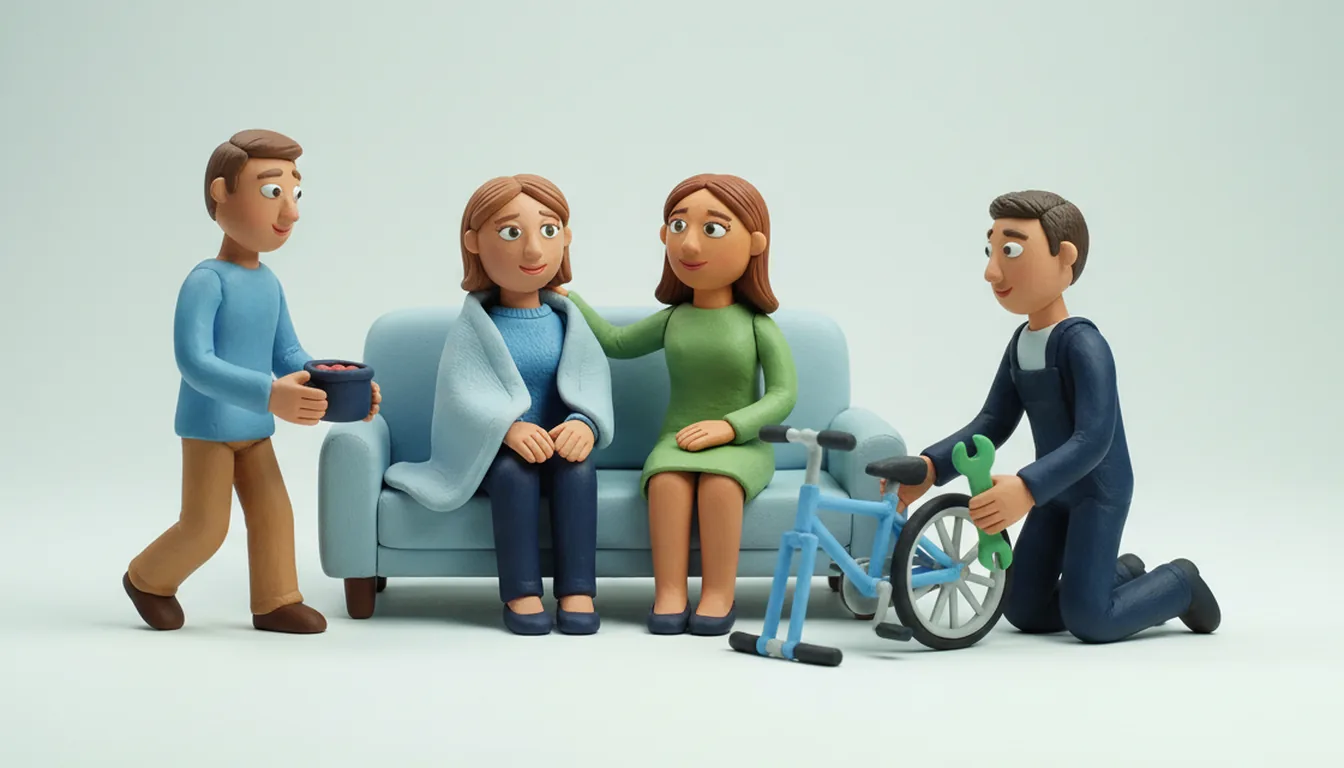
Kindness in one person is a hot meal brought round when you are sick. In another, it is a two-hour phone call. In a third, it is your bike fixed without a word. Each of them is kind, and each might miss the kindness of the others.
Personality type explains a lot of this. Here is how kindness tends to look in four of the 16 types in Typeza:
- Harmonizer: comfort. A cozy evening, a good meal, a blanket on your knees.
- Commander: protection. They step in and deal with the problem, often before you ask.
- Organizer: practical help. Your shelves go up and your forms get filled in.
- Counselor: understanding. They listen, and you feel truly heard.
The same goes for honesty, courage and humor. That is why two people can both be loyal and still feel let down by each other: each expected loyalty to look like their own version.
Which positive traits are yours?
Many people find it hard to name their own good traits. They feel ordinary from the inside. A few questions help:
- Which compliments do you hear again and again? One compliment can be politeness. The same one from five people is a trait.
- What do friends rely on you for? If you are the one people call to plan the trip, you are probably organized and reliable.
- What do you find hard to understand in others? If you can't see how anyone is late, punctuality is yours.
- Which trait do you wish you had? That one is usually not yours yet, and that's fine.
Then pick five words and test them on someone close. How to describe yourself has longer word lists and a simple way to choose three that fit. For words about someone else, words to describe a person shows each one in a sentence about a real person.
The traits that come with your type
Felix's problem was too many words. A personality type narrows them down to the ones that come naturally. Each screen of the free personality test holds a pair of statements, and you tap the one closer to you. Your result names your type and links to its profile, which is free to read and lists that type's strengths next to its weak spots. Many people find their good traits named there, along with the shadows. Seeing your type needs no account.
Felix also wanted five true words for someone else, and so might you: send that person the same test through your result. When they finish, you see their type next to yours and which of the 16 relationship types you two make.
Questions people ask
What is the difference between a trait and a quality?
In daily speech they mean nearly the same thing. A trait usually means a steady part of your personality, and a quality usually means a trait that others admire.
Can you build positive personality traits?
You can build habits that look like them. Saying thank you, keeping small promises and listening to the end all grow with practice. Your personality type stays the same, and it decides which traits feel easy and which take effort.
What is the best personality trait?
There is no single best one. Kindness and honesty come up often when people describe someone they are glad to know, and they make most other traits work better.
Is helpful a character trait?
Yes. Being helpful means you notice what others need and step in without being asked. It sits close to kindness and generosity, and like any trait it can go too far, into help nobody wanted.
Sources
- Wikipedia, "Trait theory". Traits as habitual patterns of behavior, thought and emotion that stay fairly stable over time.
- Wikipedia, "Golden mean (philosophy)". Aristotle's idea that a virtue sits between too little and too much, like courage between cowardice and recklessness.
Written by Virko Kask, founder of Typeza
Written with the help of AI tools.
One question for two, every week
A question to ask your partner, friend or family, and how different types tend to answer it.
Free. Unsubscribe any time.