
How to be funnier: find your own sense of humor
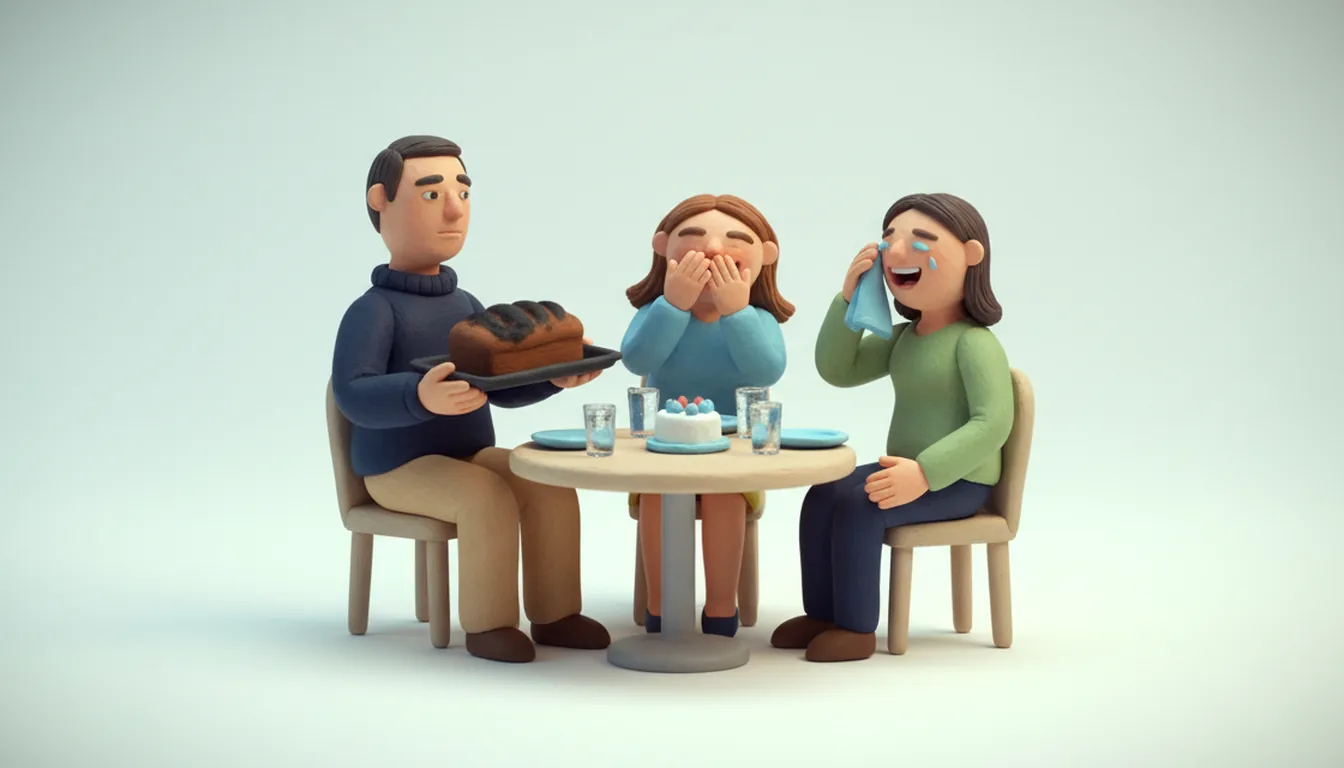
To be funnier, find the kind of humor that already comes easily to you, then use it in ordinary conversation. Very few people are funny in every style. People who seem funny have usually found one or two styles that fit them, and they use them with people they feel at ease with.
An example: Jonas spends a week getting jokes ready for his sister's birthday dinner. He has heard his funniest friend tell them, and they always work for him. At the table, the first one gets polite smiles. After the second, someone asks for the salt. Then the bread comes out of the oven burnt black, and Jonas looks at it and says, flatly, "I think it's medium rare." His sister laughs so hard she has to put her glass down. He was trying to be funny in his friend's way, and he was funny in his own.
Can you learn to be funny?
Yes, or at least funnier than you are now. Learning how to be humorous in daily life has less to do with telling jokes than with noticing things, saying them honestly and choosing the moment. All three get better with practice.
What you cannot easily do is turn into someone else. A quiet person who forces loud jokes looks nervous, and nervous jokes rarely land. Being humorous works best when it sounds like you on a good day. How to be yourself goes deeper into why copying others rarely feels right.
Four kinds of everyday humor
You probably have one or two favorites among them.
Dry humor
Said with a straight face, often understated. "Well, that went well," after everything has gone wrong. Dry humor depends on timing, and on the listener catching the gap between the words and the situation.
Playful humor
Silly voices, games, teasing everyone enjoys, being goofy on purpose. Playful humor lifts the mood of a room and invites others to join in.
If goofy is your style, stupid jokes has silly one-liners to tell with a perfectly straight face.
Storytelling humor
Turning something that happened into a story with a build-up, good details and an ending. Storytellers rarely tell jokes. They tell you about their trip to the dentist, and you cry laughing.
Observational humor
Pointing out what everyone noticed and nobody said. The odd sign in a shop window, the way the cat glares at the vacuum cleaner. This is the humor of people who watch closely.
A keen sense of humor usually means someone who catches all four quickly, even if they only produce one of them.
What makes each type laugh
Different people find different things funny, and Typeza sees personality type as part of the reason. Here is how humor tends to show up in eight of the 16 types:
- Ideator: wordplay, absurd "what if" ideas and jokes that take a thought one step too far.
- Vitalizer: shared silliness, big laughter and the joke that gets the whole table going.
- Analyst: dry irony and precise remarks. They often enjoy a clever argument as much as a joke.
- Mentor: dramatic retelling, with voices, faces and pauses. Small events turn into little performances.
- Commander: teasing and fast banter, usually with people they respect enough to spar with.
- Diplomat: quick comebacks and humor born in the moment, impossible to repeat later.
- Strategist: deadpan understatement and slightly dark humor about how things are likely to go wrong.
- Craftsman: short one-liners and practical jokes. They say little, and when they do speak, the room laughs.
Two people of very different types can sit at the same table and laugh at completely different moments. Neither has the better sense of humor. They have different ones.
How to be more humorous in everyday conversation
- Notice first. Funny remarks come from paying attention. Look for the small strange details in what is going on around you.
- Tell the truth, a bit bigger. Most everyday humor is something true, slightly exaggerated. "I have checked the oven eleven times" is funnier than any prepared joke about ovens.
- Keep it short. A good one-liner beats a long setup. If you tell stories, cut the parts that do not lead to the ending.
- Laugh at yourself. Gentle humor about your own mistakes puts people at ease and shows you do not take yourself too seriously.
- Use callbacks. Bringing back something funny from earlier in the evening is one of the easiest ways to get a laugh. It also shows you were listening.
- Mind the timing. Wait for a pause. A joke said over someone else's story feels like interrupting.
- Be a good audience. People who laugh easily at others' jokes are fun to be around, and the room relaxes around them.
- Start with people you trust. Humor needs safety. Try something new with close friends before you try it with strangers.
How to make someone laugh
Making one particular person laugh is a different job from being funny in general. Start from their sense of humor instead of yours. Think of the last time they laughed until they cried, and work from there.
- A friend: remind them of the trip that went wrong or the photo only the two of you understand. Years of shared history do most of the work.
- A partner: be silly on purpose at home. Read the weather forecast like breaking news, or give a formal speech about who ate the last cookie.
- Family: ask a relative to tell the story everyone knows by heart, then add one new detail of your own. A round of charades can get even the quietest uncle laughing.
If they groan and grin at the same time, that counts too. For jokes made for that groan, try bad jokes.
Humor that backfires
Some humor costs more than it gives.
- Teasing the wrong person. Some people enjoy banter. Others hear every tease as a real comment. If only one of you is laughing, stop.
- Jokes about someone's weak spot. Looks, money, family troubles. Even a light joke can stay with a person for years.
- Sarcasm with literal listeners. Some people take words at face value, and sarcasm confuses or hurts them.
- Humor as a shield. Joking every time a conversation turns serious can keep people at a distance.
If a joke lands badly, a short apology is enough. People forgive a missed joke easily when you notice it yourself. And if you are the one who keeps getting stung by other people's jokes, how to not take things personally has habits that help.
Why a sense of humor draws people in
People like being around someone who makes them laugh, and laughing together can make two people feel closer. A sense of humor is one of the positive personality traits people often name when they describe a good friend or partner. It is also part of what gives some people a magnetic personality: others leave their company feeling lighter.
You do not need to be the funniest person in the room for this. Being easy to laugh with counts as much as being the one who makes the joke.
Your type and your kind of funny
Your personality type can point to the kind of humor that comes to you naturally, and to the kind you will never pull off. Typeza's free personality test is a set of choices between two statements. When you are done, your type is right there with where you lean on four base traits, and your full type profile is free to read. None of that asks for an account.
Then invite the friend who always gets your jokes, or the one who never does, from your result page. Inviting someone takes a free account. When they have answered, you both see your relationship type, which can help explain why some people laugh at everything you say and others only smile politely.
Questions people ask
Is a sense of humor a personality trait?
It is closely linked to personality. Everyone has some sense of humor, but what you find funny and how you make others laugh depend on your type and your habits.
What does a keen sense of humor mean?
It describes someone who notices funny things quickly and enjoys them, even small ones. A person with a keen sense of humor catches irony, wordplay and odd details that others miss.
Can an introvert be funny?
Yes. Many introverts are very funny, often with dry or observational humor. They may save it for small groups and close friends.
Why don't people laugh at my jokes?
Often the joke does not match your natural style or your audience. Try remarks about what is happening right now, and notice who enjoys your kind of humor.
Written by Virko Kask, founder of Typeza
Written with the help of AI tools.
One question for two, every week
A question to ask your partner, friend or family, and how different types tend to answer it.
Free. Unsubscribe any time.