
How to be yourself around other people, and why it is so hard
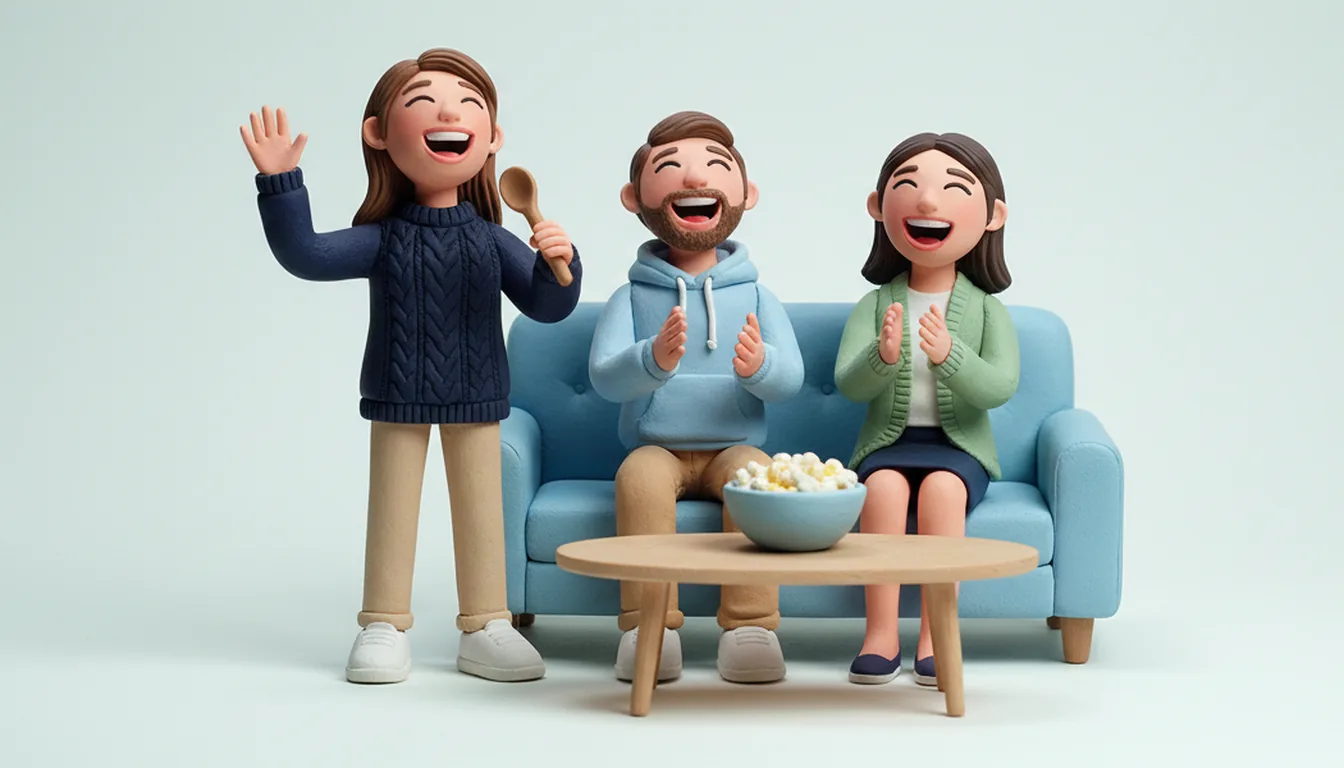
Being yourself means acting in line with what you really think, feel and enjoy, instead of what you guess other people want. It does not mean saying every thought out loud or acting the same in every room.
An example: Hannah is funny. Her sister knows it, and so do her two oldest friends. At dinner with her partner's colleagues, though, she laughs at jokes she does not find funny, agrees with opinions she does not hold and keeps her best stories to herself. On the drive home she feels tired in a way she can't explain. She liked these people. She just wasn't there.
What does it mean to be yourself?
To be yourself is to let your real preferences show. You laugh when something is funny, say "I'd rather not" when you would rather not, and talk about what interests you. What you say and do matches what is going on inside.
It helps to say what being yourself does not require:
- You do not have to be the same everywhere. You talk one way to your grandmother and another way to your best friend, and both can be you.
- You do not have to say everything you think. Choosing your words is a skill, and kindness is part of who you are too.
- You do not have to stay the same forever. You can change your habits and still be yourself.
A useful test is how you feel afterward. Time spent as yourself can be tiring, but it rarely leaves you feeling empty or fake.
Why it feels hard to be yourself around some people
Many of us have people we relax with and people we perform for. A few things push you into performing.
You want them to like you. New colleagues, a partner's family, a group you hope to join. The more you want to belong, the more you edit yourself.
You learned early that some parts were not welcome. A child who was told to calm down, toughen up or stop asking questions often learns to hide that part in front of new people.
The room rewards a different style. A quiet person in a loud group, or a loud person in a careful one, can feel pressure to switch.
Some people simply understand you less. With certain people you have to explain every joke and defend every choice. With others, half a sentence is enough. That has more to do with how two people fit than with how hard either of them tries.
Signs you are not being yourself
- You agree out loud and disagree in your head.
- You rehearse what you will say before a simple conversation.
- You feel like a different person with each group, and none of them feel quite like you.
- You hide what you like, such as a hobby, a show or a kind of music, because it might seem odd.
- You leave social events more drained than the hours spent there explain.
- You can't remember the last time you said no without a long excuse.
One or two of these are normal. If most of them fit, you are probably playing a role more often than you need to. Personality masks looks at where those roles come from and what they cost when they stay on for years.
How to be yourself around other people
Pick one or two and practice them for a few weeks.
- Notice when you switch. For a week, watch for the moment you start acting, and who you are with. Seeing the pattern is half the work.
- Start with low stakes. Say what you really think about a film. Order what you want, even if everyone else orders something different. Small honest choices build the habit.
- Share one real interest. Mention what you actually did on the weekend, even if it was birdwatching or a video game. People connect over specifics.
- Let a pause be a pause. You don't have to fill every silence. A quiet moment often feels longer to you than to anyone else.
- Say no without a story. "I can't make it, but thanks for asking" is a full sentence.
- Disagree kindly. "I see it a bit differently" keeps the conversation going and lets you stay honest.
- Spend more time with the people you relax around. They remind you what being yourself feels like.
- Leave when your energy runs out. Staying past your limit is usually when the act starts.
- Accept that not everyone will click with you. Some people will like the real you less. The ones who stay like the person you actually are.
How to be yourself and feel confident
Confidence and being yourself feed each other. When you stop performing, you have less to keep track of, and you feel steadier. When you feel steadier, it gets easier to stop performing.
- Know what you are good at. It is easier to stand behind yourself when you can name your strengths. You can practice this with the short exercises in what is self-awareness.
- Separate your worth from one conversation. One awkward joke at a party says very little about you.
- Prepare the basics and skip the script. Know roughly how you would answer common questions, then let the rest happen.
Confidence here has nothing to do with volume. A calm person who listens well and speaks up when it matters is fully themselves.
Being yourself vs being rude
Some people take "be yourself" as permission to say everything, ignore the mood and call it honesty.
Being yourself includes your care for other people. You can be honest and kind at once, and you can skip a comment that would only hurt. The question is whether you hold back to protect someone or to protect an image of yourself. The first is good manners. The second, done every day, wears you down.
Short roles are fine too. Being extra cheerful at a friend's wedding does not mean you lost yourself. It becomes a problem when the role never comes off.
What "yourself" looks like depends on your type
Advice about being yourself often assumes that the real you is outgoing and loud. For many people the real self is quiet. In Typeza, each personality type has its own natural way of being:
- Vitalizer: quick to lift the mood in a room. Being themselves means showing feelings openly, and they are sometimes told they are too much.
- Analyst: precise and principled. Being themselves means saying "that is not quite right" and needing time alone to think.
- Dreamer: quiet and drawn to meaning. Being themselves means drifting into thought and taking time to decide. Others often push them to be faster and more practical.
- Organizer: practical and hardworking. Being themselves means showing care by doing things. They can feel judged when people expect big words of affection.
- Craftsman: skilled with their hands and private. Being themselves means a quiet workshop and few words. Constant small talk asks them to be someone else.
None of these is better than the others. The quiet Craftsman in the corner may be more fully themselves than the person telling stories in the middle of the room. If you have spent years matching a style that is not yours, knowing your type can show you which parts were the act. How to find yourself has steps for the bigger question of who you are.
It is also easier to be yourself with some people than with others. With some, your natural way of being lands well, and theirs lands well with you. With others, simply being yourself causes friction for both.
Why is being yourself important?
Being yourself is less tiring. Keeping up a role takes energy, and that energy comes out of your patience, your sleep and your mood at home.
It also brings the right people closer. Friends and partners who meet the real you are choosing you, and you don't have to worry about being found out. Relationships built on an act tend to get harder as the act slips.
And it makes choices easier. When you know what you like and say so, you spend less time in plans and friendships that were never a fit.
Be yourself quotes
A quote about being yourself helps most when it's short enough to remember in the moment. Save one on your phone, write it on a sticky note or send it to a friend before a dinner they're nervous about. Quotes about honesty and keeping your word have their own page of integrity quotes.
- "Quiet is a way of being yourself too."
- "Your laugh belongs in every room you walk into."
- "If you have to act to keep them, they aren't your people."
- "The right people never found you too much."
- "Nobody gets a vote on who you are."
- "Be the same person on the drive home that you were at dinner."
- "Being yourself is a habit, built one honest sentence at a time."
See what being yourself looks like for you
If you are not sure which parts of you are real and which are habit, your personality type can help you sort them. The free personality test has no right or wrong answers. For each pair of statements, pick the one that describes you on a normal Tuesday, and skip the one you would choose at dinner with your partner's coworkers. You see your type the moment you finish, with no sign-up, and its free profile covers what makes that type shine and where it tends to struggle. Read it and notice which lines feel like you and which feel like a role you learned.
If there is one person you can always be yourself with, or one you never can, ask them to take the same test through your result. Once you both have results, Typeza names the pairing you two form and describes it from your side and from theirs.
Questions people ask
How do you be yourself around others?
Notice when you start acting, practice small honest choices, share real interests, say no without long excuses and spend more time with people you relax around.
Written by Virko Kask, founder of Typeza
Written with the help of AI tools.
One question for two, every week
A question to ask your partner, friend or family, and how different types tend to answer it.
Free. Unsubscribe any time.