
How to not care what people think, and whose opinion still counts
To stop caring so much what people think, work out whose opinion you're actually worried about, remember how little attention others pay to you, and choose a handful of people whose views really count. Caring a little is normal, and it's part of what makes you kind. The trouble starts when imagined opinions, from neighbors, distant relatives or a group chat, begin making your choices for you.
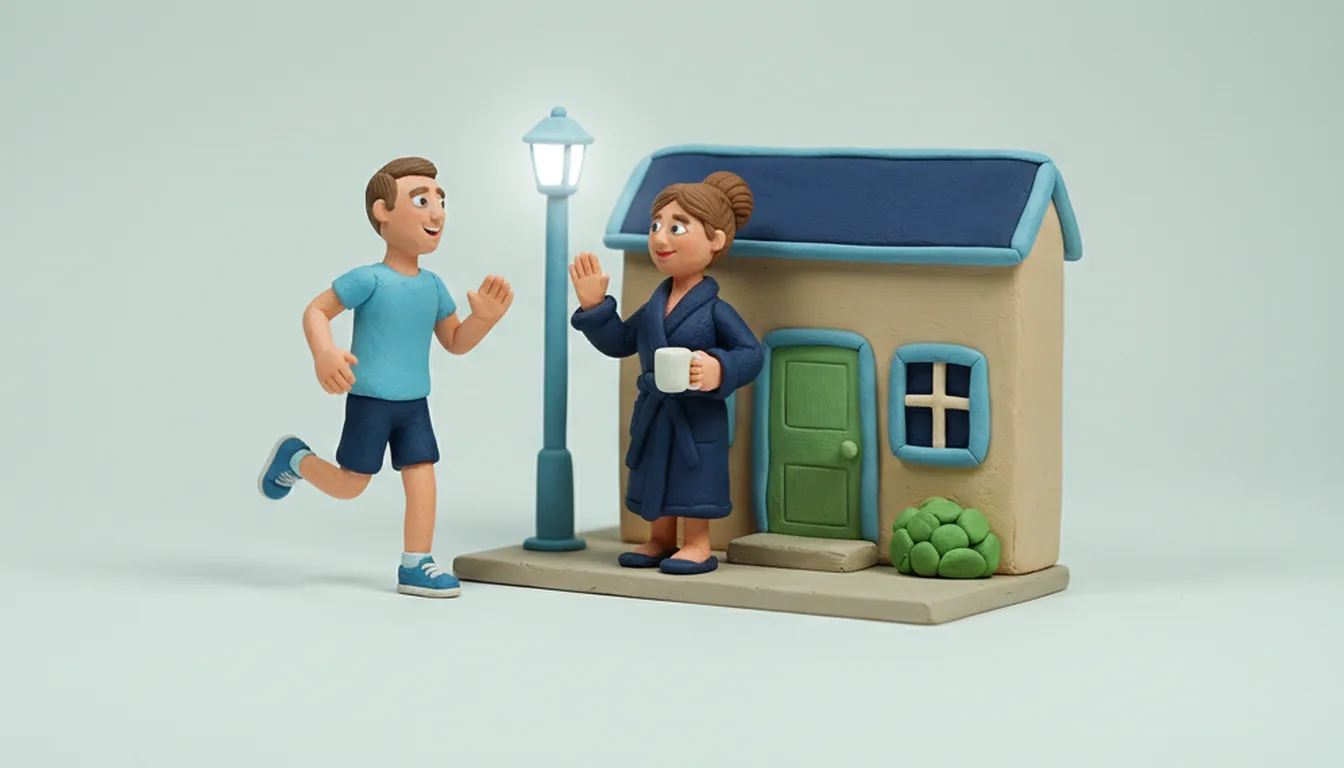
An example: Theo starts running at 45. He's slow, he goes red in the face after five minutes, and he's sure the whole street will laugh. So for three months he runs at half past five in the morning, in the dark, when nobody is up. One Saturday he oversleeps and has to go at eight. Halfway down the block, his neighbor steps out in her bathrobe to get the paper, sees him puffing past and calls out, "Good for you, Theo!" That's all. She goes back inside with her coffee. He has spent three months hiding from an audience that was never really watching.
Why do I care so much what people think?
Wanting to fit in is part of being human. Many of us felt as children how good approval was and how much a frown from the right person stung, and that feeling doesn't switch off at eighteen. A few things make it stronger:
- Growing up with approval you had to earn. If praise came only for good grades or good behavior, you may still be working for it.
- An old embarrassment. One evening when people laughed at you can make you careful for years.
- A new crowd. Moving to a new town, joining a partner's family or starting with a new friend group makes everyone more watchful for a while.
- Endless comparison. Scrolling through other people's best moments makes your ordinary ones look smaller.
- Your personality. Some people are simply more tuned in to what others feel and think.
None of this is a flaw. It just helps to know where the worry comes from.
The audience is smaller than you think
Most people are busy with their own day. They're thinking about their bills, their kids, the thing they said at dinner last night. Your new haircut or your slow jog gets a second of their attention, if that. Everyone is the main character in their own story, and you're a passing extra in theirs, which is a relief once you get used to it.
When people do notice, they're often kinder than you expect. Think of the last time you saw a stranger dancing badly at a wedding or singing loudly in their car. You probably smiled. Theo's neighbor did the same.
Whose opinion should count?
Caring less about what people think doesn't mean caring about nobody's opinion. It means sorting them. Picture three circles.
The inner circle is a few people who know you well and want good things for you: a partner, one or two close friends, maybe a parent or a sibling. Their views deserve real weight, especially when they say something hard.
The middle circle is relatives you see twice a year, neighbors and acquaintances. Listen politely, take what's useful, and let the rest go.
The outer circle is strangers, people online and the friend of a friend at a party. Their opinion of your life is a guess, and you can mostly let it pass.
Before a comment spoils your evening, ask three questions. Does this person know me well? Do they want good things for me? Will this matter in a year?
How to not care what other people think: nine habits
- Name the exact fear. "People will judge me" is huge and foggy. "My brother will make a joke" is small and survivable.
- Use the one-year test. Much of what you're worried about will be forgotten by everyone, you included, long before then.
- Start with something small and visible. Wear the bright jacket, order the odd dish, sing one song at karaoke. Each time nothing terrible happens, the worry shrinks.
- Stop over-explaining. "I just like it" is a full answer. Long justifications invite debate.
- Know what matters to you. When you're clear about your own reasons, other people's opinions have less to grab on to.
- Spend more time with people who like you as you are.
- Take a break from comparison. Mute the accounts that leave you feeling behind, for a week, and notice the difference.
- Laugh at yourself first. A joke about your own slow running leaves little for anyone else to tease.
- Remember how you see others. When a friend does something brave and a bit silly, you admire them. Others often see you the same way.
When it's family, friends or a partner
Your family
Family opinions hit hardest because they've known you the longest, and a parent's approval can matter at forty as much as at fourteen. You can listen, thank them for caring and still decide for yourself. "I hear you, Mom, and I'm going to try it anyway" is kind and clear. If the comments come about everything, what judgmental means helps you tell a passing opinion from a habit of judging.
Your friend group
Groups have unwritten rules about what's cool, and teasing is how they push people to fit in. Good friends adjust when you grow and change. If a friend keeps mocking something that matters to you, tell them once, plainly. How they respond tells you a lot.
Your partner
A partner's view should count, because you share a life. Still, caring about what your partner thinks is different from being run by it. If you've stopped wearing clothes you love or seeing friends you like because of a raised eyebrow, it's time to talk about it together.
Caring less without turning cold
Some people swing too far and start saying "I don't care what anyone thinks" as an excuse to be rude. Life is too short to care what everyone thinks, but some opinions are worth hearing. You can still apologize when you hurt someone, take advice from people who love you and notice how your actions land. The goal is to free yourself from imagined judges while staying close to real people. Being yourself goes deeper into what that looks like day to day.
What each type worries people will think
Everyone cares about some opinions more than others, and Typeza sees personality type as part of which. Eight of the 16 types:
- Harmonizer keeps the peace at a gathering and minds remarks about how fast they get things done. A hint about being lazy can stay with them a long time.
- Vitalizer pours effort into people and minds a lot when it goes unnoticed.
- Mentor may laugh off a remark about their looks or their eating while it quietly hurts.
- Inspector cares about doing things properly, and minds being called rigid or boring for it.
- Commander seems not to care, but being called cold or a bad person for being direct hurts more than they show.
- Dreamer minds being laughed at for their hunches, especially in front of others.
- Guardian cares about being seen as fair and honest, and minds being called stubborn for holding to what they believe.
- Organizer shows care through help and wonders if anyone sees it. Being told they can't think past next week stings.
Knowing which opinion bothers you most makes it easier to notice when it's deciding things for you.
See what your type cares about most
Each person worries about a different kind of opinion, and type is often part of which. Start with the free personality test. Send a sibling or friend who teases you the link from your result. After they answer, your relationship type shows what goes easily between you, where you clash and how each of you feels it.
Questions people ask
How do I stop being so self-conscious?
Give your attention a job outside yourself. Ask the other person a question, notice the room or focus on what your hands are doing. Self-consciousness also fades with practice, so repeat the situations that make you tense in small doses.
What does "what people think of me is none of my business" mean?
It means other people's opinions of you live in their heads, shaped by their mood, history and worries, so you cannot control them and do not need to manage them. Your part is how you act. It does not mean ignoring honest feedback from people close to you.
Written by Virko Kask, founder of Typeza
Written with the help of AI tools.
One question for two, every week
A question to ask your partner, friend or family, and how different types tend to answer it.
Free. Unsubscribe any time.