
Socially awkward: what it means, and how to feel less awkward
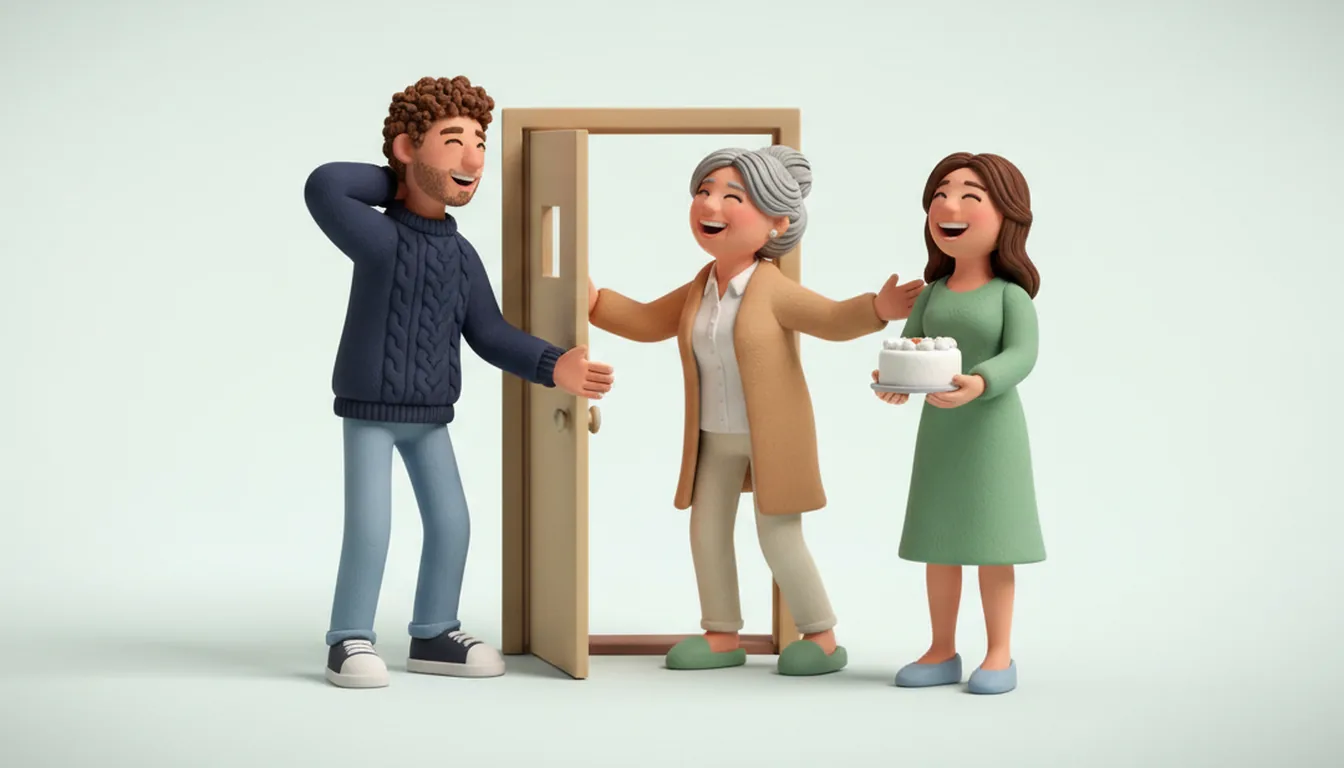
Being socially awkward means feeling, or looking, a little out of step with people. The timing is off, the right words arrive late, or a small ritual like a greeting goes sideways. Everyone has awkward moments. A person gets called socially awkward when those moments come often enough that they expect them and start to brace for them. It is a common, everyday trait, and it usually bothers the awkward person far more than anyone around them.
An example: Henrik had a good plan for his friend Odile's birthday dinner. Instead, he held the door for a couple who were still halfway down the street, so all three of them did a polite little jog. He offered Odile's aunt a handshake just as she leaned in for a hug. When the waiter brought the soup and said "Enjoy," Henrik said "You too." On the drive home he played all three moments back like a highlight reel. The next morning Odile texted: "My aunt says you are a sweetheart. She also wants your soup recipe, whatever that means."
What does socially awkward mean?
Social life runs on small unwritten scripts. You say hello, you ask a question back, you laugh at the right spot, you sense when a chat is over. Most of these scripts are picked up by watching, and nobody hands out the full list. Socially awkward people tend to notice the scripts while they are using them, which is a bit like thinking about your feet on the way down a staircase.
So you get a person who is often kind and interested, and whose delivery stumbles. They may say very little and then everything at once. They may miss a joke, or make one that lands a second too late. Social awkwardness is the word for that gap between what someone means and how it comes out in the moment.
Everyday signs of social awkwardness
Count how many of these sound like you:
- You practice your lines before a phone call, a party or meeting someone new.
- You laugh at a joke after everyone else has moved on.
- Goodbyes take you three tries, and sometimes you leave with someone and walk the same way in silence.
- The perfect answer comes to you an hour after the talk ended.
- After a social evening, you replay what you said at 2 a.m.
- You are relaxed and funny with close friends, and stiff with people you have just met.
That last one matters. A lot of awkwardness belongs to unfamiliar people and loose situations, and it fades with people who already know you.
Awkward, shy, or just quiet?
These words get mixed up all the time. Shyness is a worry about being judged, and it can make a person hold back even when they want to join in. Introversion is about energy: an introvert can chat with ease and still want a quiet evening afterward. Being quiet simply means talking less. If being judged is your worry, shyness has small steps for parties, family and a partner.
Awkwardness is about timing and fit. An outgoing, talkative person can be awkward, often more visibly, because they are the one who overshares in the first five minutes or talks over someone without noticing. A quiet person can be perfectly at ease. If you are the one who likes to watch from the side of the room, the word wallflower may fit you better than awkward does.
Why am I so socially awkward?
There is rarely one reason. Common ones:
- Less practice with a certain kind of talk. Someone who spends most evenings with two close friends will find a room of strangers harder. Small talk gets easier with use, like cooking or driving.
- Your attention is on yourself. When you keep checking how you are coming across, less attention is left for the other person, and the conversation loses its rhythm.
- You are tired. Awkward moments pile up when your energy is low. If your social battery is flat, even easy chats feel clumsy.
- Your pace and the room's pace differ. A thoughtful person in a fast, jokey group feels out of step, and so does a lively person at a very formal dinner.
If what you really wonder is whether people find you tiring, am I annoying has a few signs worth noticing.
Why small talk is harder for some types
Personality type plays a part too. Small talk asks for a quick, light rhythm, and some people think in a different one. A few examples, in types page order:
- Ideator skips the warm-up. They open with the weather and three sentences later ask whether cities will float in a hundred years.
- Analyst hears "How are you?" as a real question and gives a real answer. The unwritten rule that the answer is "Good, you?" seems a little silly to them.
- Inspector is at home when there is a plan and a role. A party with no structure gives them nothing to hold on to, so they can seem stiff until someone asks them to help with the grill.
- Strategist thinks before speaking. By the time their reply is ready, the talk has moved on, and the pause looks stranger from outside than it feels from inside.
- Encourager is so curious about people that they ask a near stranger a very personal question within ten minutes. The interest is warm. Only the timing is off.
Each of these types also has places where it shines. The Ideator who confuses a dinner table can be the best company on a long car ride.
How to be less awkward
You don't have to turn into the life of the party. A few small habits take a lot of pressure off. Learning to read body language helps too, since it shows you when a chat is going well and when to wrap it up.
- Keep two easy openers ready. "How do you know the host?" and "What have you been up to lately?" work almost anywhere.
- Ask a second question. It shows you listened. "Where did you go?" after "I just got back from a trip" does more than any clever line.
- Give a little extra in your answers. "Fine" ends a chat. "Fine, I spent the weekend trying to fix my bike" hands the other person something to pick up.
- Have an exit line. "I'm going to grab some food, it was nice to talk" closes a chat cleanly, with no long fade.
- Laugh first. When something goes sideways, a quick "Well, that was smooth" turns it into a shared joke.
- Cut the late-night replay short. Others often forget your awkward moment first. They are busy with their own.
Classic awkward moments, and how to recover
- The "you too." The waiter says "Enjoy your meal," and you say "You too." Smile and carry on. Waiters hear it every day.
- The handshake that meets a hug. Pick one and commit. Laugh, say "Let's do both," and go for it.
- The forgotten name. Admit it early: "I'm so sorry, tell me your name again." Asking right away is far easier than dodging it all night.
How to be more social and friendly
Feeling less awkward in a chat is one goal. Seeing people more often is another, and it asks for a different kind of effort. Being more social mostly means giving yourself more chances to meet people. Being friendly means making each of those chances easy for the other person.
How to be more social
- Say yes to one invitation a month that you would usually skip.
- Join one thing that meets every week, so the same faces become familiar. Making friends as an adult lists good places to start.
- Make the first plan yourself. A text like "Coffee on Saturday?" is enough.
- Bring a friend to a new place the first time, then go alone once you know your way around.
- If you are an introvert, choose small meetups over big parties. Two hours with three people still counts.
How to be friendly
Friendliness is mostly small signals. Say hello first, with a smile and eye contact. Use the person's name. Put your phone away and turn toward them. When you like something about them, such as a good jacket or a funny story, say so. Some people who say "I'm not a friendly person" feel warm inside and simply wait for others to say hello first, so from outside they look distant.
How to be more outgoing
You can grow more outgoing a little at a time. Give yourself one small goal for each event, like talking to one new person or asking one question in a group. If you freeze on what to say first, how to make small talk has openers for parties, neighbors and new friend groups. You don't need to become loud. A few warm habits, repeated, are enough for many people to see you as open and easy to approach.
Is being socially awkward a bad thing?
Mostly it isn't. Plenty of people find a little awkwardness charming, because it reads as honest. The awkward person is rarely slick or fake, and once they relax they are often a good listener.
It becomes a problem when the fear of awkward moments starts to keep you at home, or when you skip a friend's wedding because you dread the small talk. Then it is worth working on, one easy evening at a time. It also helps to remember that the people you feel nervous around are often nervous too. How to get to know someone has more ideas for those first conversations. And some of what feels awkward to you may look quirky to others, which is usually meant kindly.
See where your awkward moments come from
Henrik is now known in Odile's family as the man with the soup. His awkward moments came from thinking too hard about each script. Yours may have another source, and your personality type helps you see which one. Typeza's free personality test is 41 rounds of picking the truer of two statements. Your type appears the second you finish, and next to it your score on four base traits, one of them how outgoing or reserved you are. Its profile lists what you are good at and what tends to trip you up, and reading it costs nothing. No sign-up stands between you and that page.
If one friend always rescues you from awkward moments, invite them to the same test from your result. A free account lets you send the invite. After their last answer, you will both see the relationship type you share, and a clue to why one of you walks into a room so differently from the other.
Questions people ask
What does it mean to be socially awkward?
It means social situations often feel a little out of step for you. Greetings, small talk and goodbyes don't come naturally, and you are aware of it while it happens.
Am I socially awkward, or just introverted?
They are different things. Introversion is about what drains and refills your energy. Awkwardness is about timing and fit in a conversation. You can be one, both or neither.
Can you stop being socially awkward?
You can become much less awkward. Easy chats, a few ready questions and less self-watching help many people. A little awkwardness usually stays, and that is fine.
Why are some smart people socially awkward?
Often their attention goes to ideas more than to the room. Someone deep in a topic can miss the cue to stop explaining it. It is a habit of attention, and it says nothing about how much they like people.
What is the opposite of socially awkward?
Socially at ease, or socially smooth: someone who greets, chats and says goodbye without thinking about it. Even very smooth people have awkward days.
Written by Virko Kask, founder of Typeza
Written with the help of AI tools.
One question for two, every week
A question to ask your partner, friend or family, and how different types tend to answer it.
Free. Unsubscribe any time.