
What does quirky mean? Quirky people, habits, and when it's a compliment
Quirky means a little odd in a way people like. The word points to small, harmless habits and tastes that set a person apart, and it usually comes with a smile.
A quirk is one of those habits, and quirkiness is the trait as a whole. Close words are offbeat, unconventional and a bit of a character. The opposite is conventional or ordinary, which isn't an insult either, just a description of someone who does things the expected way.
Quirky, weird or eccentric?
All three describe someone who doesn't quite fit the usual pattern, and the difference is mostly in how much and how warmly. Quirky is the lightest of the three. It covers small things, like a habit or a taste, and it's nearly always fond. Weird is broader and can go either way: friends say it with love, strangers say it to keep their distance. Eccentric is quirky taken further, a whole way of living that ignores what others expect, and people often use it for someone older or someone with strong, settled habits. So a friend who eats pizza with a fork is quirky. A friend who wears a cape to the supermarket every week is closer to eccentric.
Quirky habits in grown-ups
Many adults have a few quirks, even the ones who think they're perfectly ordinary. Here are some common ones.
- Naming houseplants, cars or kitchen tools, and using the names.
- Eating food in a fixed order, like all the peas first.
- Reading the last page of a book before starting it.
- Humming the same three notes while thinking.
- Keeping one odd rule, like never walking under a ladder or always taking the stairs.
- Collecting something small and unusual, like stones from every beach or old keys.
- Laughing at their own puns before they've finished telling them.
- Having strong feelings about how a towel should be folded.
None of these hurt anyone, which is what keeps them in quirky territory. When a habit starts to take up other people's time or comfort, the word people reach for changes.
Is quirky a compliment?
Most of the time, yes. When a friend, a partner or someone you've just met calls you quirky, they're usually saying they noticed something different about you and enjoyed it. It means you're memorable, a little surprising and not a copy of everyone else.
Tone still matters. Said with a laugh and a warm look, it's affection. Said with raised eyebrows after a long pause, it can be a polite way to say "that was strange". When in doubt, you can ask, half joking, "Good quirky or bad quirky?" Most people will tell you.
When someone you're getting to know calls you quirky, it's often a good sign. They've started to notice the little things about you, the way you tell a story or the odd snack you always order, and they want to see more of them.
If you'd like kinder or more exact words for the people in your life, this list of words to describe a person has plenty to choose from.
Gerald the fern
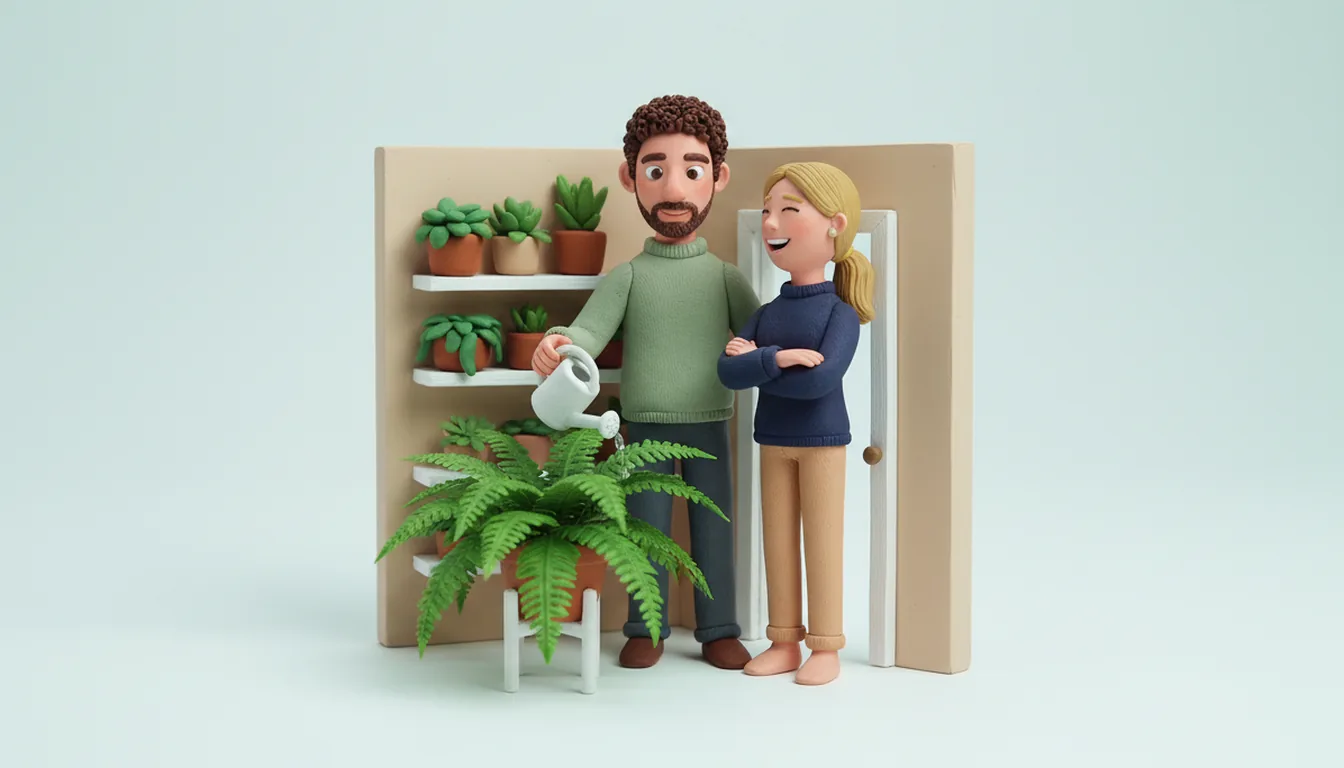
An example: Mateo, 34, has thirty houseplants in a small flat, and every one of them has a name. The big fern on the white stand by the door is Gerald. On Sunday mornings Mateo waters them one by one with a small white watering can and tells each plant about its week. "Good growth, Gerald. Very proud."
His partner Ilse, 33, leans in the doorway with her arms crossed and laughs every single time. The habit was one of the reasons she stayed.
Last spring Mateo went away for a week. Ilse promised to water the plants and was sure she would just water them. On the third morning she heard herself say, "Morning, Gerald, you look thirsty." She stood there with the watering can and laughed alone in the hallway. When Mateo came home, she didn't tell him for two days.
Living with a quirky partner or friend
A quirky partner makes ordinary days a little less ordinary. Over time, their quirks become part of the shared life, like a joke only the two of you understand. Some couples say the quirks they found odd at first are the ones they'd miss most.
It goes more smoothly when the quirks don't land on the other person's plans. A partner who names the plants is charming. A partner who insists the plants need a vote on the holiday dates might take more patience. A simple rule many couples land on is that a quirk is yours to keep, as long as it doesn't take over what you share.
In a friendship, quirks often keep things fun. The friend who sends you a photo of every interesting door they pass, or who has a fixed order for ordering at the same café, is easy to remember and fun to tease. If you've ever wondered whether your own habits are too much for people, am I annoying looks at how to tell.
Charming to one person, unpredictable to another
How much someone enjoys a quirk depends partly on their type. The Ideator loves the unexpected and often collects quirky friends without trying. The Inspector likes life to run on clear rules, so a habit that seems to have no reason can feel a little unsettling. The Organizer values routine and may read a quirk as something that could get in the way of the plan. The Encourager sees a person's quirks as part of who they are and tends to cheer them on.
So an Ideator and an Inspector can watch the same man talk to a fern and see two very different things. Type theory sketches tendencies like these, and real people mix them in their own way. Treat it as a way to understand a reaction, not as advice about anyone.
Being at ease with your own quirks
Some people hide their quirks because they're afraid of seeming odd. Yet the small things that make you different are often what people remember and like about you. A few thoughts can help.
- Notice who enjoys them. The people who laugh with you, and not at you, are a good sign you're with the right people.
- Keep the ones that make you happy. If talking to your plants makes your morning better, it's doing its job.
- Adjust the ones that bother others. A quirk that keeps a friend waiting is worth a small change.
- Don't confuse quirky with awkward. Feeling stiff and unsure in company is a different thing, and socially awkward covers it.
Quirks also sit close to other parts of who you are. A free spirit follows their own path in bigger life choices. An old soul feels at home with the music, books and pace of an earlier time. And some of the oddest habits turn out to be hidden talents that nobody thought to ask about.
Find out which of your habits come with your type
With Typeza, two people see where their types meet, including which habits feel charming to one of you and odd to the other. The free personality test is where it starts. After that, invite the person who laughs at your quirks the most.
Questions people ask
What is a quirky person?
Someone with small, harmless habits or tastes that make them stand out, in a way people tend to like. They aren't trying to be different. They just are.
What is a quirk?
A quirk is one odd little habit or feature, like humming while you think or eating cake from the edges in. A person can have many quirks without being called quirky.
What does it mean when someone calls you quirky?
It usually means they find you a little unusual and like it. Listen to the tone: a warm laugh means affection, while a long pause may mean they were simply surprised.
What are other words for quirky?
Offbeat, unconventional, unusual and a bit of a character are the most common. Eccentric is stronger, and weird is less clear about whether it's meant kindly.
Is it good to be quirky?
Usually, yes. People remember quirky friends and often feel more at ease around them, because they show it's fine not to be perfect.
Can someone be too quirky?
Only when the quirks start to get in other people's way. Many quirks are small enough that they simply make a person more interesting.
Sources
- Dictionary.com, "quirky" and "quirk". Quirky as "having or full of quirks," and a quirk as a peculiarity of behavior or personality.
Written by Virko Kask, founder of Typeza
Written with the help of AI tools.
One question for two, every week
A question to ask your partner, friend or family, and how different types tend to answer it.
Free. Unsubscribe any time.