
How to make small talk with anyone, and enjoy it a little more
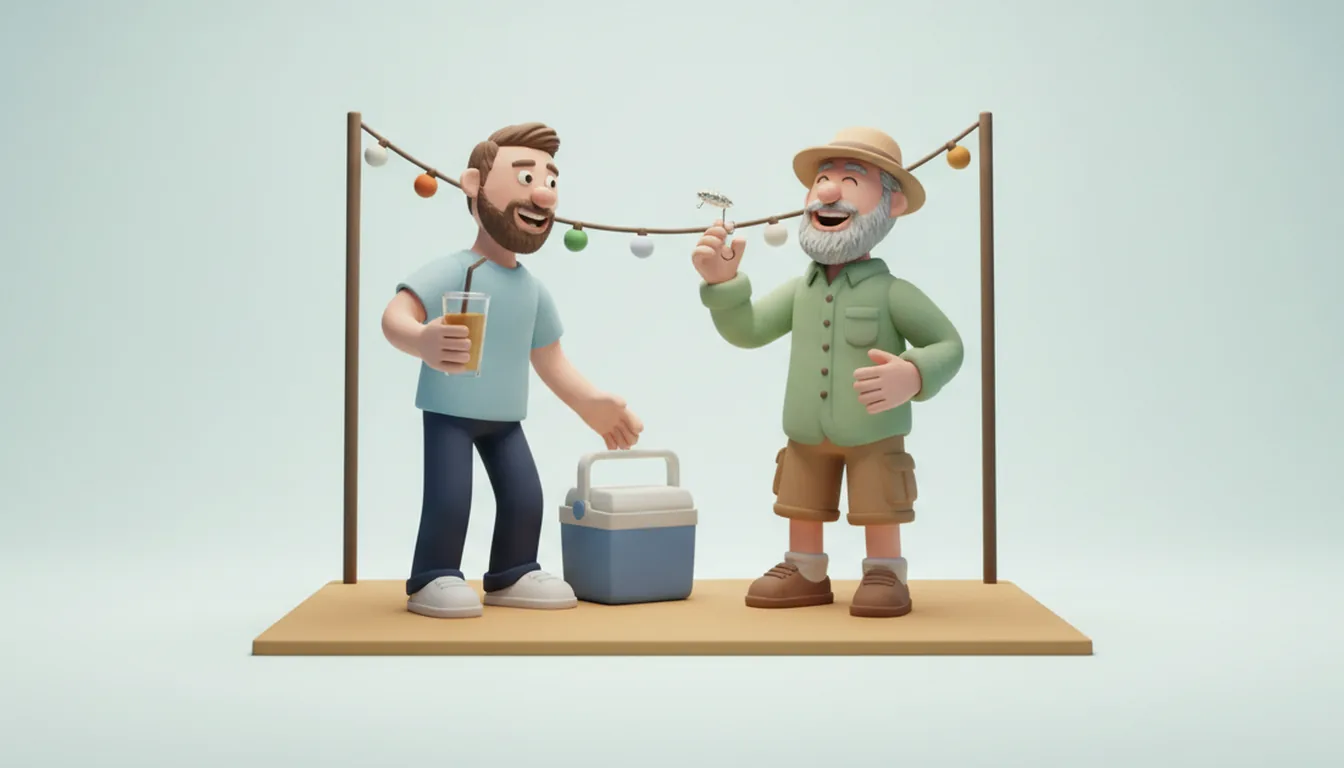
To make small talk, comment on something you can both see, ask an easy question about it, and give a bit more than one word when it's your turn to answer. Then watch for the thing the other person brightens up about, and follow it. Small talk is light, friendly chat about the food, the place, the weather or how you know each other. It exists so two people can relax enough to find something real to talk about.
An example: Mateo knew exactly one person at the backyard birthday party, and ten minutes after they arrived his girlfriend Sofia was pulled into the kitchen by an aunt. He ended up by the cooler next to a gray-bearded man in a fishing hat. "Nice weather," Mateo said. "Yep," said the man, and the silence that followed felt very long. Then Mateo noticed a tiny feathered lure pinned to the man's hat and asked about it. It turned out Uncle Walt tied his own lures, and he had a story about a trout he lost in 1998 that took twenty minutes to tell. By the time Sofia came back out, Walt had invited Mateo to the lake for six the next Saturday morning.
What is considered small talk?
Small talk covers the safe, everyday topics people use to get comfortable with each other. Most of it falls into a few groups:
- Anything around you, like the food, the music or the dog that keeps stealing napkins.
- How you each got here, such as how you know the host or how long the drive was.
- Light news and plans, like the weekend, a recent trip or a show you both watch.
- Small worries everyone shares, such as traffic, rain or the price of eggs.
Some topics are better left for later. Money, politics, religion, health and weight can wait until you know someone, and so can questions about why a person isn't married or doesn't have kids.
Why bother with small talk?
Plenty of people would rather skip small talk and go straight to the deep stuff. It can feel empty, even a bit fake. Still, it does a real job. A few minutes about the weather let two strangers check that the other one is friendly, and they give both of you time to find a topic worth more. Many close friendships started with a chat about something tiny, like Walt's lure.
If chats like this leave you replaying every word at night, socially awkward looks at that feeling and where it comes from.
How to start small talk anywhere
The easiest opener is almost always about the setting you share. A few ideas for the places it comes up most:
With a neighbor
Neighbors are the people you'll see a hundred times, so short and friendly works best. Mention something you both live with: "Did the storm get your fence too?" or "Your tomatoes are doing better than mine." Learn their name early, and use it the next time you pass.
At a party where you know one person
Stay near the food or the drinks, where people drift and chat. A comment on what's in front of you is enough to begin: "Have you tried the dip? I can't stop eating it." If you see someone else standing alone, they'll usually be glad you came over.
With your partner's family
Your partner's family is often curious about you and a little cautious. Ask about the family itself: old photos, how the parents met, what your partner was like at ten. Offering to help in the kitchen or at the grill also gives you a job and a natural reason to talk.
In a new friend group
Joining a group that already has years of inside jokes is hard. Ask one person about a story the others keep mentioning, and let them fill you in. Remembering details about each person and asking about them next time does more than any clever line.
With a cashier or a barista
These chats last thirty seconds, so keep them light and kind. "Busy morning?" or "That's a great pin on your apron" is plenty. If they're rushed, a smile and a thank-you counts too.
Fun conversation starters
An opener about the setting gets you past hello. A fun conversation starter is for the next step, when the chat feels easy and you would like a laugh or a story. The best ones are simple to answer, have no wrong reply and bring up a small memory. If the other person hesitates, answer your own question first. In a group, pick a question everyone can answer and pass it around the table.
Fun conversation starters for a party or a dinner with friends
- What's the best thing you've eaten this month?
- What were you obsessed with when you were ten?
- What's a hobby you tried for exactly one week?
- What's the most useless talent you have?
- What song would play every time you walked into a room?
- What's a food you hated as a kid and love now?
- What would your perfect lazy Sunday look like?
- What's the worst gift you've ever received, and did you keep it?
Funny conversation starters over text
- Is a hot dog a sandwich? My friends need you to settle it.
- Rate your day out of ten, and explain the number.
- I need a new show. What should I watch next?
- Send me the last photo on your phone that isn't a screenshot.
- What's something small that made you laugh today?
If the table is in the mood for a game, would you rather questions do the same job with a little more drama.
How to keep a light chat going
Starting is often easier than the next two minutes. These habits keep it from fizzling out:
- Ask questions that need more than yes or no. "What made you pick this neighborhood?" goes further than "Do you like it here?"
- Listen for loose threads. Walt said "I tied that one myself." That small extra detail was an invitation to ask more.
- Share something back. A chat that is all questions feels like an interview. Add a short story of your own, then hand the turn back.
- Stay with what interests them. If they light up about their garden, keep talking about the garden.
- Let small pauses happen. A pause of a few seconds is normal, and the other person is often about to say something.
If a light chat starts turning into something more, deep conversation topics has ideas for where to take it.
How to be a better conversationalist
Good conversationalists aren't always the funniest people in the room. Mostly they make the other person feel interesting. A few habits help:
- Be curious about people. Ask what someone loves doing, and keep asking until you understand why.
- Remember small details. The name of their dog or the trip they were nervous about makes the next chat warmer.
- Keep your stories short. Give the point first and the extras only if they ask.
- Notice when a topic is finished. Short answers and a glance around the room mean it's time to move on.
- Pull in the quiet one. "Lena, didn't you go there last year?" makes a group feel friendly.
- Skip the one-upping. When someone tells you about their bad flight, you don't need a worse one.
- Listen properly. Half of good conversation is listening, and how to be a better listener has more on that side.
How to leave a chat gracefully
A clean ending leaves a good memory. Wait for a natural pause, then say something warm and specific: "I'm going to find Sofia, but I loved hearing about the lake." If you want to see the person again, say so plainly. You don't need an excuse for leaving, only a kind sentence.
What each type brings to small talk
People do small talk in very different ways, and a lot of it comes from personality type. Here are eight of the 16 types:
- Harmonizer makes people feel at home, offers you a plate and keeps the talk on pleasant ground. They steer away from any topic that might cause tension.
- Vitalizer brings energy and laughter and pulls new people into the circle. Their practice is leaving space for quieter voices.
- Mentor turns a chat about the weather into a story about feelings within minutes. People tend to tell them things they didn't plan to share.
- Commander asks direct questions and gets to the point fast. It can feel like a quick interview, but you always know where you stand.
- Diplomat reads the room well, sees who is bored and changes the subject in time. Parties are where they shine.
- Guardian watches first and talks later. Once they've decided you're decent, they become warm and loyal company.
- Counselor asks gentle questions and notices who has been left out of the group.
- Craftsman is happiest talking about something concrete, like the grill, a boat engine or the best way to tie a lure.
So if small talk feels hard, your way of chatting may simply look different from the loud, fast style people picture.
Learn how you come across in a chat
Some people relax into small talk at once and others need something to ask about first, and type plays a part in which one you are. The free personality test shows your strong sides and weak spots. Send someone you have just met the link from your result so they can take the same test. After they answer, your shared relationship type shows what tends to flow or snag between you.
Questions people ask
How do you make small talk with a stranger?
Comment on something you both see, ask an open question about it and add a small detail when you answer. Then follow whatever they seem to enjoy talking about.
How do you keep a conversation going?
Move from facts to opinions. After "Where did you go?" ask "What was the best part?" or "Would you go back?" When a topic runs dry, jump to a nearby one, like from their trip to the food they ate there. People enjoy being remembered, so coming back to something they said earlier also gives the talk somewhere new to go.
What are good small talk topics?
The food, the place, how you know the host, weekend plans, recent trips, pets and shows. Leave money, politics, religion and health for later.
How do I get better at small talk?
Practice in short, low-stakes chats with neighbors and shop staff. Ask open questions, remember names and share a little about yourself.
Is it OK to skip small talk?
With close friends, yes. With new people, a few minutes of light chat helps both of you relax before a deeper conversation.
Written by Virko Kask, founder of Typeza
Written with the help of AI tools.
One question for two, every week
A question to ask your partner, friend or family, and how different types tend to answer it.
Free. Unsubscribe any time.