
How to connect with people when small talk is not enough
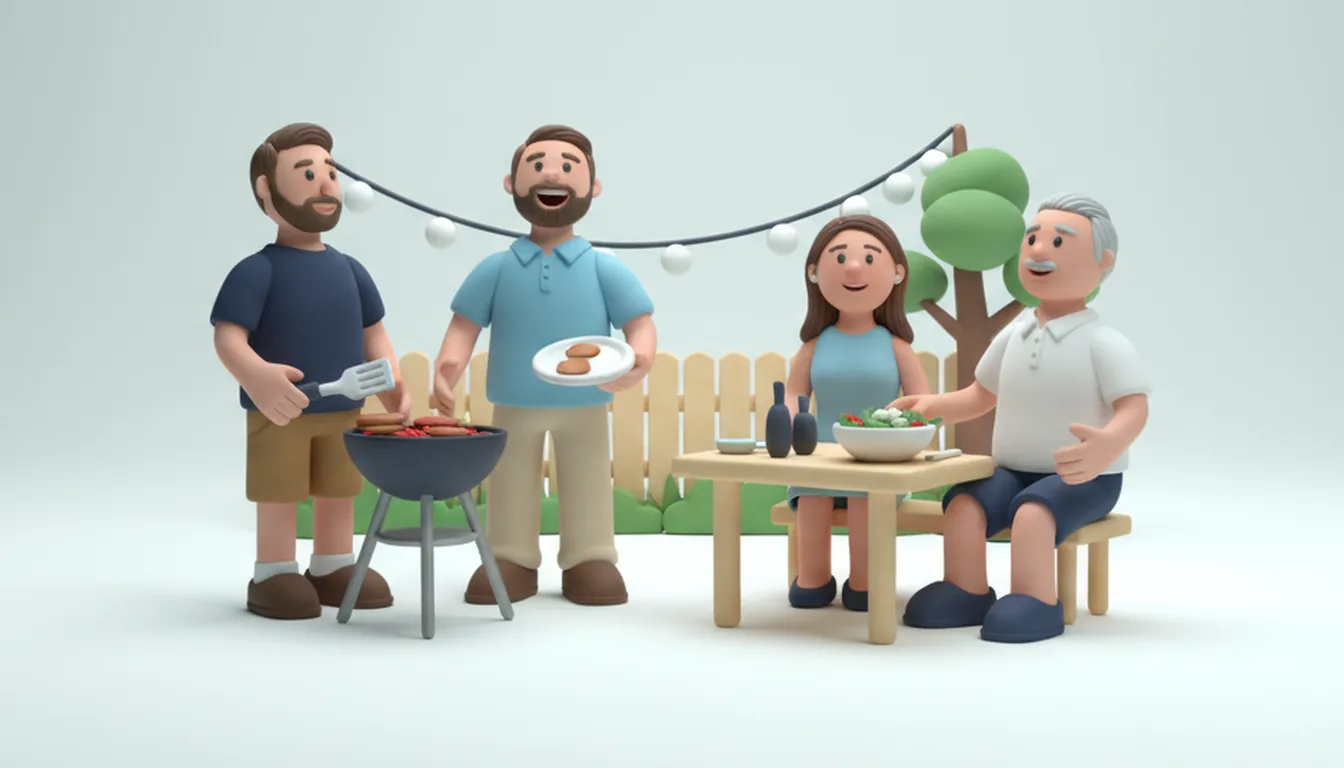
To connect with someone is to get past polite talk to the point where you each know something real about the other and want more of it. It often comes from a few plain things: doing something side by side, asking one question further, giving it time and laughing at the same thing.
An example: for eight years, Dev and his brother-in-law Marcus talked about three things at family events: the traffic, the weather and the score of whatever game was on. They got along fine, but they never got anywhere.
Then, at a family barbecue, Dev's wife Priya handed her brother a plate and pointed at the grill. "You two are on burgers. I'm sitting with Dad." For forty minutes the two men stood side by side with a spatula and nothing to do but wait. Somewhere between the first batch and the second, Marcus told Dev about the food truck he'd been planning in secret for two years. Dev told Marcus how much he missed his own father's cooking. When they carried the burgers over, Priya took one look at them laughing and asked what she'd missed.
What connecting with someone feels like
You notice it more than you plan it. You stop planning your next line, and a pause in the talk feels comfortable. You remember what they told you last month, and they remember what you told them. When something good or bad happens, they're near the top of the list of people you want to tell.
It can happen with a new friend in an afternoon, or with a relative you've known for decades and never really talked to. Dev and Marcus had sat at the same table for eight Thanksgivings before it happened to them.
Why small talk stops short
Small talk does a real job. It lets two people see that the other is friendly, and it gives you something easy to say at the start. How to make small talk covers that first step.
It stalls when both people keep it safe forever. Each one waits for the other to go first with something more personal, and neither does. Family events make it worse, because there's always a crowd, a game on and someone needing help in the kitchen. You can spend years in the same room as someone and never be alone with them for ten minutes.
What makes people open up
Doing something side by side
Many people talk more easily when their hands are busy and they don't have to look at each other. Think of cooking, a long drive, fixing a bike or painting a room. The task fills the silences, so nobody feels pressure, and the real talk slips in between.
Asking one question past the polite one
"How's work?" gets "Busy." The next question is where people open up: "What's the part you actually like?" or "What would you do instead, if you could?" Ask it, and hear the whole answer out before you add your own story. When you're ready for a longer talk, deep conversation topics has easy ways to start one.
Time, and showing up again
Closeness rarely comes from one long talk. It builds from being around again and again: the same weekly walk, the text after their big day, the second barbecue and the third.
Laughing at the same thing
A shared joke is a quick way past the polite stage. Once you've laughed at the same burnt burger, you have a small story that belongs only to the two of you, and you'll bring it up for years.
Who opens up over a chat and who over a shared job
People open up in different ways. Part of it is personality type. One person warms up over a heart to heart. Another shuts down when asked something personal too soon, and opens up while carrying a couch. Here's how eight of the 16 types tend to open up:
- Vitalizer: opens up fast over food, laughter and a lively table. Too much seriousness too soon can feel heavy to them.
- Mentor: loves a talk about feelings and what matters in life, and often asks you the deep question first.
- Inspector: opens up slowly, through reliability. Show up on time, keep your word, and trust grows. Personal questions on the first day make them close up.
- Commander: connects through action, like a project, a challenge or a game where something is at stake.
- Diplomat: warms up while doing something fun right now. A long sit down talk with no plan can bore them.
- Guardian: needs to trust you first and watches how you treat others. Once you're in, the loyalty is deep.
- Counselor: opens up one on one, in a quiet place, with someone who listens without rushing.
- Craftsman: talks most with busy hands and few words about feelings. A shared job does more than a heart to heart.
Dev sounds a lot like a Craftsman, and the grill gave him exactly what he needed: a job, a partner and no pressure to talk.
Small steps with friends, family and a partner
With a new friend
Suggest a second meeting before the first one ends, and make it something to do, like a walk, a market or a class. Small, regular meetings often do more than one big night. For finding people and keeping a new friendship going, see making friends as an adult.
With an old friend you've drifted from
Skip the long apology. Send something small that shows you thought of them: a photo, a song, "this made me think of you." Then suggest one easy plan. Friends who drift apart often come back the same way they drifted, one small step at a time.
With a parent, sibling or in-law
Get them alone, ideally doing something. Offer to help with a job they care about, or ask them to teach you a recipe or a skill. Ask about their life before you knew them: "What were you like at my age?" Some have never been asked.
With your partner
Couples can fall into small talk too, mostly about logistics. Put the phones away on one walk a week and ask something you don't know the answer to. Try something new together now and then, since new things give you new things to talk about.
Signs you've connected
- You remember the small details about each other's lives.
- Silence doesn't feel awkward anymore.
- They tell you things they don't tell everyone.
- You have a joke that nobody else would get.
- One of you makes the next plan without needing a reason.
- You leave with more energy than you came with.
Find out how you open up to people
Some people open up over a long talk and others over a job done side by side, and your type points to the one that works for you. You can learn yours on the free personality test. Send a relative, a friend or your partner the link from your result so they can take the same test. Once the other person has answered, you both get your relationship type, which lays out what comes easily for two people like you and where you tend to get stuck.
Questions people ask
Why do I find it hard to connect with people?
Often the setting is wrong for you. Some people open up in a busy room, others only one on one or while doing something with their hands. Try a different kind of meeting before you give up.
How long does it take to feel connected to someone?
It varies a lot. Some people click in an afternoon, and others need months. A 2018 University of Kansas study put rough numbers on friendship: about 50 hours together to become casual friends, about 90 to become friends and more than 200 to become close friends.
Sources
- University of Kansas News, "Study reveals number of hours it takes to make a friend" (2018): Jeffrey Hall's study in the Journal of Social and Personal Relationships, with the 50, 90 and 200 hour figures.
Written by Virko Kask, founder of Typeza
Written with the help of AI tools.
One question for two, every week
A question to ask your partner, friend or family, and how different types tend to answer it.
Free. Unsubscribe any time.