
How to apologize without saying sorry, by what the other person needs
To apologize without saying sorry, give the other person what the word was supposed to carry. Show that you understood with other words, fix what went wrong, give them a little time, or make a small gesture. Which one works depends on the person.
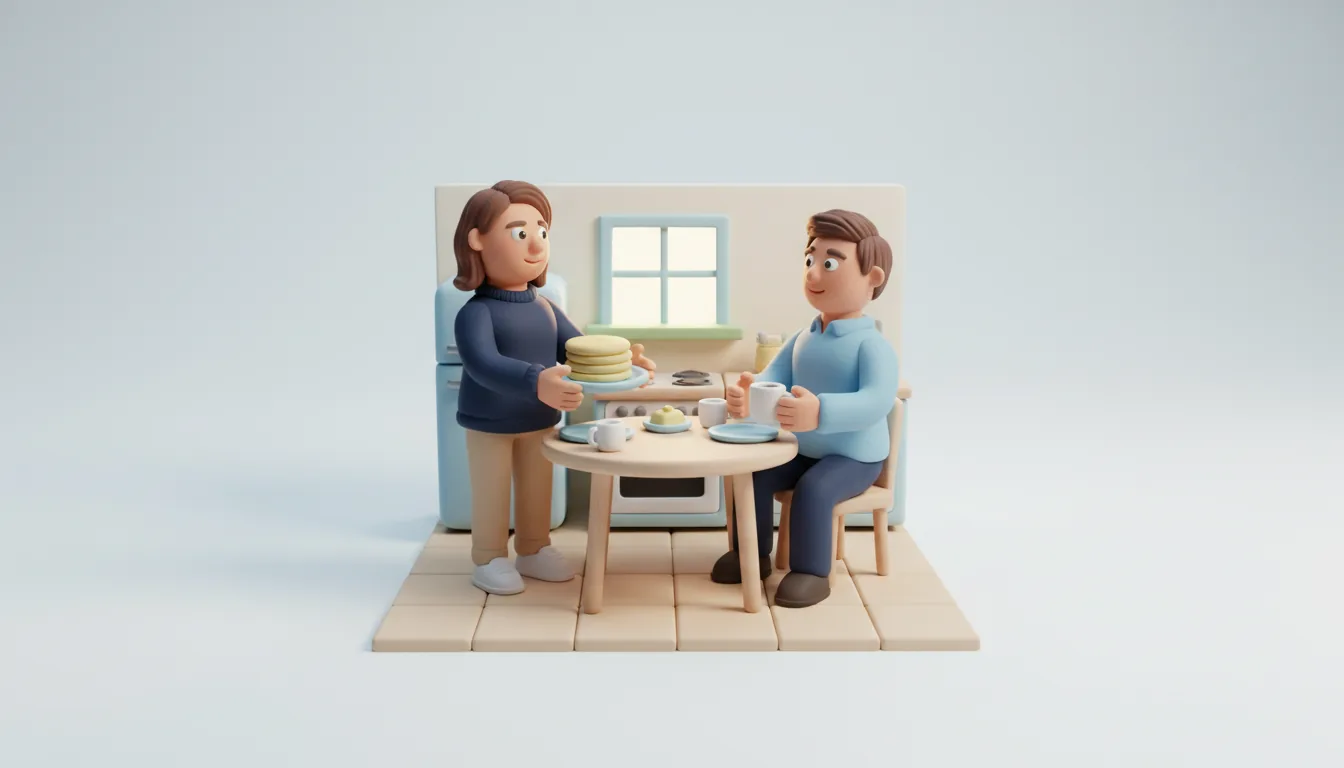
An example: June snapped at Kofi on a Tuesday night. He came home twenty minutes late with the groceries, and after a long day she told him, sharper than she meant to, that she was tired of always waiting for him. He didn't argue. He put the milk away and went to bed early. The next morning she got up first and made his favorite banana pancakes. He thanked her, ate two and was still a little quiet. Only when she sat down across from him and said, "Last night wasn't about you. I had an awful day and I took it out on you," did his shoulders drop. "I thought I'd done something," he said, and laughed. The pancakes were nice. What he needed was to know it wasn't him.
What a sorry carries besides the word
Sorry is a shortcut. It packs several messages into one word: I know what I did, I know how it felt for you, it won't keep happening, and we're still okay. Leave the word out and you can still send each of those, sometimes more clearly. Many people need one of them more than the rest.
- Words that show you understood. For the person who mainly wants to know they were seen.
- A fix. For the person who wants the problem gone.
- Time. For the person who has to cool down before anything can land.
- A gesture. For the person who feels care through small acts.
This is about the small, everyday slips: a sharp word, a forgotten errand, a text you left unanswered for three days. For a bigger hurt, how to apologize goes through everything a full apology needs.
Things to say in place of sorry
These lines do the same job, and many people find them easier to believe:
- "That wasn't fair of me."
- "I took my bad day out on you."
- "You were right, and I didn't want to admit it."
- "I can see why that bothered you."
- "I should have called. Next time I will."
- "Let me make that right."
- "I've been thinking about what I said yesterday."
Thank you can also stand in for sorry when the slip is small. "Thanks for waiting for me" in place of "sorry I'm late" turns the moment toward them and what they gave you.
When the fix matters more than the words
Some people hear an apology with their eyes. If you forgot to pay the electric bill, the words are fine, and a paid bill with a reminder set for next month is better. Fix it before they have to ask. Fix the thing next to it too: if you emptied the gas tank, fill it and run the car through the wash on the way home.
Say very little while you do it. "Done, and I set a reminder" is enough. Then keep it fixed, because a fix that breaks again in two weeks counts against you twice.
When they need room before anything else
Some people can't take in any apology while they're still upset, with or without the word. Give them a clear signal and some space: "I know I messed up this morning. I'm around when you want to talk." Then wait, for an hour or for an evening. When they come back, keep it short.
Giving time is different from going silent. Saying nothing for three days and hoping it fades often leaves a small grudge behind.
When a small gesture says it best
For some people, care is something you do. A coffee brought to the couch, a favorite snack left on the counter, a chore done before they get to it. The gesture works best when it is tied to the slip. Forgot to pick up her prescription? Pick it up first thing tomorrow and bring her favorite tea with it. Talked over him at dinner with friends? At the next dinner, ask him to tell the story again, and listen to the end.
A gesture with no link to what happened can feel like a bribe, and June's pancakes on their own didn't tell Kofi what he needed to hear. People who already show affection in small ways every day find these moments easier, because the other person already knows what their care looks like. After a real falling-out, the same kind of gesture is often called an olive branch.
How to tell which one they need
Watch how they apologize to you, because people often give the apology they would want. The friend who fixes things after a slip probably wants a fix. The partner who explains how they felt probably wants words.
Listen to what they say when they're upset. "You never listen" asks for words. "Now I have to redo it" asks for a fix. "I need a minute" asks for time. And you can simply ask, "Do you want me to fix it, or do you want to talk?" Between people who know each other, that question is a kindness.
Partners, friends and family: the same slip, three ways
With a partner
Small slips between partners happen daily: a short answer, a dish left in the sink, a plan you forgot to put in the calendar. Repair them the same day if you can, since a slip left overnight tends to grow. If you snapped, say what was behind it, the way June did.
With a friend
Friends don't see each other every day, so a slip can sit for weeks. A missed birthday, a canceled plan, a joke in the group chat that went too far. A specific plan often repairs it fastest: "Let me take you to breakfast on Saturday, my treat, and you pick the place." Or a message that names the thing: "I was flippant about your news on Friday. I'm really happy for you."
With parents and grown siblings
Families have long memories, so a small slip can echo an old one. A grown son who missed his mom's call three times can call back and stay on the line longer than usual. A sister who teased her brother at dinner can text him the next day: "That joke about your cooking wasn't fair. The lasagna was great." With parents, actions often speak loudest. Show up early, stay for the dishes, and remember the thing they told you last time.
How each type tends to make amends
Kofi took words well partly because of who he is. People give and take apologies in ways that follow their personality type. Here are six of the 16 types:
- Ideator: makes amends with a joke or a fresh idea for fixing things. A light, quick apology suits them, and a long one is hard to sit through.
- Harmonizer: makes up with comfort: a meal, a blanket, a calm evening. Feels better once the room feels warm again.
- Inspector: likes the record set straight. Says plainly what went wrong and fixes it, and wants the same back, with the details right.
- Dreamer: may send a thoughtful message later, once the right words have come. Needs a little time before they can take in yours.
- Entrepreneur: apologizes by solving, with a new plan or a booked table. Values a fix more than a long talk.
- Guardian: wants to know the relationship still matters. One sincere sentence about the two of you means more than a present.
None of these is the right way. Someone who apologizes exactly the way you do is rare, so many of us end up translating. Some moments, after a bigger hurt, still need the word sorry itself.
Find out how the two of you make up
People make up in very different ways, and type shows whether you reach for words, a fix or a small gesture. Start with the free couples compatibility test. Then your partner answers through the link on your result, and after that you both read your relationship type: what goes smoothly for you and where you tend to clash. It works the same way with a friend or a parent.
Questions people ask
What can I say instead of sorry?
Try "That wasn't fair of me," "I see why that bothered you," or "Let me make that right." For small things, a thank you works too: "Thanks for waiting for me."
How do you say sorry in different ways?
Words, a fix, time or a small gesture. Pick what they need.
Is it okay to apologize with a gift?
For a small slip, a small gesture tied to what happened works well. A gift with no link to the slip can feel like a bribe, so add a sentence that shows you know what went wrong.
What if they still seem upset after I made it right?
Give it a little time, then ask what would help. Some people need to hear the words even after the fix, and that's easy to give.
Written by Virko Kask, founder of Typeza
Written with the help of AI tools.
One question for two, every week
A question to ask your partner, friend or family, and how different types tend to answer it.
Free. Unsubscribe any time.