
How to apologize: what a real apology needs, and why it lands differently with each person
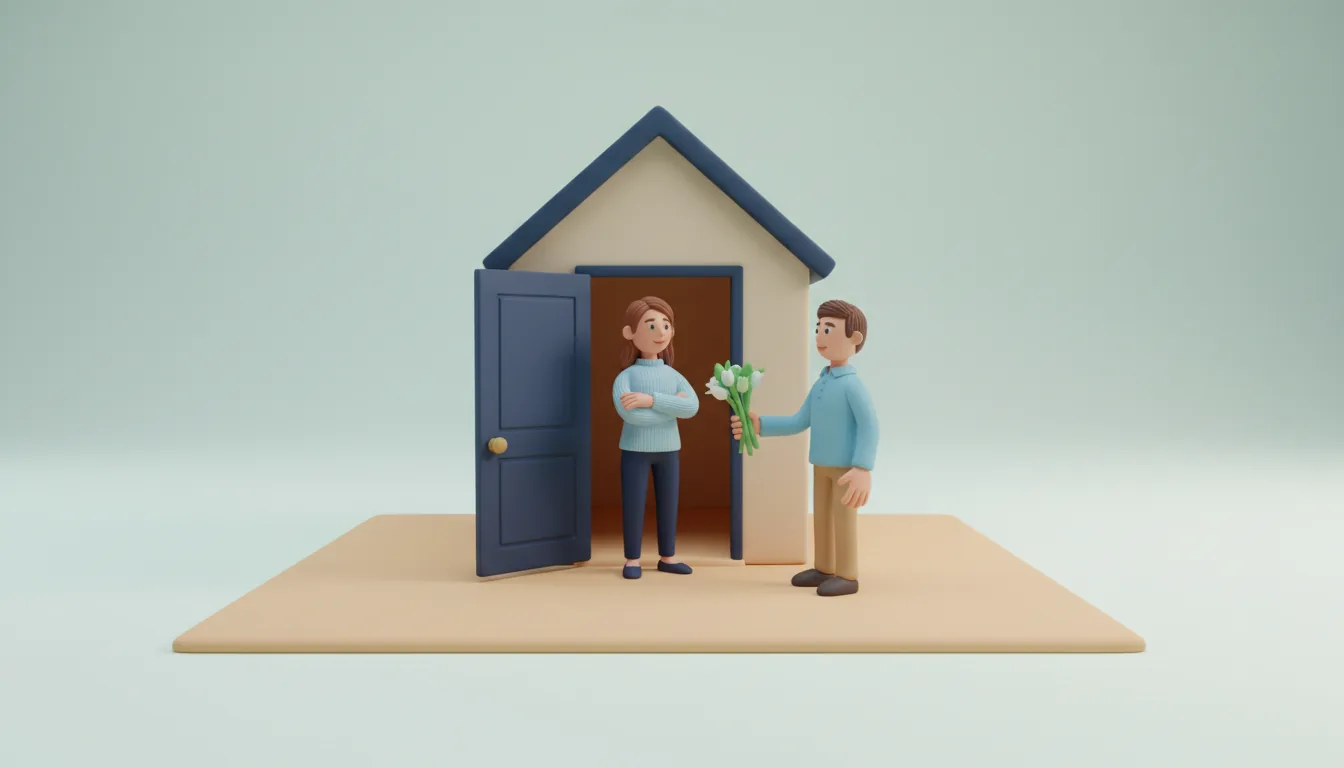
To apologize, say what you did, show that you understand how it hurt the other person, take responsibility without excuses and say what you will do differently. A sincere apology is about their experience more than your guilt. It also has to reach them in a form they can take in. Some people need to hear their feelings named, some need a clear account of what happened, and some need to see the change.
An example: he said sorry the same evening, in two clear sentences, and thought it was over. Three days later she was still upset, because he never said how it must have felt for her. A month later she apologized to him with tears and a long talk, and all he wanted to know was what she would do differently next time. Both of them meant it. Neither apology landed.
What makes a good apology?
A good apology has a few parts. Small slips need one or two, big hurts need all of them.
- Name what you did. "I'm sorry I made fun of your job in front of your parents" works better than "Sorry about last night."
- Show you understand the effect. Say how it probably felt for them. "That must have been embarrassing" tells them you see it.
- Own it. No "but", no "if you were hurt" and no list of what they did first. If you can't find the words, a few lines about owning your part may help.
- Say what changes. Tell them what you will do differently, and make it something you can really do.
- Repair what you can. Pay it back, fix it, call the person you were rude to.
- Give them time. An apology opens the door. They decide when to walk through it.
Some lines sound like apologies and are not. "I'm sorry you feel that way" puts the problem on their feelings. "I'm sorry, but you also..." starts a new argument. "Mistakes were made" leaves out who made them.
How to apologize sincerely
How you say it matters as much as what you say.
- Wait until you understand what went wrong. A quick "sorry" to end the tension usually sounds empty, and the other person can tell.
- Pick a calm moment. Not in the middle of the fight, not as they walk out the door.
- Keep it short. Long explanations of why you did it start to sound like excuses.
- Listen after you speak. They may want to tell you how it felt. Let them, without defending yourself.
- Follow through. The apology is only finished when the behavior changes.
How to apologize sincerely in a relationship
With a partner, many apologies are about a pattern more than a single act. Being late once is easy to forgive. Being late again after three apologies feels like your words mean nothing. So in a relationship, the "what changes" part carries the most weight.
A few things help couples in particular. Apologize for your part, even if your partner had a part too. You can talk about theirs later. Do not apologize only to end a fight, because the same fight will come back. Repair small things as well, like a sharp word in the morning or a forgotten call. Small repairs help keep big fights rare.
With a close friend, a hurt can sit for weeks because you do not see each other daily. A short message like "I've been thinking about what I said, can we talk?" often opens the way. If the fight has already cost you the friendship, see how to get your friend back.
How to apologize to someone you hurt
If you hurt them deeply, expect it to take time. Say it fully, then let them be angry. Do not ask for forgiveness in the same breath, and do not keep asking. Show the change over weeks and months. Some trust comes back slowly, and some may not come back at all.
If you hurt them by accident, your intention matters less to them than the effect. "I didn't mean it" is true and still not enough. Try "I didn't mean it, and I can see it hurt you. I'm sorry." Then ask what would help.
How to apologize without saying sorry
Some people find the word hard to say, and some have heard it too often to trust it.
- Fix the thing that went wrong, without being asked.
- Say "You were right about that" or "I see now why that upset you."
- Change the behavior, and let them notice.
- Do something that shows you understood, like taking the early shift with the kids after missing the last one.
These work for small things between people who know each other well. After a big hurt, many people need the words. For picking the right one by what the other person needs, there is a whole page on how to apologize without saying sorry.
Why does the same apology work for one person and not another?
Many of us apologize the way we would want to hear an apology. In socionics, the theory behind Typeza, people have one of 16 personality types, and how two of them get along follows one of 16 relationship types. Each type needs something different after a hurt, and the relationship type shows how two people's needs meet. These are four common patterns.
When the apology finds its way easily
A Vitalizer feels a hurt quickly and wants to talk about it now, with feeling. Her partner the Analyst needs to think before he speaks. When he gets something wrong, he goes quiet for an hour, then comes back with a calm, clear account of what happened and what he will change. Her warmth makes it easy for him to come back, and his clear words settle her. They are a Duality couple, the kind with the easiest fit. Their only real task is timing. He tells her early "I need a little time, I'm coming back to this," and she gives him that time.
When "let's move on" feels like a second insult
A Commander apologizes fast: "I was wrong, it won't happen again, let's go." To him that is a full apology. His partner the Counselor needs to feel that he understood how it felt for her, and his speed tells her that her feelings do not count. When she explains her hurt gently and at length, he hears criticism of who he is. This is Conflict, where one person wants to act now and the other needs to work through it first. It helps when he names her feeling in one sentence before moving on, and she tells him plainly what she needs to hear.
When an apology turns into a debate
An Organizer and a Craftsman both care about things done right. The Organizer apologizes by fixing: "Sorry I forgot the bill. I've paid it and set a reminder." The Craftsman thinks the reminder is set up badly and says so, and ten minutes later they are arguing about apps instead of the missed bill. Their relationship is Mirror: two people who care about the same things, and each does almost, but not quite, what the other would. Agree first that the apology is accepted. Talk about the method another day.
When a big apology feels like pressure
A Mentor feels strongly and shows it. When she apologizes, she does it with emotion and many words. Her partner the Strategist finds this hard to take. The intensity lands on his weakest spot, and he wants the moment to end more than he wants to hear the words. When he apologizes, it is one dry sentence, and to her it sounds cold. Here the Mentor is the Supervisor and the Strategist the Supervisee: she can reach his weak point just by being herself. She can say it calmly and briefly and let him answer later, even by message. He can add one sentence about what the hurt meant to her.
You do not need to know your types to apologize well. Knowing them can explain why the apology that works on you falls flat with them.
How to respond to an apology
Taking an apology well is a skill too.
- Thank them. Saying sorry is hard for many people.
- You do not have to forgive at once. "Thank you. I need a little time" is an honest answer.
- Say what was missing. "I hear that you're sorry. I also need to know it won't happen again."
- Accepting is different from saying it was fine. "Thank you, I accept your apology" is clearer than "It's fine."
- Let it go once you accept it. Bringing it back in the next fight undoes the repair.
If a slight still stings long after the sorry, the page on holding grudges looks at why some people keep score.
For fights that keep coming back, see what couples argue about, and for raising a hard topic without heat, communication styles in relationships.
How to see what an apology needs between you
You will not spot your relationship type by watching how the two of you argue. Take the free compatibility test. Then invite your partner or friend from your result to take the same test. Once they have finished, you learn your relationship type, what each of you tends to need after a fight and why your sorry can get lost on the way.
Questions people ask
What are the steps of a sincere apology?
Name what you did, show you understand how it felt, take responsibility without excuses and say what you will do differently. Then do it.
How do you apologize to someone you love?
Be specific, keep it short and make it about their experience. With someone close, what you do after the apology matters most.
How do you ask for forgiveness?
Apologize fully first, then ask in plain words: "Can you forgive me?" Give the other person time, and accept that the answer may be "not yet." What usually wins forgiveness is the change that comes after, so keep the promise you made when you said sorry.
How do you apologize without saying sorry?
Fix what went wrong, admit they were right, change the behavior or do something that shows you understood. For a big hurt, say the words as well.
What should you say when someone apologizes?
Thank them, and say whether you accept it or need time. If something was missing, say what you still need.
How do you write an apology letter?
Use the same steps as a spoken apology: say what you did, how it must have felt and what will change. Keep it short, and don't ask for a reply.
Written by Virko Kask, founder of Typeza
Written with the help of AI tools.
One question for two, every week
A question to ask your partner, friend or family, and how different types tend to answer it.
Free. Unsubscribe any time.