
Deep conversation topics for friends and couples, and how to start them
Good deep conversation topics are the ones you have both lived through: where your life is going, what you value, getting older, friendship, memories, and what you fear and hope for. You don't need a long list of questions to get there. One honest opening line and some time usually do it. Below, each topic comes with a line or two you could actually say and a note on when it fits.
Three evenings at the lake
An example: every September, Nadia, Joelle and Priya rent the same small cabin by a lake for a long weekend. They have been friends since their first jobs, and they're all in their early thirties now.
On the first evening, Nadia asked, "So, is this the life you pictured?" Priya laughed and gave a real answer. Joelle said "pretty much" and went to start the stove. Nobody pushed.
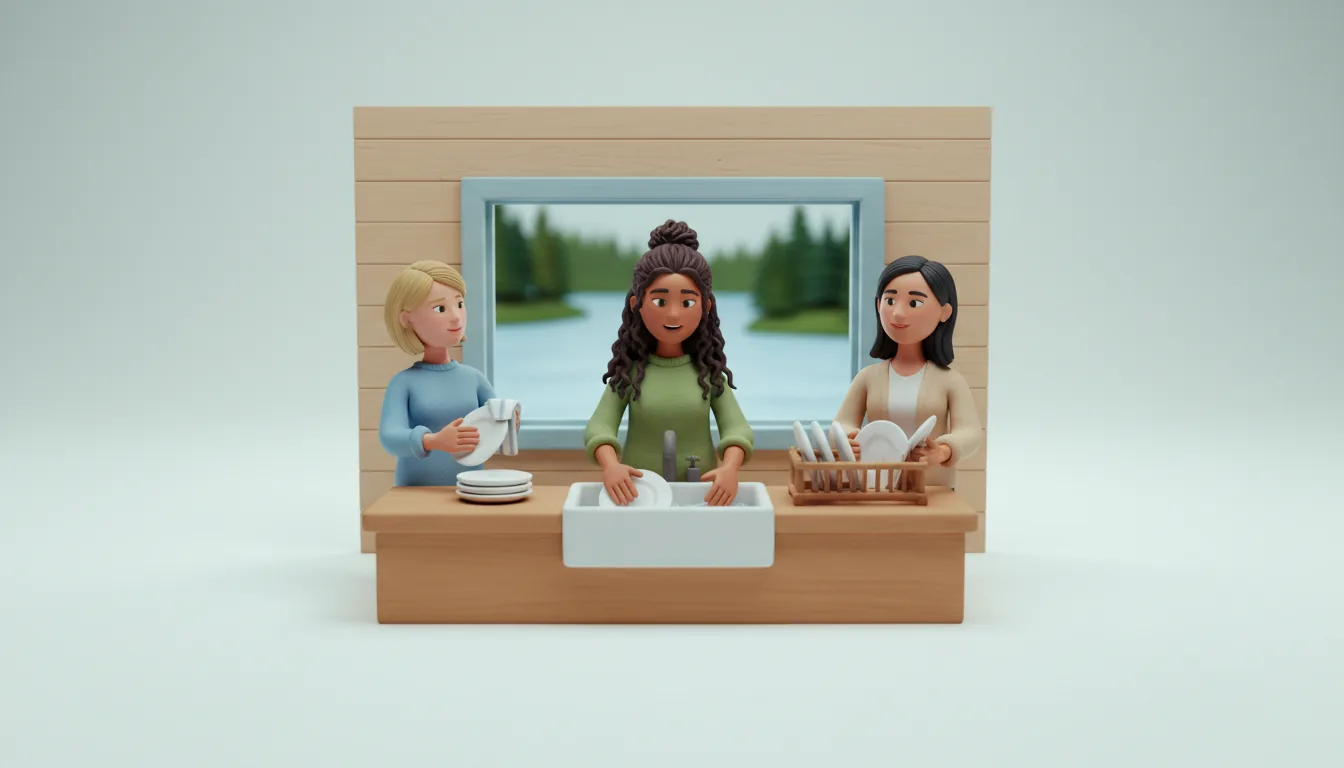
On the third evening, with her hands in the sink and the dishes half done, Joelle started talking. She said she had spent most of the year wondering whether she wanted to stay in the city at all. The other two stood there holding their dish towels and listened until the water went cold.
It was the same question, two days apart. Some people go deep the moment you ask, and some need a few evenings and something to do with their hands. It helps to have a few topics ready for whenever the moment comes.
Where your life is going
This is the big one: plans, changes and the gap between the life you have and the one you pictured. You could start with something like this:
- "I've been thinking about where I want to be in five years, and I'm not sure yet. Do you ever think about that?"
- "Is the way you spend your weeks now close to what you'd want?"
It fits best after a big change, like a move or a birthday that ends in zero. It's also easier side by side on a walk than face to face across a table.
What you value most
Values come out in the choices people make, so start from a choice rather than from the word itself.
- "I've noticed I care less about some things than I used to. Has that happened to you?"
- "What's something you'd keep doing even if it got hard?"
This fits when one of you has just made a hard decision. Keep it about your own lives, and skip any debate about who is right. If you both enjoy the big abstract side, like what makes a life good, try these philosophy questions.
Getting older
Many adults have mixed feelings about age, which makes it a good topic for honesty.
- "I used to think thirty-five was old. What did you think it would feel like?"
- "What's better about your life now than it was ten years ago?"
Bring it up around a birthday, or when you're looking at old photos together. Start with what's better, so the talk doesn't turn gloomy.
Friendship and the people who matter
Talking about friendship itself can feel brave, but it's often the talk people remember longest.
- "I've been thinking about how friendships change after thirty. Have yours?"
- "Who are the people you'd call first when something big happens, and how did they get there?"
It fits with an old friend, or right after you've seen someone you hadn't seen for years. Saying what the friendship means to you is a fine place to begin.
Memories you share
Memories are the easiest way into a deeper talk, because the story is already there.
- "I found an old photo of us the other day. Do you remember what was going on that summer?"
- "What's a day from years ago you'd happily live again?"
This fits almost anywhere: a place you used to go, an old photo, a smell that brings something back. Let one memory lead to the next.
Fears and hopes
This is the most personal topic, so go slowly and share your own side first.
- "Something has been worrying me a little lately. Mind if I talk it through with you?"
- "What are you hoping for these days that you don't say out loud much?"
It fits only when there's time and privacy. Let the other person decide how far to go, and take a short answer as a fine answer.
Deep topics for two friends
Between friends, the best deep talks often start from something you did together: a trip, an old apartment, the year you met. From there it's a short step to how each of you has changed since then, the friends you've lost touch with and what you'd tell each other's younger selves. Both of you should get a turn. When you'd like a ready list for a night like that, deep questions to ask friends has plenty.
Deep topics for couples
For couples, the big topics are where you want to live, how you want your weeks to look in ten years, what home means to each of you and what you each learned about love from your own family. Talk about them on a calm day, and not in the middle of a disagreement. For specific questions to use, see deep questions to ask your partner.
Why one friend goes deep at once and another needs three evenings
Joelle wasn't holding back on purpose. People simply open up at different speeds and in different settings. Personality type explains part of it. Here are six of the 16 types:
- Analyst opens up through ideas first. Ask what they think about something abstract, and the personal side often follows later, sometimes days later.
- Mentor goes deep right away and loves it. A big question on the first evening is their idea of a good time.
- Dreamer talks deeply and easily one on one in a quiet place, and goes quiet in a big group.
- Entrepreneur would rather talk about plans and what comes next. Feelings come up once they've seen that you keep things to yourself.
- Organizer often says the most while doing something practical with you, like cooking or washing up, and rarely in a sit-down talk.
- Encourager is curious about everyone and asks deep questions early, but may change the subject when it turns to them.
Type theory sees these as tendencies. They aren't rules about any one person, and none of this is advice. If a friend isn't ready, try again on another evening.
Signs the talk is going well, and how to ease out
A deep talk is going well when the other person answers at length, asks you something back and lets the pauses sit without rushing to fill them. Another good sign is when they bring the topic up again a day later.
If you keep getting short answers, or they look away and change the subject, let it go. A light comment about something right in front of you, like the view or dinner, gives you both an easy way out. You can also say "We can come back to this," and mean it.
Learn how you and a friend tend to open up
Typeza shows two people their relationship type, including how each of you tends to open up and what kind of talk comes easily between you. Try the free friendship compatibility test. Afterwards, invite the friend you'd most like a long talk with.
Questions people ask
How do you start a deep conversation?
Share something small and honest about yourself first, then ask one open question about the same topic. Pick a calm moment with time to spare, like a walk or a long drive.
What do you talk about when small talk runs out?
Move from what happened to what it meant. If you've been chatting about a trip, ask what the best part was for them, or what they'd do differently next time.
Is it normal for a friend not to want deep talks?
Yes. Some people need more time, a quieter place or something to do with their hands. Try again another day, or start with memories, which feel safer than fears.
Written by Virko Kask, founder of Typeza
Written with the help of AI tools.
One question for two, every week
A question to ask your partner, friend or family, and how different types tend to answer it.
Free. Unsubscribe any time.