
Making new friends as an adult: where to start, and why you click with some people fast
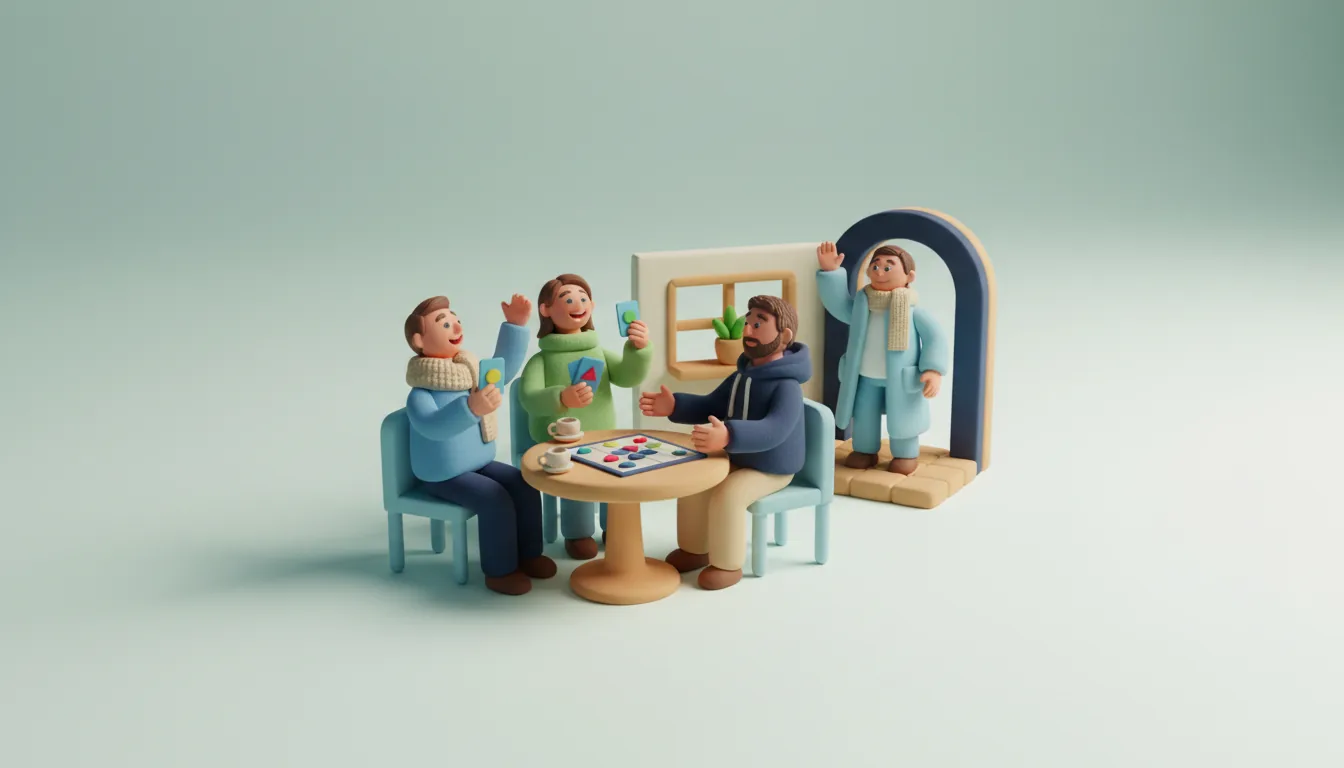
Making friends as an adult works through repeated contact: a weekly class, a team, a club, neighbors or work, where you see the same people again and again. Then someone suggests a specific plan, and you keep meeting until the hours add up. At school this happened on its own. As an adult, nobody puts you in a class. You move to a new city, or your friends move away, and the weekends go quiet. You meet nice people at work and at parties, and nothing sticks.
Why is making friends as an adult so hard?
Sociologists often name three conditions for close friendship. You are near each other. You meet again and again without planning it. And the setting lets you relax and say personal things. School and university give you all three for years. Adult life rarely gives you any of them by default.
Then come the practical reasons. Work, a partner and children take most of the free time. Many people already have a circle and feel no need to add to it. And many adults feel awkward asking someone to meet, as if it were a date. Two men who would get on well often both wait for the other to ask, and a possible bromance never starts.
None of this says anything about you. The conditions changed, and now you have to build what school once gave you for free.
How long does it take to make a friend?
Longer than many people think. A study from 2018 estimated that it takes about 50 hours together to turn an acquaintance into a casual friend, about 90 hours to become real friends, and more than 200 hours to become close friends. Time spent hanging out, joking and doing fun things counted for more than time spent working side by side.
At three hours a week, 200 hours is more than a year. That is why one great evening rarely turns into a friendship by itself, and why regular plans matter more than big ones.
Where to make friends as an adult
Look for places that give you the three conditions: the same people, again and again, in a setting where you can talk. One weekly activity does more than five one-off events.
- A class or course that runs for weeks, like a language, cooking or dance.
- A sports team, running club or climbing gym where the same faces come back.
- A regular volunteering shift.
- A choir, band or theatre group.
- A board game night, book club or hobby group that meets in the same place each week.
- Neighbors, the dog park and the school gate, where you run into the same people without planning it.
- Work, where you already see the same people. Suggest lunch or a drink after.
- Apps and local event sites for finding friends. They work best when they lead to something regular.
Pick something you would enjoy even if you made no friends there. Then you will keep going, and keeping going is most of the method.
How to make new friends in a new city
A new city takes away the routine, the familiar places and the people who knew you, all at once. The first months are also the easiest time to start, because everyone expects a newcomer to say yes to things.
Say yes to invitations, even small ones, for the first few months.
Choose one or two regular activities and stick with them.
Ask friends back home whether they know anyone in your new city. A friend of a friend comes with some trust built in.
Talk to your neighbors. They are the people you will see most often without planning it.
Host something small once you have a place: a dinner, a game night, coffee on a Sunday. Hosting is how three acquaintances become a group.
Give it time. With the hours above, a circle in a new city usually takes a year or more to build.
How do you turn an acquaintance into a friend?
Many new friendships stop at this step. You had a good talk, you both said "we should meet up", and nobody did.
Suggest something specific. "Want to get coffee after class on Thursday?" works better than "we should hang out sometime".
Make it regular if you can. A standing plan, like a weekly walk or a monthly dinner, adds hours without anyone having to ask each time. Doing things side by side is also one of the easiest ways to connect with people.
Share a little more each time. Friendship grows as both people say a bit more about their lives. How to get to know someone has questions that make this easier. For a ready list, see these questions to ask a new friend.
Bring in other people. Invite them to something with your other friends, so the friendship does not rest on two calendars alone.
Someone has to go first. It feels risky, and many people are glad to be asked.
If you're not sure what to suggest, friend date ideas has easy plans for a first meet.
Why do you click with some people and not others?
You meet ten people at a new club. With one, the talk flows from the first minute. Another seems a bit flat, and a year later is one of your closest friends. First impressions say little about which new friendship will last.
The theory behind Typeza, socionics, explains some of it. It counts 16 personality types, and every pair of people falls into one of 16 relationship types. Some relationship types feel exciting from the first meeting. Others show what they give only when you are close. A compatibility test with a new friend can tell you early which kind of pair you are.
The new friend who lights you up at once
Ten minutes together and you feel more awake, full of plans. This is often Activation. It is a great start. It works best in doses, and a long weekend together can tire you both.
The new friend who seems ordinary at first
At the first meeting they seem nothing special, maybe even a little odd. Over months they turn out to be the easiest person in your life, the one who handles what you find hardest without being asked. This is often Duality, the closest fit for a friend. Its gifts appear only up close, which is why it is easy to give up on a dual too early. Chemistry vs compatibility looks at this gap between the first spark and what lasts.
The new friend you understand at once
You share values and a view of life, and talk is easy. Then you plan a trip together, and it turns out each of you wants it run differently. This is often Kindred. This friend is great to talk with, and the friendship rarely becomes very close.
The new friend you do things with
You run, climb or fix bikes together, and you go about it the same way without needing to explain. This can be Business. A friend like this is worth having, even if the friendship stays around the activity.
So do not judge a new friendship by the first evening. Give the quiet ones a few more meetings, and do not expect the exciting ones to carry a whole holiday.
Why do new friendships fade, and how do you keep them?
Some fade because the shared setting ended. The course finished, someone changed jobs, the team broke up. A friendship that lived on that setting needs a new reason to meet, or it thins out. Why couples and friends drift apart looks at this in more detail.
Some fade because the fit is hard up close. Two people can get on well in a group and find each other tiring one to one. That is a question of fit and distance, and it says nothing bad about either of you.
Keeping friends takes what making them took: regular time. A short message, a standing plan, showing up for the birthday.
How to see which new friendships could grow
First meetings mislead, and a relationship type stays out of sight anyway. Take the free friendship compatibility test and use your result's link to invite a new friend. Once your new friend has done it too, you each see your relationship type, the easy parts and the places you might rub. Comparing results also gives you something easy to talk about over the next coffee.
Questions people ask
Where can I make friends as an adult?
Anywhere you see the same people regularly and can talk: courses, sports clubs, volunteering, choirs, hobby groups, your building and your workplace.
How long does it take to make a friend?
One study estimated about 50 hours together for a casual friend, about 90 hours for a friend and more than 200 hours for a close friend. At a few hours a week, a close friendship takes a year or more.
Why is it so hard to make friends after 30?
The conditions that made friendship easy at school mostly disappear: seeing the same people every day, without planning, in a relaxed setting. Work, partners and children take the time, and many people already have a full circle.
Why do I click with some people right away?
Some relationship types feel exciting from the first meeting, like Activation in Typeza's model. Others, like Duality, start quietly and show what they give only when you are close. A fast click is a good start, and it does not tell you which friendship will last.
When is Make a Friend Day each year?
National Make a Friend Day falls on February 11 each year in the US. Use it as an excuse to send the message you keep putting off, like inviting a neighbor for coffee or asking someone from your running club to join you for a walk.
Sources
- Jeffrey A. Hall, "How many hours does it take to make a friend?", Journal of Social and Personal Relationships (published online 2018). About 50 hours together for a casual friend, about 90 for a friend and more than 200 for a close friend; time spent working together counted for less.
- Alex Williams, "Friends of a Certain Age: Why Is It Hard to Make Friends Over 30?", The New York Times (2012). The three conditions for close friendship that sociologists have named since the 1950s, quoted from sociologist Rebecca G. Adams: proximity, repeated unplanned contact, and a setting where people let their guard down.
Written by Virko Kask, founder of Typeza
Written with the help of AI tools.
One question for two, every week
A question to ask your partner, friend or family, and how different types tend to answer it.
Free. Unsubscribe any time.