
How to be an adult: the grown-up skills nobody teaches you
Being an adult has less to do with a birthday than with a set of skills. You run a home, handle money, feed yourself, talk to your parents as an equal and keep friendships going when nothing schedules them for you. Nobody hands out a manual for it. Many people learn by doing it badly first, and that part is completely normal.
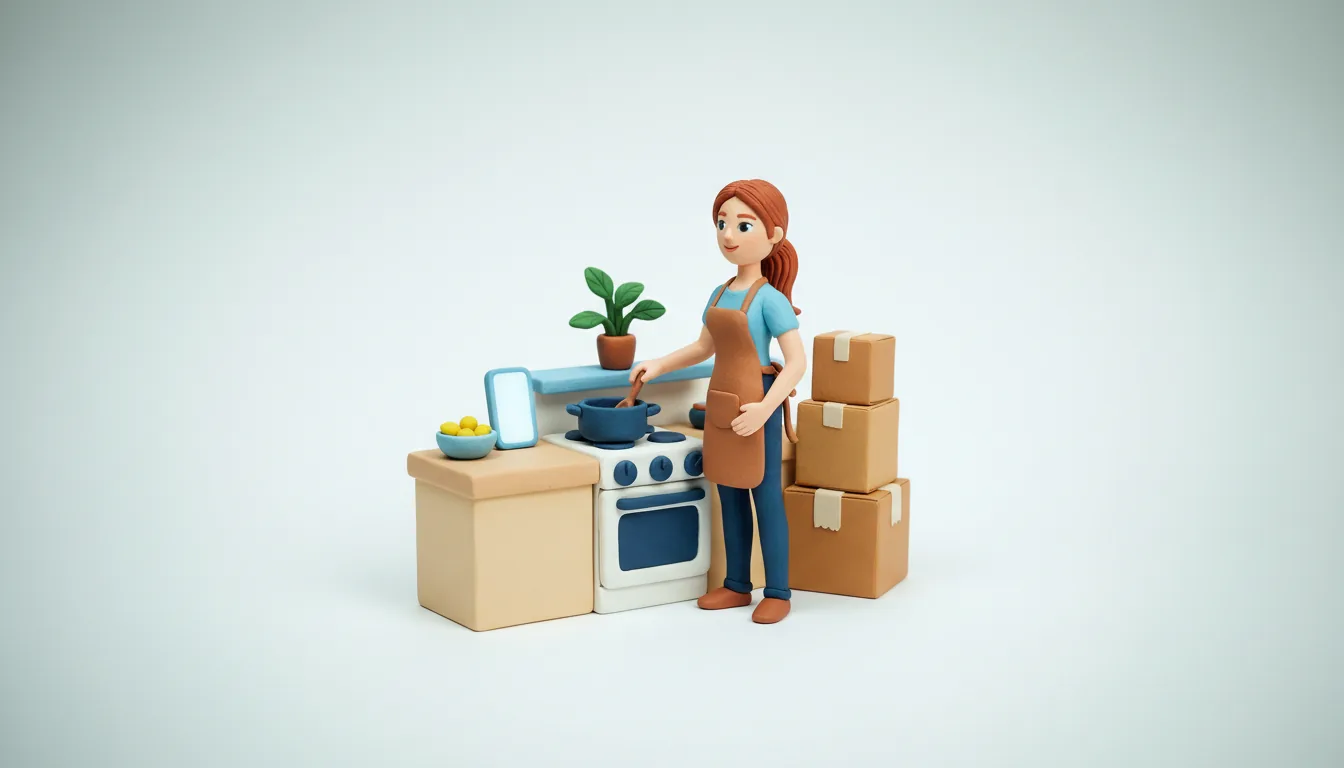
An example: Ellie is 23 and three weeks into her first apartment on her own. Three moving boxes are still taped shut by the stove, and she has no idea where the can opener went. One evening she's making lentil soup for the first time, for two old friends coming over the next night. Her phone is propped against a bowl of lemons with her mom on speaker. Ellie asks how long the lentils need. Her mom answers and then moves on to whether the deposit is paid, whether the landlord fixed the window and whether Ellie is eating enough. Ellie stirs the pot and says, kindly, "Mom, it's all handled. I just need the soup." There's a short pause, and then her mom laughs and says twenty-five minutes.
What being an adult actually asks of you
When people joke about "adulting," they usually mean the boring jobs: paying bills, booking the dentist, buying toilet paper before it runs out. Those count. But the bigger change is quieter. Nobody is checking on you anymore, so things only happen if you make them happen.
That can feel like a lot at first. It also means you get to decide how your days look, what's in your fridge and who you spend your Sundays with.
Your first place of your own
Your first home teaches a lot of grown-up skills fast. A few things make it easier:
- Read the lease before you sign it. Know when rent is due, what the deposit covers and who fixes what.
- Take photos of every scratch and stain on move-in day, so you don't pay for someone else's damage later.
- Keep a small tool kit. A screwdriver, a hammer, tape, a flashlight and a plunger will handle most small emergencies.
- Learn where the main water valve and the fuse box are, before you need them at midnight.
- Write down your landlord's number and your neighbors' names.
- Report problems early. A small leak mentioned today is a quick fix. Left for a month, it can become a ruined floor and an awkward talk about your deposit.
Money basics nobody explains
You don't need to be good with numbers to be good with money. You need a simple routine you'll actually keep.
- Pay the fixed costs first. Rent, power, phone and transport come out of each payment before anything fun does.
- Know where the rest goes. Track your spending for one month. Many people find one leak, like food delivery or forgotten subscriptions.
- Build a small cushion. Even a little set aside each month turns a broken phone from a crisis into an annoyance.
- Put bills on automatic payment where you can, so a busy week doesn't turn into a late fee.
- Check your bank account once a week, on the same day, so nothing surprises you.
Feeding yourself and keeping the place running
Cooking is the life skill that pays back fastest. Learn five meals you can make without a recipe: one soup, one pasta, one rice dish, one thing with eggs and one dish you'd serve to guests. That covers most weeks.
Keeping a place clean works the same way. Small and often beats one big weekend scrub. Wash the dishes the same night, wipe the counter after cooking, run one load of laundry before the basket overflows, and take the trash out on the same evening every week. A home that's mostly tidy is also a home you can invite friends into on short notice.
Talking to your parents as one adult to another
This one surprises people. Your parents knew you as a child for a long time, and the habits on both sides take a while to catch up.
- Share news before they have to ask. A short update now and then keeps the worry, and the questions, down.
- Ask for advice because you want it. Then make the choice yourself and own it.
- Say no kindly and without a long defense. "Thanks, I've decided to do it differently" is a full answer.
- Have the hard talks face to face. Moving cities, a new partner or a holiday elsewhere goes better in a calm conversation than in a text.
Like Ellie's mom, many parents relax once they see you've got things covered.
Keeping friends after school ends
At school, friendship came built in. You saw the same faces every day without planning a thing. After that, every meeting has to be arranged, and old friendships fade because nobody arranges them.
Pick a regular thing with the friends you want to keep: a monthly dinner, a Sunday walk, a group chat where someone always asks "who's free Friday?" Be the one who asks. And when you move somewhere new, making friends as an adult takes a different kind of effort that's worth learning early.
How to be mature
Maturity is mostly how you act when things don't go your way. A mature person keeps promises, owns their mistakes without a long excuse, stays calm in a disagreement and can wait for what they want. It also means you can hear "you're wrong" without falling apart, and say "I was wrong" without a speech. If you want to act more mature, pick one of those and practice it this week.
Each type grows up in a different order
Everyone learns the same adult skills eventually. Typeza sees personality type as part of which ones come first and which ones arrive late. Seven of the 16 types:
- Ideator: quick to figure out a new city or a new system, slower with routine chores and bill dates.
- Harmonizer: makes a cozy home and cooks well early on, and may find hard money talks or saying no to family uncomfortable.
- Inspector: has the budget, the lease and the cleaning plan sorted on day one. Relaxing about a messy evening can take longer.
- Commander: handles landlords, repairs and problems head on. Patience with slower people around them often grows later.
- Strategist: thinks far ahead about money and plans, and may put off the first practical step.
- Organizer: practical, hands-on and good with a household from early on. Leaving work undone for a fun night can be the harder lesson.
- Encourager: keeps friendships alive without trying and connects people easily. Paperwork and deadlines often catch up with them.
If your friends seem further along on every front, you may simply grow up on a different timeline. Being a late bloomer may be more common than it feels from inside.
Find out which grown-up skills come easily to you
Each type learns adult skills in its own order, so one person handles money early and still feels lost in the kitchen. The free personality test lists the strong points and weak spots of your type. If friends are setting up their first homes too, send them the link from your result. When a friend has answered, the relationship type you share shows what is easy between you and what grates.
Questions people ask
How do I become an adult?
Take over one grown-up job at a time: your own bills, your own meals, your own appointments. Each one you handle without help makes the next one easier.
Is it normal to feel like you're not a real adult?
Yes. Many people in their twenties and thirties feel like they're faking it. The feeling usually fades as the skills pile up, one handled problem at a time.
Written by Virko Kask, founder of Typeza
Written with the help of AI tools.
One question for two, every week
A question to ask your partner, friend or family, and how different types tend to answer it.
Free. Unsubscribe any time.