
Procrastinator: why some people put things off, and what actually helps
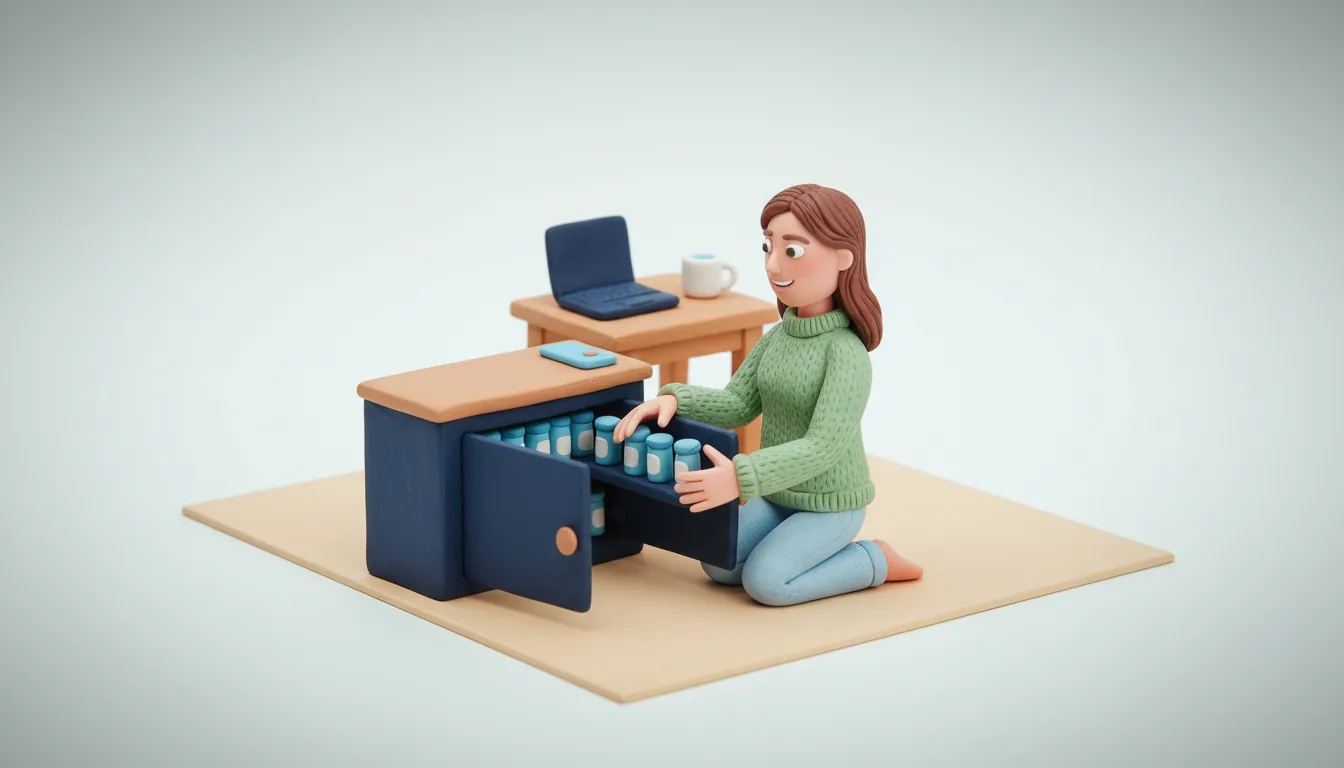
A procrastinator is someone who often puts off a task they mean to do, even when they know that waiting will make it harder. Everyone does it now and then. A procrastinator does it as a habit, and often with surprising energy for every other job in the house. It has less to do with laziness than people think, and much more to do with how a person gets started.
An example: Noor had two jobs for Sunday: reply to her landlord about renewing the lease, and book the dentist appointment she had been "about to book" since June. By noon she had descaled the kettle. By three every spice jar in the cupboard stood in alphabetical order, labels facing out. At twenty to eleven that night she wrote the email in four minutes and went to bed cross with herself. Her partner, Ben, does his taxes the week the forms arrive. He finds Sundays like this baffling. Noor finds Ben a little alarming.
What is a procrastinator?
The word comes from Latin procrastinare, "to put off until tomorrow." "Pro" means forward and "crastinus" means belonging to tomorrow, so a procrastinator moves things forward into tomorrow, and then into the day after.
Examples of procrastination many people will recognize:
- answering an easy message a week late, after it has grown into a hard one;
- cleaning the whole kitchen to avoid one phone call;
- starting a form, a gift or a thank-you note the night before it is due;
- saying "I'll do it when I have a free afternoon" and never having that afternoon;
- rewriting the first line of a message ten times and then not sending it.
Is procrastination just laziness?
Mostly no. Laziness is not wanting to do anything, and a lazy Sunday can be a perfectly good Sunday. Procrastination is wanting to do one particular thing and doing everything else instead. Noor was busy all day. She just wasn't busy with the email.
The difference matters because the fixes differ. If you are tired, rest helps. If you are dodging one task, rest changes little, because the task will feel exactly the same tomorrow. What helps is making the task easier to begin, and that is what the habits further down are for. If it's a whole habit you can't get going on, like running or a language, how to get motivated looks at what moves different people.
Why do I procrastinate on things I want to do?
Delaying something you dread is easy to understand. Delaying something you want, like booking a trip, writing to an old friend or starting a hobby, is stranger. Some everyday reasons:
- The task is vague. "Plan the trip" has no first step. "Look at three flights to Lisbon" does.
- You are waiting for the mood. The mood rarely comes first. It often arrives after you start.
- You want to do it well. If the thank-you note has to be perfect, it is easier never to write it.
- The reward is far away. A sorted tax folder pays off next spring. A funny video pays off right now.
- Pressure works for you. Some people do their best work close to a deadline, know it, and wait for it.
- There are too many good options. When you could start in five places, it is easy to start in none.
Six kinds of procrastinator
People put things off in different styles. Many of us are a mix, and the mix changes from task to task.
The mood waiter
Waits to feel like it. Works in happy bursts when the mood shows up and loses whole days when it doesn't.
The deadline sprinter
Can't start until the clock is loud. Often does good work at the last minute, which is exactly why the habit is so hard to break. The people around them pay for it in the final two days.
The polisher
Wants the result to be very good, so doesn't start, or starts and never finishes. Spends an hour choosing the font for a party invitation.
The idea hopper
Starts three things on Monday and finishes none by Friday. The beginning is the fun part of any project, and every new idea is a fresh beginning.
The busy avoider
Noor's kind. Does every useful job except the one that matters. The spice jars have never looked better.
The big-block waiter
Waits for a free day to do something that needs one hour. The free day never comes, so the hour never happens.
What actually helps you start
A lot of advice tells procrastinators to try harder. What works better is making the start smaller and the finish clearer.
- Write down the first physical step. Swap "sort out the lease" for "open the landlord's email and press reply."
- Set a timer for ten minutes. Promise yourself only ten. Often you'll keep going, and if you stop, ten minutes still got done.
- Decide what done looks like. "Book the dentist" is done when a date is in the calendar. Reading reviews of every dentist in town was never part of the job.
- Use your best hour. Some people start well at seven in the morning, others at nine at night. Give the hard task your good hour.
- Work next to someone. Sitting at the same table as a friend who is busy with their own task makes starting easier. So does telling someone "I'll send it by six."
- Borrow a deadline. If pressure helps you, create some: ask a friend to check at four whether it's done.
- Pair dull with pleasant. Pay the bills with a good coffee, or open the mail with your favorite album playing.
- Forgive yesterday. In one study of first-year students, those who forgave themselves for putting off study before one exam put it off less before the next.
Putting things off, type by type
Some types delay a lot, some hardly ever, and each does it for its own reasons. Here are eight of the 16 types:
- Ideator: loves the start of a project and drifts once the exciting part is over. Routine jobs pile up in the corner.
- Harmonizer: can put off an unpleasant task for a very long time, especially one that might upset someone, like a difficult phone call.
- Mentor: full of plans and big feelings, and much less keen on the dull practical steps that turn plans into something real.
- Inspector: rarely late, and finds procrastination hard to watch. When they do wait, it is usually because the next step or the rules aren't clear yet.
- Diplomat: lives in the present, so a task with a far-off payoff tends to lose to whatever is happening right now.
- Strategist: thinks a decision through so carefully that the doing keeps sliding into next week.
- Organizer: usually finishes early, and is more likely to take on too much than to put anything off.
- Encourager: keeps spotting new and more interesting possibilities, so following through on the old ones suffers.
Some delays come from not being able to pick between options, which is a slightly different habit. If that sounds more like you, read about what it means to be indecisive.
When an early starter shares a home with a last-minute person
Noor and Ben have learned a few things in four years together:
- Shared deadlines go to the early one. Ben handles the joint taxes and the car insurance. Noor handles birthday plans, which she enjoys and always pulls off at the last minute.
- One check-in beats seven reminders. A single question on Sunday evening, "anything due this week?", replaces a week of small nudges that feel like nagging.
- The sprint is allowed. Noor really does write well under pressure. Ben has stopped asking whether she has started, and she has started telling him when she plans to.
- Anything with a fee gets done early. Rent, flights and renewals are handled ahead of time, whatever the style.
Each style has its gift. Early starters bring calm and fewer surprises. Last-minute people bring focus and speed when it counts. Trouble begins only when each expects the other to work the same way. When the gap is about the clock more than the deadline, the early bird gets the worm is about morning people and night owls under one roof.
Find out how you get things started
Whether you start a job the day it arrives or at twenty to eleven at night has a lot to do with your type. The free personality test shows your strong sides and the places you tend to stall. If you share a home with an early starter, hand them the link on your result. After they have answered, your shared relationship type spells out what usually runs smoothly at home, where you rub and how it feels from each side.
Questions people ask
Why do I procrastinate even when it feels bad?
The discomfort of starting is sharp and immediate, while the cost of waiting is spread thinly over days. A tiny first step makes the sharp part smaller.
How does procrastination affect your time management?
A task you put off doesn't go away. It moves to a later day that already has its own plans, so the end of the week gets crowded and small chores turn urgent. After a while you stop trusting your own plans, which makes the next one easier to ignore.
What is the opposite of a procrastinator?
A precrastinator: someone who does tasks as early as possible, sometimes too early, like replying to a message before thinking it through. Psychologists named the habit in 2014.
Is procrastination a personality trait?
It is more of a habit than a trait, but personality shapes it. Some types find routine tasks dull and delay them, while others feel uneasy until a job is done.
Is procrastinating ever a good thing?
Sometimes. A short delay can give an idea time to settle, and some people do sharp work under a deadline. It becomes a problem when it costs you money, sleep or other people's patience.
Sources
- Dictionary.com, "procrastinate": from Latin procrastinare, "to put off until tomorrow," from pro- (forward) and crastinus, "of tomorrow."
- Wohl, Pychyl and Bennett, "I forgive myself, now I can study", Personality and Individual Differences (2010), summarized by the British Psychological Society: first-year students who forgave themselves for procrastinating before one exam procrastinated less before the next.
- Wikipedia, "Precrastination": the term coined by David A. Rosenbaum and colleagues in Psychological Science, 2014.
Written by Virko Kask, founder of Typeza
Written with the help of AI tools.
One question for two, every week
A question to ask your partner, friend or family, and how different types tend to answer it.
Free. Unsubscribe any time.