
How to get motivated when you don't feel like it, by personality
To get motivated when you don't feel like it, stop waiting for the feeling and start with whatever gets you in particular moving. For some people that's a clear goal. Others need people around them, something new or a tidy routine. Find your fuel, make the first step small enough to take on a bad day, and the wish to keep going often turns up once you're already moving.
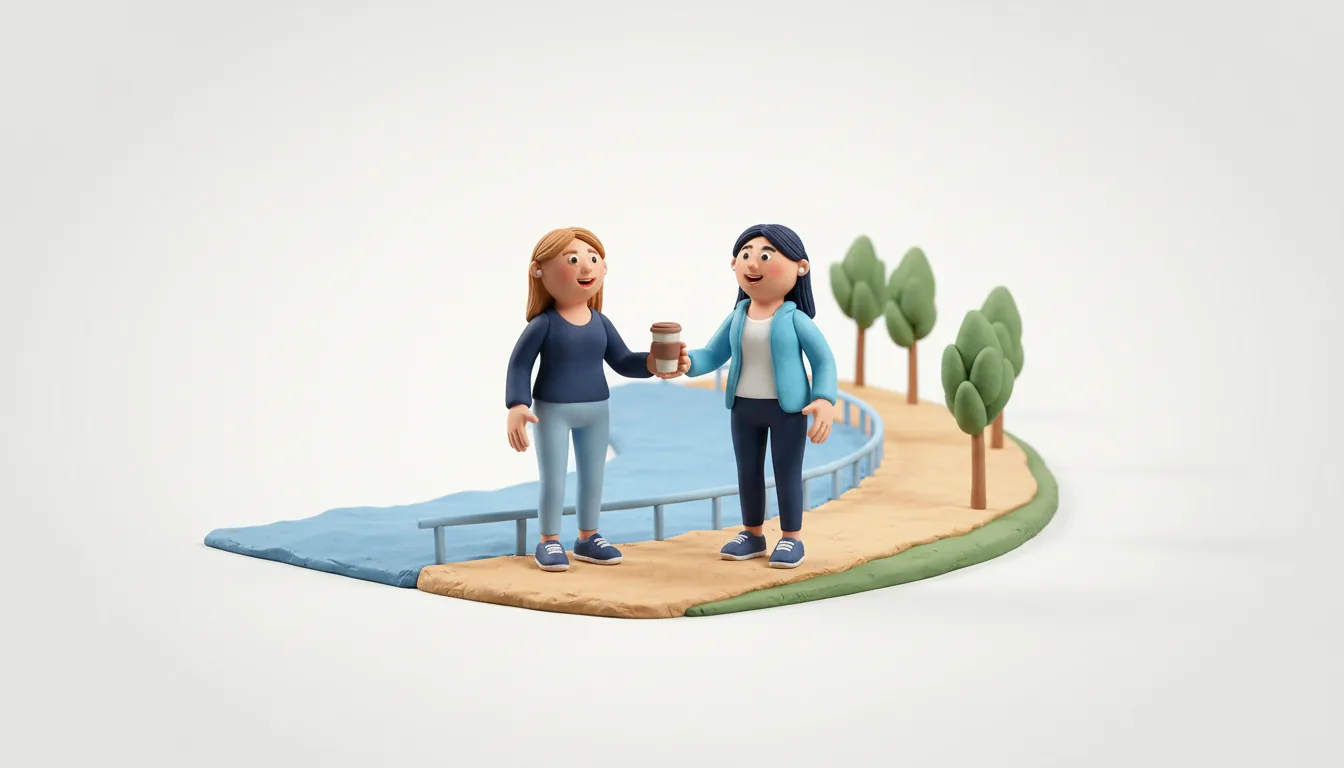
An example: Lena buys new running shoes, downloads a ten-week plan and sticks the printout to her fridge with a magnet shaped like a lemon. Six weeks later the plan has three ticks on it and the shoes are back in their box. Then her friend Tasha sends a text: "Saturday, 8 a.m., the river path. I'll bring coffee for after." Since then Lena has missed only two Saturdays. Her brother Jonas, on the other hand, runs alone at six in the morning and loves everything Lena gave up on: the printed plan, the ticks, the spreadsheet of his times. They want the same thing. They need different fuel to get there.
What does it mean to be motivated?
Being motivated means wanting something enough to start it and keep at it when it gets dull. It's the pull toward a thing: the run, the language lessons, the clear kitchen counter. Some days the pull is strong and starting feels easy. Other days it's faint, and the couch wins.
Many people think the mood has to come first. In daily life it often works the other way. A small action comes first, and the pull grows out of it. Ten minutes into a walk, the walk feels like a good idea.
Motivation, discipline and habit
These three words get mixed up, and each one helps in a different moment.
- Motivation is the pull. It gets you to sign up for the class.
- Discipline is what carries you on the evenings when the pull is weak. It gets you to the class in the rain.
- Habit is what's left when you've done something so often that it barely needs either. In one study, a new daily habit took 66 days on average to feel automatic, from 18 to 254 days. After that, the class is simply what you do on Tuesdays.
You don't need much discipline if you choose a fuel that suits you, and you need far less motivation once something becomes a habit.
Four things that get people going
Many people run mostly on one of these four.
A goal you can see
Some people come alive with a target: a 5K in May, a finished quilt by the holidays, a savings number for a trip. Progress has to be visible to them, so they count kilometers, pages or days. A vague wish like "get fitter" does nothing for them. "Run the river loop without stopping by June" does.
People who are counting on you
For others, a person is the strongest fuel there is. They'd skip a workout they planned alone, but they'd never leave a friend waiting at the river path. Classes, clubs, a walking partner, a study buddy or even a weekly photo sent to a friend all work for them.
Something new
Some people lose interest the moment a thing becomes routine. Their fuel is novelty: a new route, a new recipe each week, a different sport each season, a new set of words to learn. Fighting this rarely works. Changing the details while keeping the habit usually does.
Order you can count on
Then there are people who need a fixed shape: the same time, the same place, a list with boxes to tick. The routine itself becomes a comfort, and breaking the streak feels worse than doing the work. This is Jonas, with his printed plan.
Why a list helps one person and a friend helps another
Lena's plan on the fridge was good advice for Jonas and useless for her. Typeza sees personality type as part of which fuel works. Eight of the 16 types and what they tend to run on:
- Vitalizer: runs on people and energy. A dance class with friends will last longer than any home workout plan.
- Analyst: needs to understand why a habit works, and likes to design the system personally. A plan made by someone else feels like a rule to argue with.
- Inspector: loves order. A fixed time, a written list and a neat row of ticks keep the habit going for years.
- Commander: wants a challenge. A race date, a heavier weight or a friend to beat gets them out of bed.
- Dreamer: needs a calm mood and their own pace, and being hurried makes them stall. A gentle push from a friend they trust works better.
- Entrepreneur: likes progress in numbers. Minutes saved, pages read or money put aside keep them moving.
- Guardian: keeps promises to people they care about. "I told my sister I'd walk with her" is stronger than any app.
- Counselor: needs the habit to mean something, often for someone else. Learning to cook for an aging parent works where "eat better" never did.
If you're not sure which fuel is yours, look back at the last habit that stuck and ask what kept it going.
How to start when the mood never comes
Waiting to feel ready is a common reason a good plan stays on the fridge. Some ways to get going anyway:
- Lower today's bar and keep the goal. On a bad day, a fifteen-minute walk still counts as the run. The goal stays the same. Only today shrinks.
- Get ready the night before. Shoes by the door, the yoga mat unrolled, the book open at the right page. Fewer steps between you and the start means fewer chances to talk yourself out of it. A short line on a sticky note, like the ones in positive affirmations, can talk you back into it.
- Pick a time and keep it. "Seven o'clock" decides for you, so a bad mood never gets a vote.
- Begin with the part you like. Learning Spanish can start with a song you love before the grammar. Cleaning can start with the one shelf that bugs you most.
- Use your fuel on purpose. If people move you, text a friend before you start. If order moves you, write the list. If something new moves you, change one detail.
- Count days, not results. A calendar full of marks says "I showed up," and showing up is the part you control.
If you put things off in general, read what makes someone a procrastinator. If you've started calling yourself lazy, how to stop being lazy looks at why that word is often wrong.
Ideas for home, health, hobbies and learning
The same four fuels work anywhere in life outside work.
At home. A list person can split the weekend chores into small boxes. A people person can do them on a call with a friend who's cleaning too. Someone who needs novelty can set a timer and race it.
For your health. Join a walking group if people move you, sign up for a fun run if goals do, or try a new sport each season if you get bored easily.
For a hobby. Pick a small finished thing to aim for, like one scarf or one song on the guitar, instead of "getting good." Share it with someone when it's done.
When you're learning for yourself. A fixed fifteen minutes after breakfast suits the order lovers. A class or a language partner suits everyone who needs people, and switching between a book, a podcast and a film keeps the novelty seekers happy.
If you're still choosing what to aim for in the first place, life goals examples may help you find one worth the effort.
How to get your motivation back after a break
A busy month, a trip or a cold can stop any habit. Coming back is often harder than starting the first time, because you remember how easy it used to feel.
Start smaller than where you stopped. If you were running five kilometers, run two. Change one thing so it feels fresh, like a new route or a new time of day. And skip the guilt. Every day spent being cross about the break is a day further from the start.
Find out what your fuel is
A printed plan gets one person moving and a friend waiting on the river path gets another, and type is often part of which fuel is yours. The free personality test shows your talents and where you run out of steam. Send a friend the link from your result. When they are done, the relationship type between you shows the places you fit and the places you clash.
Questions people ask
Why is it easier to get motivated with a friend?
For many people, a promise to someone else feels harder to break than a promise to themselves. The company also makes the work more pleasant.
Sources
- Wikipedia, "Habit". A 2009 study by Lally and colleagues: a new daily habit took 66 days on average to become automatic, with a range of 18 to 254 days.
Written by Virko Kask, founder of Typeza
Written with the help of AI tools.
One question for two, every week
A question to ask your partner, friend or family, and how different types tend to answer it.
Free. Unsubscribe any time.