
The early bird gets the worm: meaning, and morning people vs night owls
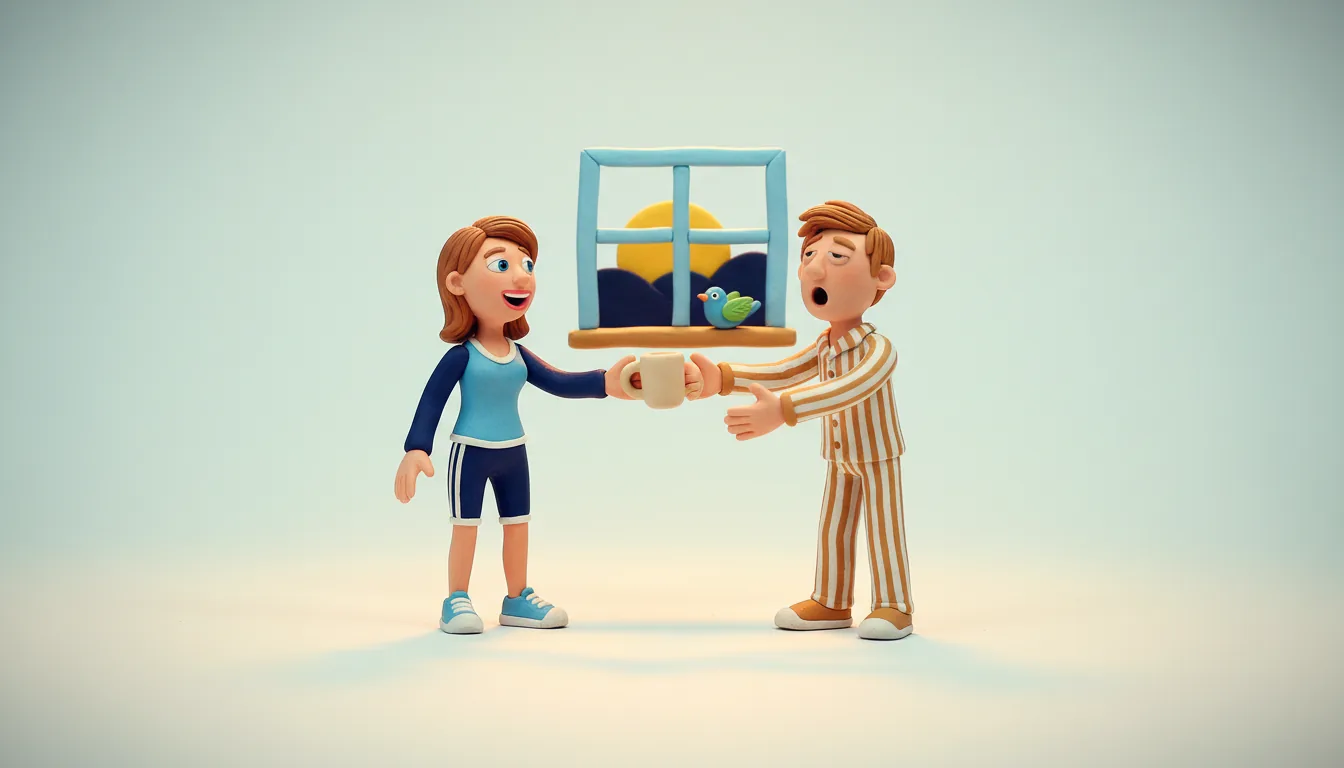
"The early bird gets the worm" means that people who start early, or act before others do, get the best chances. The saying comes from birds hunting on a lawn at first light, and it was in an English book of proverbs by 1670.
An example: Grace says it most Saturdays at about half past ten, when Owen finally comes down the stairs. By then she has run three miles, done half the crossword and been to the farmers market and back. Owen was up until two, finishing a song on the keyboard in the spare room, and he is in no mood for proverbs. Last month he found an answer. "The early bird gets the worm," Grace said, holding out his coffee. Owen took the mug. "Sure. And the second mouse gets the cheese."
They have been together six years and still haven't settled who is right. They don't need to. The saying is good advice for some people and a poor fit for others, and a lot depends on who you are and who shares your mornings.
The full saying, and the mouse that answers back
You'll hear two versions. "The early bird catches the worm" is the older one, and "the early bird gets the worm" is the one many people say today. They mean the same thing. People also use "early bird" on its own for someone who wakes up early or shows up first, which is where the early bird dinner and the early bird ticket get their names.
The famous comeback, "but the second mouse gets the cheese," works because the first mouse to reach the cheese springs the trap and the second one gets to eat.
In daily life the saying often turns up in three ways:
- To nudge. A parent or partner says it to someone who is still in bed.
- To explain. "I was in line at seven. Early bird gets the worm."
- To brag a little. Someone who booked the cabin in January says it to friends who waited until June.
What morning people tend to have in common
Morning people often love the house before anyone else is awake. The kitchen is quiet, nobody needs anything yet, and the first hour feels like time that belongs only to them. Many like to get chores out of the way early so the afternoon is free, and they often plan tomorrow the evening before.
The other side of that is the evening. A morning person can be the first to yawn at a dinner party and the first to suggest heading home. They aren't bored. Their best hours came and went while the rest of the table was still asleep. Ask a morning person to a late movie and you may get a polite yes and a lot of yawning in the dark.
What night owls tend to have in common
Night owls come alive after dinner. Ideas show up late, conversations get better after ten, and the quiet after everyone has gone to bed feels like the best part of the day. A lot of hobbies live in those hours: music, reading, sketching, long calls with a friend in another time zone, a batch of cookies at midnight.
For many night owls, mornings are something to get through slowly. That's why they hear the word lazy so often, and why some get mistaken for a procrastinator when their energy simply arrives later in the day.
Early birds and night owls, type by type
How someone likes to time the day can have something to do with personality type. Six of the 16 types show the spread:
- Ideator: can be a night owl. A new idea can arrive at eleven at night, and so can the urge to start on it right away.
- Harmonizer: cares less about early or late than about unhurried. A slow breakfast and a soft start count for more than the clock.
- Inspector: often an early bird. The same alarm every day, weekends included, and a plan for the morning set out the night before.
- Dreamer: a night owl at heart. Evening brings the mood and the imagination, while mornings can feel like walking through fog.
- Strategist: likes the late, quiet hours for thinking things through, and keeps their energy for the few things that matter most.
- Organizer: up and doing. Laundry folded and the day's list half done before the rest of the house has opened its eyes.
Grace sounds a lot like an Organizer. Owen, she says, is an Ideator to the bone, with a new song every month and no idea what time it is.
Why starting early doesn't suit everyone
The proverb assumes the worm waits at the same hour for everyone. Real life is messier than that.
- Home life sets the clock. Someone who cares for an aging parent in the evenings, or lives with a partner who works nights, has a different best hour from someone who lives alone.
- Some hobbies belong to the dark. Stargazing, band practice and the call to a sister on the other side of the world can't move to six in the morning.
- Some worms come out late. The friend who needs to talk at midnight, the best hour of a party and the idea that only shows up once the house is quiet all belong to night owls.
- Being first is not always the point. Sometimes it pays to wait and learn from whoever went first, which is the second mouse's whole argument.
Starting early goes hand in hand with planning ahead, and people who like to wing it often feel the same about both. If that sounds like you, read about people who fly by the seat of their pants and the planners around them.
Sharing mornings with someone on a different clock
Couples, roommates and grown children who move back home all run into this. One person's six o'clock blender is another person's worst alarm, and one person's one o'clock snack is another person's broken sleep. A few things help:
- Agree on quiet hours. The early one keeps the kitchen calm until a set time, and the late one keeps the music down after midnight.
- Guard one shared hour. Some mismatched couples protect a single meal or a walk, like a late Sunday breakfast or a stroll after dinner.
- Leave something for the other. A thermos of coffee on the counter, a note, the dishwasher emptied the night before.
- Split chores by the clock. Morning jobs go to the early bird, evening jobs to the night owl.
- Retire the proverb as a weapon. Said at half past ten on a Saturday, "the early bird gets the worm" lands as a scolding.
A shared morning goes easier when each of you also has a first hour of your own, and morning routine has ideas for building one.
See how an early bird and a night owl fit
Early birds and night owls can share a life well once they understand each other, and type helps with that. You can take the free personality test at any hour. From your result you can send your partner a link. Once your partner has answered, your relationship type shows the places you click and the places you bump heads.
Questions people ask
What does the early bird gets the worm mean?
Whoever gets there first has the best chance. People use it to nudge someone out of bed or to praise quick action.
What is the full saying?
The older form is "the early bird catches the worm." Many people add "but the second mouse gets the cheese," a joke reply in favor of waiting.
Is it "gets the worm" or "catches the worm"?
Both are right. "Catches" is the older form, and "gets" is common in everyday speech.
How old is the early bird saying?
It was printed in a collection of English proverbs in 1670, as "the early bird catcheth the worm." It was already a proverb then.
What does "the second mouse gets the cheese" mean?
It's the joke answer to the early bird. The first mouse to reach the cheese springs the trap, so the one who waits gets to eat. People say it when going first looks like more risk than reward.
What is the opposite of an early bird?
A night owl, someone who comes alive in the evening and likes to stay up late.
Sources
- The Phrase Finder, "The early bird catches the worm". First recorded in John Ray's "A Collection of English Proverbs" (1670, 1678).
- Wiktionary, "the early bird gets the worm". The meaning and the "catches" form.
Written by Virko Kask, founder of Typeza
Written with the help of AI tools.
One question for two, every week
A question to ask your partner, friend or family, and how different types tend to answer it.
Free. Unsubscribe any time.