
Fly by the seat of your pants: meaning, and the people who live that way
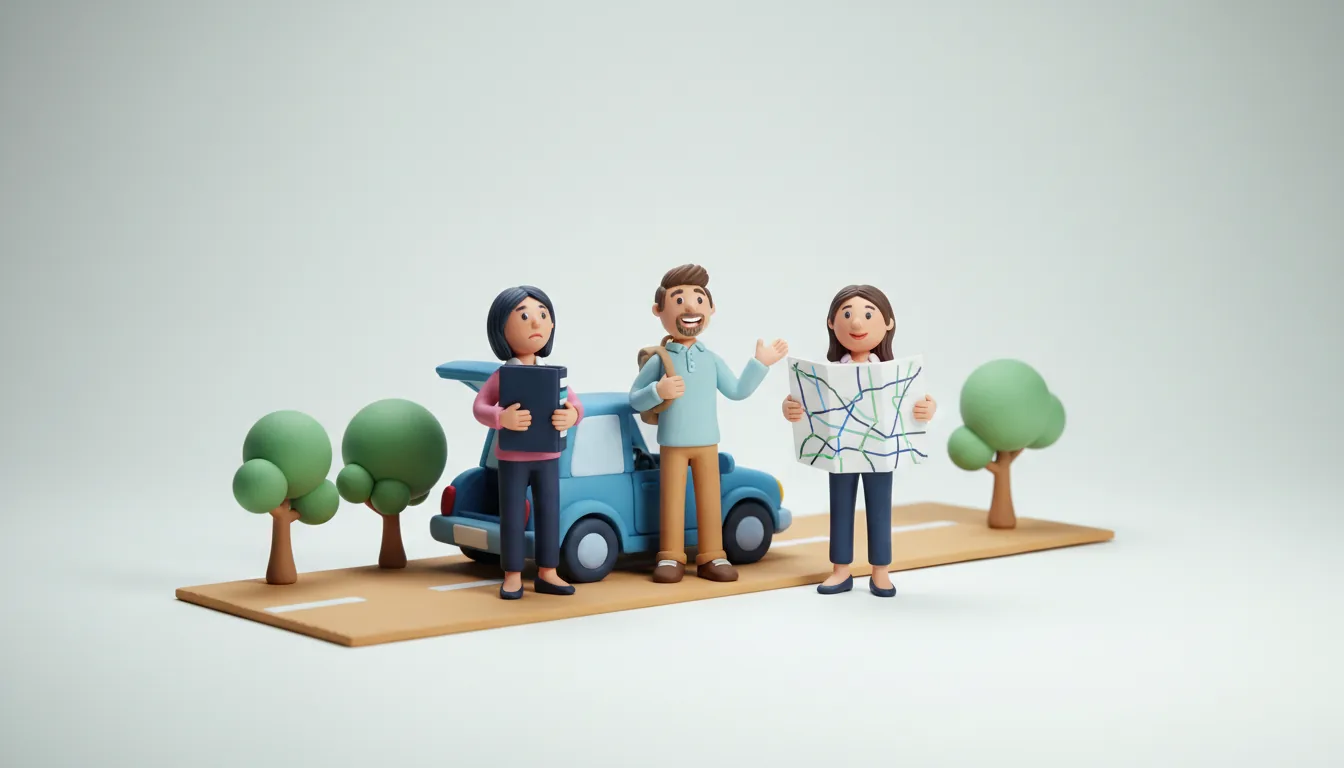
To fly by the seat of your pants means to do something without a plan, deciding as you go and trusting your instincts. The phrase comes from early aviation, when pilots had few instruments and judged what the plane was doing by what they felt through their seat. Today people say it about anyone who improvises, like a friend who packs an hour before the flight.
An example: every August, three friends, Dana, Theo and Marisol, rent the same lake cabin for a long weekend. Dana books it in January. By June she has a shared list of who brings what and a second plan in case of rain. Theo arrives with a sleeping bag, a guitar and no idea which day they are driving home. Marisol likes to know where she will sleep and doesn't mind if lunch happens at four. Last summer the car broke down two hours from the lake. While Dana rebuilt the schedule on her phone, Theo found a mechanic, a diner with pie and a field of wild blackberries. Dana still says Theo flies by the seat of his pants. These days she says it with a smile.
What does fly by the seat of your pants mean?
When you fly by the seat of your pants, you handle things as they come, with little preparation and a lot of gut feeling. The phrase can sound admiring or worried, depending on who says it. "She flew by the seat of her pants the whole trip, and it was the best week of my life" is praise. "We're flying by the seat of our pants with this wedding" usually comes with a nervous laugh.
The idiom says nothing about whether things turn out well. It only tells you that nobody planned them. You will hear it in a few forms:
- Flying by the seat of my pants. The way many people say it about themselves, often a little proudly.
- By the seat of your pants. The short form, as in "we did the whole move by the seat of our pants."
- A seat-of-the-pants decision. A choice made quickly, on instinct, without much thought.
- Living by the seat of your pants. Winging it as a whole way of life.
Where the phrase started: flying before instruments
In the 1920s and 1930s, many small planes had only a few basic gauges. Pilots learned to sense the plane through their bodies, and the part pressed against the seat told them a lot. If the plane slipped sideways or began to tip, they felt it there before they saw it. Flying by feel like this became known as flying by the seat of your pants, and the phrase was in American newspapers by 1938.
There's a twist that suits the idiom well. Flying by feel worked on a clear day. In thick cloud, the body could be fooled, and a pilot might feel perfectly level while the plane was slowly turning. That is one reason instruments took over in the cockpit. The phrase stayed behind and drifted from pilots to everyone else.
Improvisers and planners in a friend group
Many friend groups have both kinds, and the group chat gives them away. One person sends a poll three weeks before the birthday dinner. Another answers "down" an hour before and turns up with a friend nobody has met.
Both kinds keep the group going. Without Dana there would be no cabin, because nobody else would have booked it in January. Improvisers are the reason a broken plan turns into a good story. When the restaurant is closed, they already know a taco truck two streets away.
Trouble starts when each side feels unseen. Planners begin to feel like the group's unpaid travel agent, and improvisers begin to feel managed. A few habits help:
- Split the jobs. Let the planner book the place and the improviser choose what to do once you get there.
- Fix only what needs fixing. Agree on the time, the place and the budget, and leave the rest open.
- Thank the planner out loud. Booking things is invisible work until somebody stops doing it.
When the trip is a longer one, traveling with friends has more on sharing rooms, money and plans. Improvisers are often called spontaneous, a word with its own shades, from a warm unplanned hug to an impetuous rush.
When a couple is one of each
Couples meet this difference in small daily choices. What's for dinner? When do we leave for the airport? Does Saturday have a plan, or is Saturday the plan?
The airport is the classic test. The planner wants to be at the gate with time for a coffee. The improviser would rather spend those hours at home. Neither is wrong, and both can be annoyed for the whole drive.
It helps to sort life into two piles. Some things need a plan for both of you to feel safe, like money, holidays and visits to family. Other things can stay open, like weekends and most evenings. Agree on which pile each thing belongs in, and the daily arguments get fewer. If you live with someone who resists every schedule, free spirit looks at what that kind of person needs to feel at home.
Families that wing it, and families that plan
Families have a rhythm too. In some, the holiday seating chart exists by October. In others, the head count is a guess until the doorbell stops ringing.
Grown children and their parents often clash here. A mother asks what time her son will arrive on Saturday. He says "sometime in the afternoon," which to him is a perfectly good answer. To her it means she can't put the roast in. Adult siblings can split the same way over a parent's birthday: one wants a booked table for twelve, the other wants to see who is free.
A window is a good compromise. "Between two and four" gives the planner something to cook around and leaves the improviser room to stop for gas. The same tug of war shows up over alarms and bedtimes, a clash that the early bird gets the worm looks at in more detail.
When winging it helps, and when a plan does
Winging it tends to work well when:
- the plan has already fallen apart and you need a new one fast;
- not much is riding on the outcome, like where to eat on a Tuesday;
- a friend needs you right now and you can't plan for that.
A plan tends to work better when:
- other people depend on it, like a group of eight or a grandparent who needs to know where to be;
- money is tight and a surprise could cost a lot;
- the day matters a lot, like a wedding, a move or a big birthday.
Many people do best with a light frame and room to move inside it. Dana's cabin weekend works because her list exists, and because Theo is there when it falls apart. For the days when even a good list fails, there's an old Scottish line about best laid plans going wrong.
Why some people improvise by nature
Your style is part habit and part personality. One of the four base traits on a Typeza result is about this rhythm. People toward the rational side of rationality and irrationality like plans settled, and sudden change unsettles them. People toward the irrational side take things as they arrive. Here is how six of the 16 types tend to meet an unplanned weekend:
- Ideator: starts three plans in one afternoon and enjoys the detours more than the destination. Someone else had better remember the tickets.
- Vitalizer: plans around people. They set the date and invite everyone, then enjoy whatever the evening turns into.
- Inspector: likes a timetable and checks it twice. A last-minute change can throw them, and they are the one you want when a trip must run on time.
- Diplomat: lives in the moment, talks the group into the late swim and turns a missed train into the best part of the story.
- Organizer: packs the first aid kit, the snacks and the spare charger, and quietly fixes what goes wrong.
- Encourager: follows whatever looks interesting right now. Easy to talk into a detour, hard to pin down to a date.
Neither rhythm is better. A group or a family with both kinds has someone to book the cabin and someone to find the blackberries.
Map or no map: see which way you lean
Dana suspects she was born holding a list. Theo is sure he could go a year without one. The free personality test shows where you really sit. It asks you 41 times to choose between two statements about yourself. Your type lands on screen once you make the final choice. So does a bar for each base trait, one of them the plan or flow rhythm from this page. A free profile of your type covers what it does well and where it stumbles. None of this asks you to make an account.
Planning a trip with someone who is your opposite? Send them the same test from your result. Invites go through a free account, and anyone 16 or older can take part. When they finish, you get the relationship type between your two types, with notes on where your styles are likely to click or grind.
Questions people ask
Is flying by the seat of your pants a bad thing?
Not by itself. Improvising is a real skill, and it saves the day when plans break. It causes trouble when other people depend on a plan that never gets made, or when money or safety is on the line.
Where does fly by the seat of your pants come from?
From early aviation. Pilots in the 1920s and 1930s had few instruments, so they judged what the plane was doing by what they felt through their seat. Flying by feel came to mean doing anything by instinct.
Is it seat or seam of your pants?
Seat. The phrase pictures a pilot feeling the plane through the seat of their pants. "Seam" is a mishearing.
What is another way to say fly by the seat of your pants?
Wing it, play it by ear, make it up as you go along, improvise and go with the flow all mean much the same thing.
Sources
- The Phrase Finder, "Fly by the seat of your pants": the aviation origin and an early printed use, a headline in The Edwardsville Intelligencer of 19 July 1938.
- Dictionary.com, "seat-of-the-pants": based on instinct or guesswork, or done without the aid of instruments.
Written by Virko Kask, founder of Typeza
Written with the help of AI tools.
One question for two, every week
A question to ask your partner, friend or family, and how different types tend to answer it.
Free. Unsubscribe any time.