
People who talk too much: why some talk a lot, and how to talk less
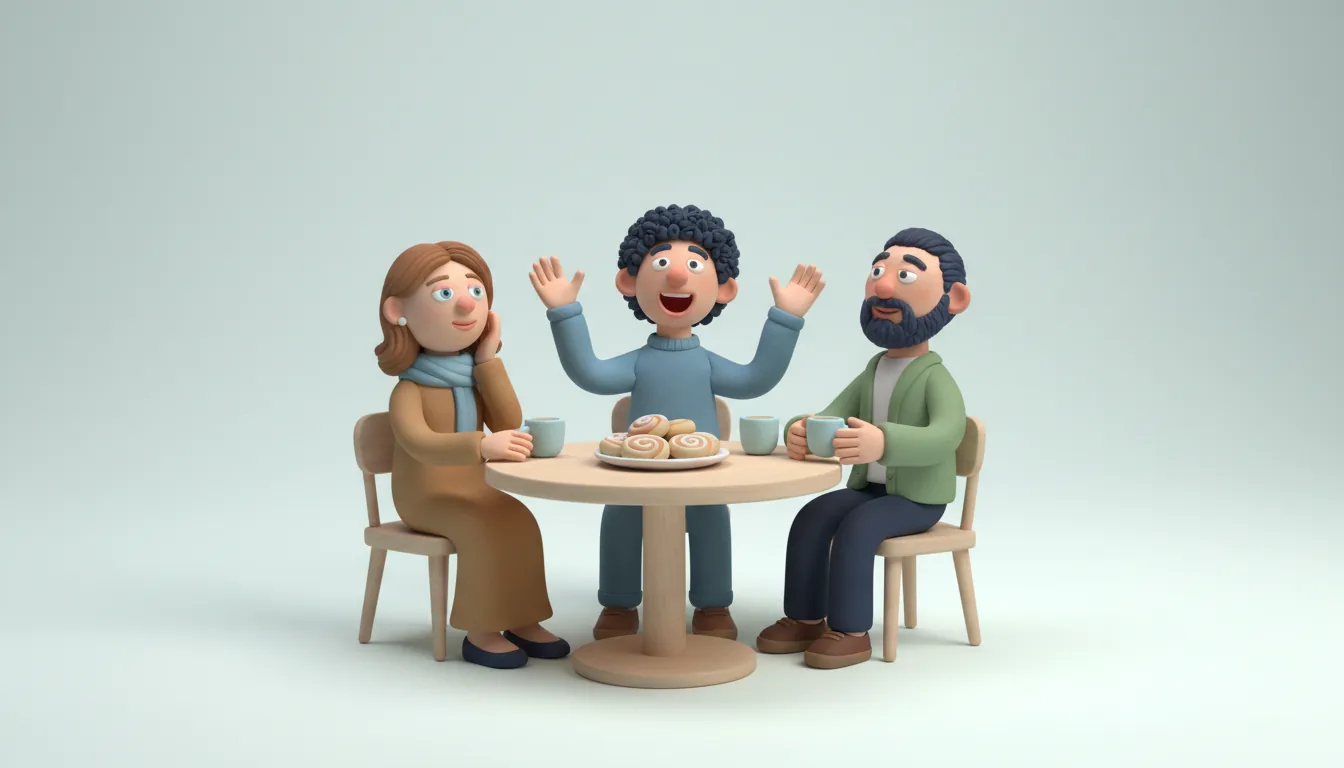
Some people talk a lot because they think out loud, because silence makes them nervous, or because they get excited and the words come faster than the brakes. Talking a lot turns into talking too much when the conversation only goes one way. On both sides the fix is usually small: more questions, shorter stories and a friendly way to get a word in.
An example: every other Thursday, Ben meets his old college friends Ana and Kofi for coffee. Ben arrives mid-story. There is the neighbor with the drum kit, then the cousin's wedding, then a long detour about a podcast. He is funny and warm, and they love him. By the time the cups are empty, Ana has said maybe four sentences. One evening she started to tell them she was thinking of moving to Lisbon. Ben jumped in with his own Lisbon story, about a tram and a lost wallet. Ana laughed and then went quiet for the rest of the evening. Ben noticed, which was new.
Why do some people talk so much?
Talkative people are rarely trying to hog the room. Usually one of these is going on:
- They think out loud. For some people, talking is how thinking happens. They don't know what they think about the Lisbon move until they hear themselves say it.
- Silence makes them nervous. A pause feels like a verdict, so they fill it with whatever comes to mind.
- They're excited. A favorite topic opens the tap, and every detail feels important.
- They've had a quiet week. Someone who lives alone or hasn't seen friends in a while can arrive with a week of talk saved up.
- It's how their family talked. In some homes everyone talked at once and the loudest story won. The same person who seemed normal at their parents' table seems nonstop in a calmer group.
- They miss the signals. Glances at a phone or short answers don't register while they're in the middle of a story.
None of these makes someone a bad friend. They do explain why a hint often doesn't land.
When a lot becomes too much
Being talkative isn't a flaw. Plenty of people love a friend who always has a story. It tips over when the balance goes missing. You can usually tell by a few things. The talker asks few questions, or asks one and then answers it themselves. The same story comes up twice in a month. Other people start sentences and don't get to finish them. Every topic swings back to the talker's life. A phone call means forty minutes of listening.
A good talker reads the room and hands the conversation back. Real chat is a back and forth, and how to make small talk has more on keeping it moving in both directions.
Why do I get annoyed when someone talks too much?
If a nonstop talker gets on your nerves, you're not a mean person. There are good reasons for it:
- You want a turn too. Being heard is part of what makes time with a friend feel good.
- Listening takes effort. Following a long story with no pauses wears you out faster than a real exchange does.
- You feel like an audience. After a while it stops feeling like friendship and starts feeling like a show you didn't buy tickets for.
- Your energy runs out sooner. Quieter people often need breaks in a conversation, and a talker never leaves one.
The annoyance is useful information. It tells you the balance is off and that it's time to change something.
How to handle a friend or relative who talks too much
You don't need a big talk to fix this. Small moves work better and hurt less.
- Step in at a breath. "Wait, can I add something?" said with a smile is almost never taken badly.
- Use their name. "Ben, hold on" stops a story more gently than talking over it.
- Ask about your topic. "Can I ask you something about Lisbon?" steers the talk your way.
- Name a time frame on calls. "I've got twenty minutes before I start dinner" gives the call a natural end.
- Pick shared activities. Walks, cooking together or a board game spread the attention around.
- Say it once, warmly, to a close friend. "I love your stories. Sometimes I'd like a turn too."
Older relatives are a special case. A grandparent who tells the same story every visit may simply be lonely. Shorter, more frequent visits often work better than long ones, and letting some stories run is a kindness.
Are you the one who talks the most?
It's easier to spot a talker than to notice you are one. A few honest questions help. After you meet a friend, do you know much less about their week than they know about yours? Do people say "anyway" a lot around you? When did you last ask a question and wait for the full answer? Do you leave conversations buzzing while the other person looks tired?
Talking a lot is different from saying too much. How to stop oversharing is about what you share, the private details that slip out. This is about how much of the room you take up. If you worry about more than talking, am I annoying looks at why one habit can charm one friend and tire another.
How to talk less without going silent
Nobody is asking you to become quiet. The goal is a fair share of the air.
- Ask one question for every story you tell. Then listen to the whole answer before you reply.
- Count to two after you finish a point. That small pause is where other people get in.
- Start with the ending. "I lost my wallet in Lisbon and got it back" is a shorter story than the full tram ride.
- Watch faces. Short answers, glances at a phone and a slow nod mean it's time to stop.
- Let a silence sit. A pause in a good conversation is restful. You don't have to fill it.
- Think out loud on purpose. Save it for the one friend who enjoys it, or work it out on paper first.
How to be a better listener goes further into the listening half of all this.
Talkers and listeners by type
How much a person talks depends partly on mood and company and partly on personality. Six of the 16 types make the range easy to see:
- Ideator: thinks out loud and leaps between topics. One idea sparks three more, and the conversation zigzags.
- Vitalizer: fills a room with warmth and chatter. A silent table feels to them like something has gone wrong.
- Mentor: tells stories with feeling and drama. Listeners get swept along, sometimes for quite a while.
- Diplomat: lively and persuasive, keeps the energy high and tends to steer where the talk goes.
- Strategist: says little and thinks first. A nonstop talker tires them, and they may sum up the whole evening in one dry sentence.
- Encourager: gets excited by people and new possibilities. One "oh, and another thing" leads to the next.
A talker and a quieter friend often get on well. One brings the stories, the other brings the pauses, and both are happier once each knows the other's pace.
See who does the talking, and why
How much you talk in a group often follows your type, and so does how long you can listen before you want a turn. The free personality test describes your type's strong sides and the places it struggles. Curious about a chatty friend, or the quiet one beside them? Send either of them your result's link, and once they finish, you both get your relationship type, with where your talk flows and where one of you keeps waiting for a gap.
Questions people ask
What do you call a person who talks too much?
Chatty, talkative and a chatterbox are the friendly words. Motormouth and windbag are less kind. In a description of someone's character, "talkative" is the neutral choice.
Is it rude to talk too much?
Talking a lot isn't rude in itself. It starts to feel rude when the other person never gets a turn, when stories are cut off, or when every topic comes back to the talker.
How do you politely tell someone they talk too much?
Pick a calm moment and start with what you like: "I love your stories, and sometimes I'd like a turn too." In the moment, a smile and "Can I add something?" usually does the job.
Is it normal to talk to yourself?
Yes. Plenty of people do it now and then, often while they cook, look for their keys or rehearse a hard talk. Saying a thought out loud can make it clearer, so people who think out loud do it most.
What is a good quote about people who talk too much?
An old saying goes "We have two ears and one mouth, so we can listen twice as much as we speak." Another puts it more sharply: empty vessels make the most noise.
What does "empty vessels make the most noise" mean?
It says the people with the least to offer are often the loudest, the way an empty pot rings when you tap it and a full one only thuds. It was already a known saying when Shakespeare wrote Henry V, where a boy repeats it as "the empty vessel makes the greatest sound." It's a harsh thing to say about a friend, though, since many big talkers think out loud or simply get excited and have a lot in their heads.
Sources
- Folger Shakespeare Library, Henry V, Act 4, Scene 4: the Boy's line "the saying is true: 'The empty vessel makes the greatest sound.'"
- Wiktionary, "empty vessels make the most sound": the proverb's meaning and its other wordings.
Written by Virko Kask, founder of Typeza
Written with the help of AI tools.
One question for two, every week
A question to ask your partner, friend or family, and how different types tend to answer it.
Free. Unsubscribe any time.